
Lens distortion is a critical optical issue in machine vision systems, directly affecting the geometric accuracy of images and leading to problems such as measurement errors, inaccurate positioning, and recognition failures. This distortion can have multiple effects in machine vision applications, depending on the accuracy requirements of the application and the degree of distortion.
Let’s take a look at the specific impact of lens distortion on machine vision:
1.This leads to a decrease in measurement accuracy
In applications requiring precise measurement of object size, distance, or position, lens distortion can introduce errors of 10-100 pixels at image edges, causing deviations in the measurement of object size, position, and shape, resulting in inaccurate measurement results.
For example, in edge detection or geometric measurement, the effects of barrel and pincushion distortion, in particular, can cause object edges that should be straight to appear curved in the image, leading to measurement errors. For precision measurement and dimensional inspection, without distortion correction, the results are essentially unusable.
2.This leads to errors in target localization and identification
In machine vision’s precise positioning and grasping tasks, distortion can lead to misjudgments of an object’s geometric features and position, such as misidentifying a circle as an ellipse.
For example, in robot-guided or automated assembly, distortion can cause the coordinates of feature points to shift, so the target position calculated by the system may deviate from the actual physical position, leading to the failure of the robotic arm to grasp or place the object.
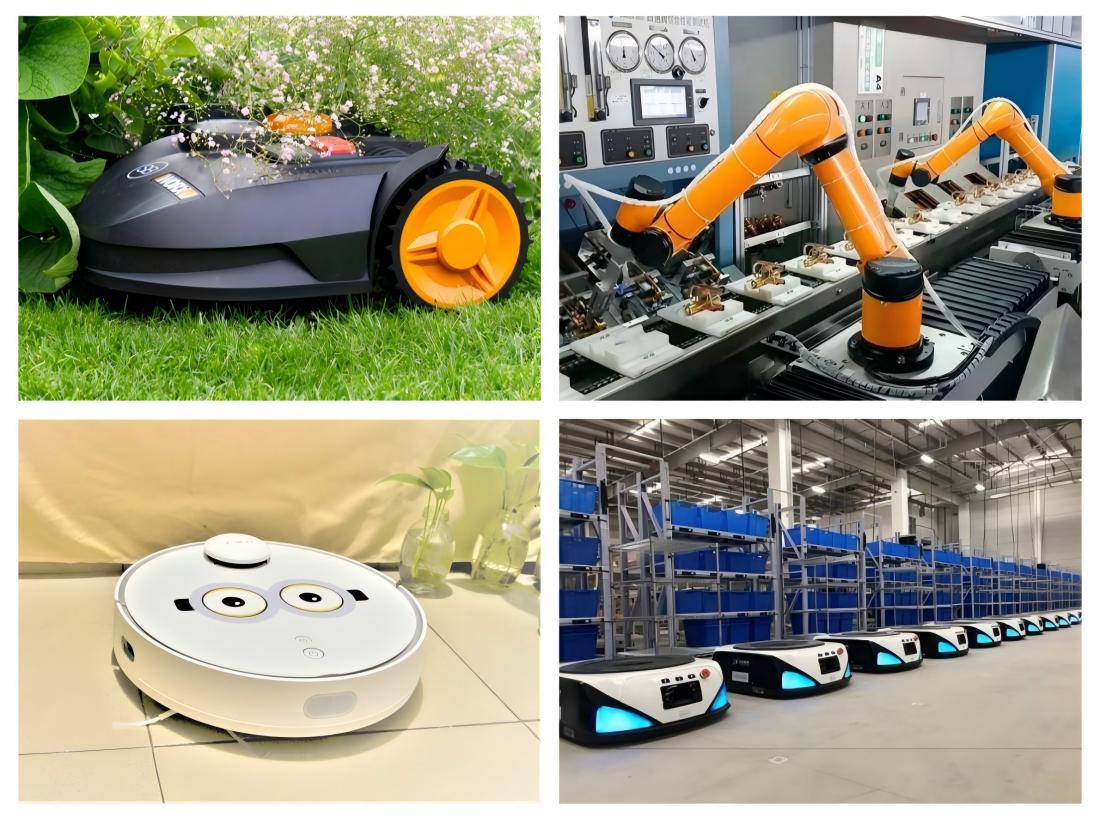
Lens distortion can easily lead to errors in target localization and recognition
3.This leads to reduced accuracy and larger errors in 3D reconstruction
In stereo vision and structured light systems, lens distortion can affect camera calibration accuracy, which in turn affects the accuracy of 3D reconstruction and measurement. In binocular stereo vision or multi-view vision systems, distortion directly affects parallax calculation, leading to deviations in depth estimation and distance measurement.
For example, in structured light or laser triangulation systems, distortion can warp the generated 3D point cloud, affecting the geometric accuracy of the reconstructed model.
4.This leads to a deviation between visual guidance and motor control
In robot vision guidance systems, lens distortion can affect the accuracy of hand-eye calibration, leading to misunderstandings of spatial relationships, impacting path planning and map building, and preventing the robot from accurately reaching the location indicated by the vision system.
For some automated equipment that needs to move along specific trajectories, distortion may distort the positional information in visual feedback, affecting the precision of motion control.
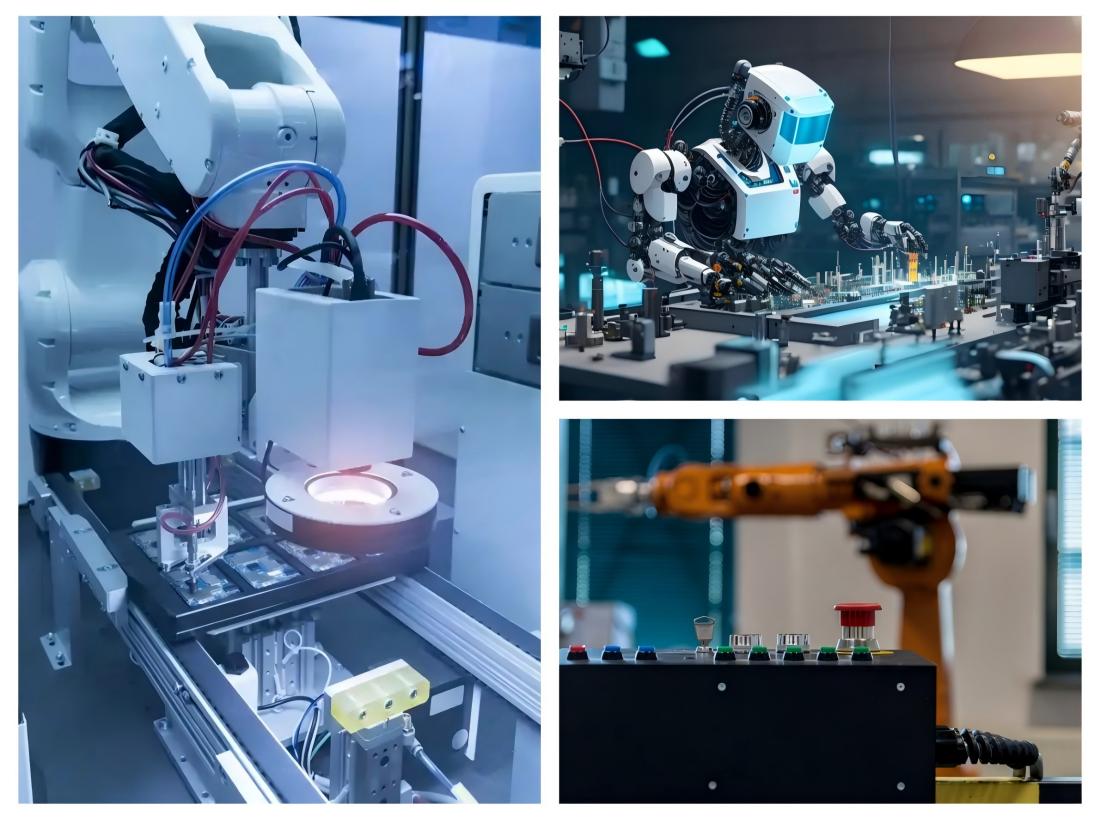
Lens distortion can lead to visual guidance deviation
5.This leads to misalignment between image stitching and panoramic imaging
In applications such as panoramic monitoring and aerial stitching, which require stitching multiple images into a single panoramic view, lens distortion can cause feature points at the image edges to become misaligned, resulting in ghosting or noticeable stitching gaps.
Furthermore, lens distortion can cause the appearance of the same object to change in different images or different regions, increasing the difficulty of feature matching and potentially reducing the accuracy of target recognition and classification.
Lens distortion can be considered the “geometric noise” of a machine vision system. While it doesn’t reduce image sharpness, it systematically distorts spatial information, putting all algorithms that rely on geometric relationships at risk of failure.
Therefore, in industrial scenarios with high precision and high reliability requirements, lens distortion cannot be ignored; otherwise, it becomes a potential quality hazard.
Post time: Jun-12-2026


