
Leveraging advantages such as non-contact operation, high precision, and high efficiency, industrial scanning technology plays a pivotal role in modern industrial manufacturing. Its applications are extensive, spanning virtually the entire product lifecycle—from research and development through to decommissioning—and have profoundly transformed workflows across numerous industries.
In general, industrial scanning applications can be summarized in the following aspects:
1.Quality inspection and control
Quality inspection and control is the core application area of industrial scanning. It is often used to scan and inspect the dimensional deviations and shape errors of product parts, detect whether there are scratches, dents, deformations and other defects on the product surface, and check the assembly consistency of the product.
For example, by performing non-contact measurements on aerospace parts, automotive engine parts, and other components, key indicators such as complex curved surfaces and coaxiality can be detected; by comparing the scanned data with CAD digital design drawings, millimeter-level or even micrometer-level precision inspection can be achieved, enabling zero-defect production.
2.Logistics and warehousing management
In logistics cargo sorting, it is often necessary to scan package barcodes to automatically identify the destination in order to achieve automated sorting, while recording the transportation status in real time and providing logistics tracking information.
In inbound and outbound warehouse management, barcode scanning can quickly collect data in the inbound, outbound, and inventory stages, improving efficiency and accuracy and reducing human error.
In warehousing, barcode scanning management can help update inventory information in real time, avoid backlog or stockouts, guide picking routes, and improve warehouse operation efficiency and security.
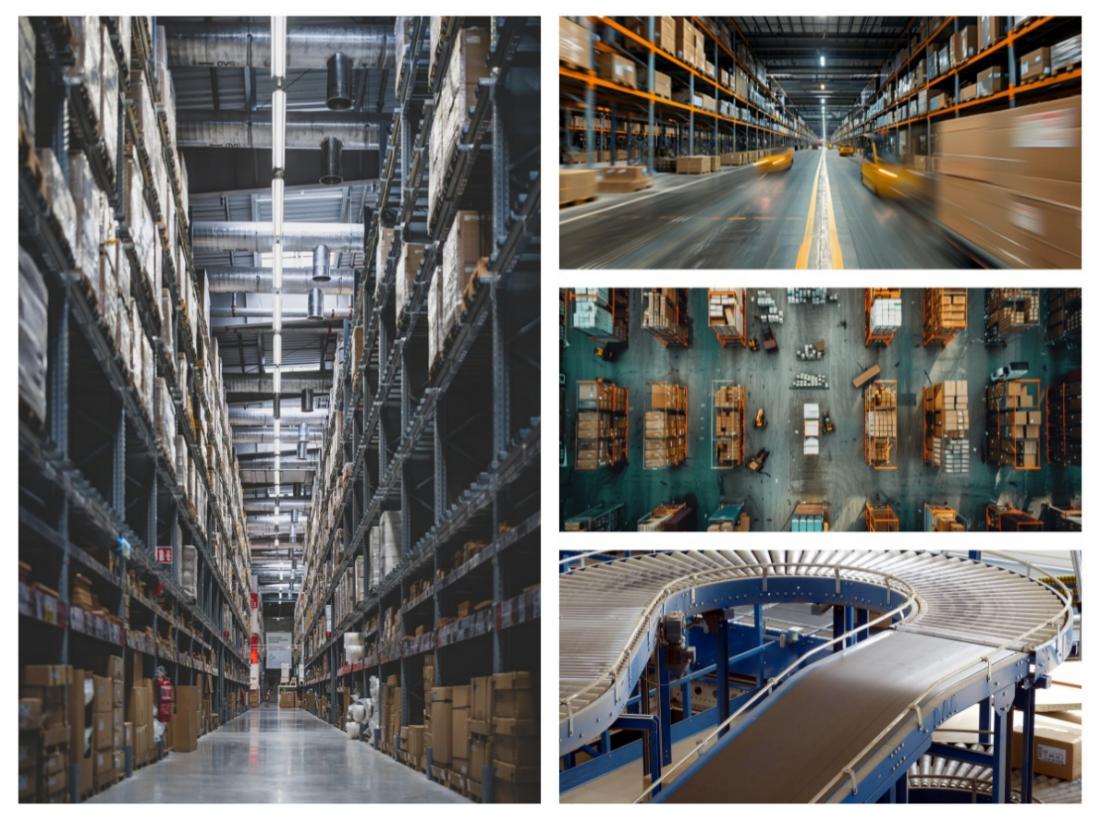
Logistics and warehouse management are common application scenarios for industrial scanning
3.Automated production line management
In smart manufacturing and automated production lines, scanning technology mainly exists in the form of barcode recognition and visual guidance.
For example, in barcode recognition, real-time scanning of workpiece barcodes can record production progress, pass rate, and responsible person, enabling full-process traceability of production; in robot vision guidance, scanning the position, angle, and posture of objects can guide the robotic arm to accurately grasp disordered workpieces; in the assembly process, it can guide the robot to automatically calibrate the position of parts, solving the error problem of manual alignment.
4.New product development and reverse engineering
Scanning also has important applications in the product development process. When original design drawings are lacking, or when improvements are needed to existing mature products, scanning is the best way to obtain geometric data. For example, scanning old molds and analyzing their wear can guide the design and manufacturing of new molds.
For example, for new products such as small internal flow channel castings, scanning their structure after molding and detecting problems such as mouth shrinkage and deformation can significantly shorten the new product development cycle by reverse iteratively correcting the design.
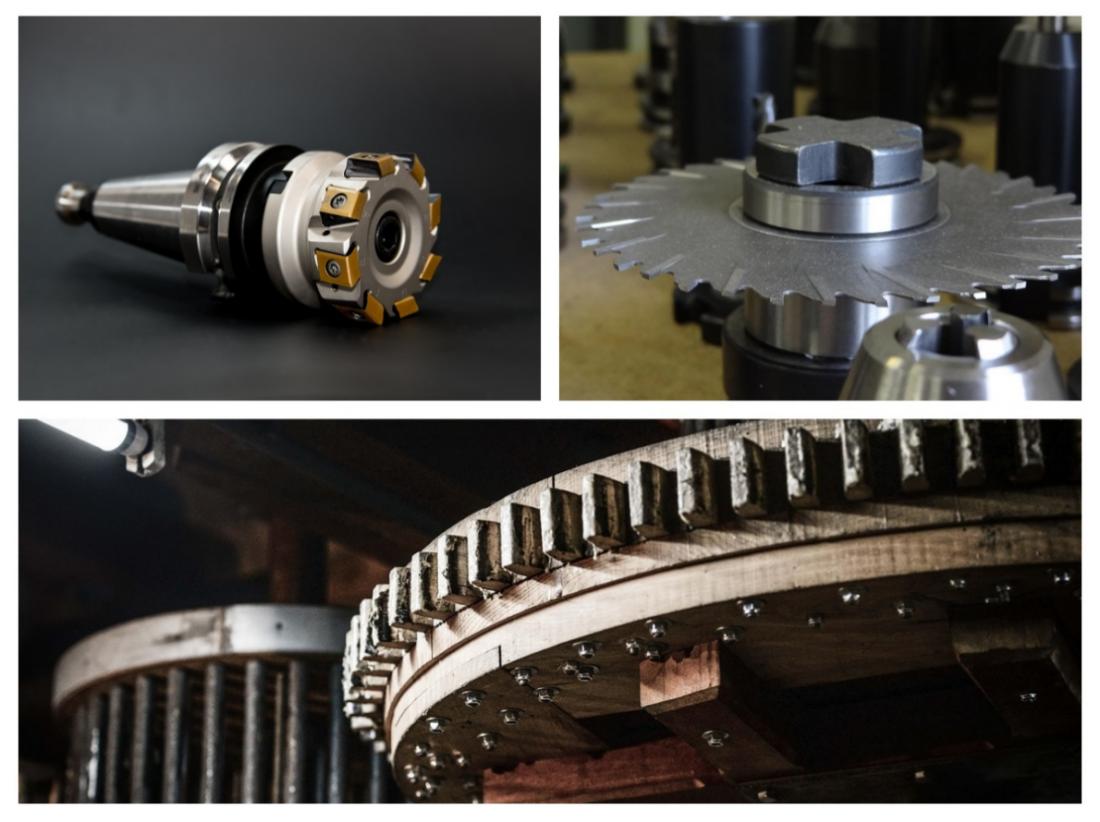
Scanning technology is commonly used in automated production line management
5.Equipment maintenance and repair
Scanning technology is also frequently employed in equipment maintenance and repair. By periodically scanning critical equipment—comparing the results against historical data to assess conditions such as wear, deformation, or damage—predictive maintenance can be achieved. For example, inspecting the wear of railway tracks and assessing the wear of water turbine blades.
6.Factory digitization and digital twins
For large-scale infrastructure or hard-to-access areas, industrial scanning offers a non-contact digital solution. For example, 3D data acquisition of factory equipment, pipelines, and steel structures can be used to build digital twin models, which can be used for factory planning and renovation, production line optimization, equipment maintenance management, and virtual simulation training.
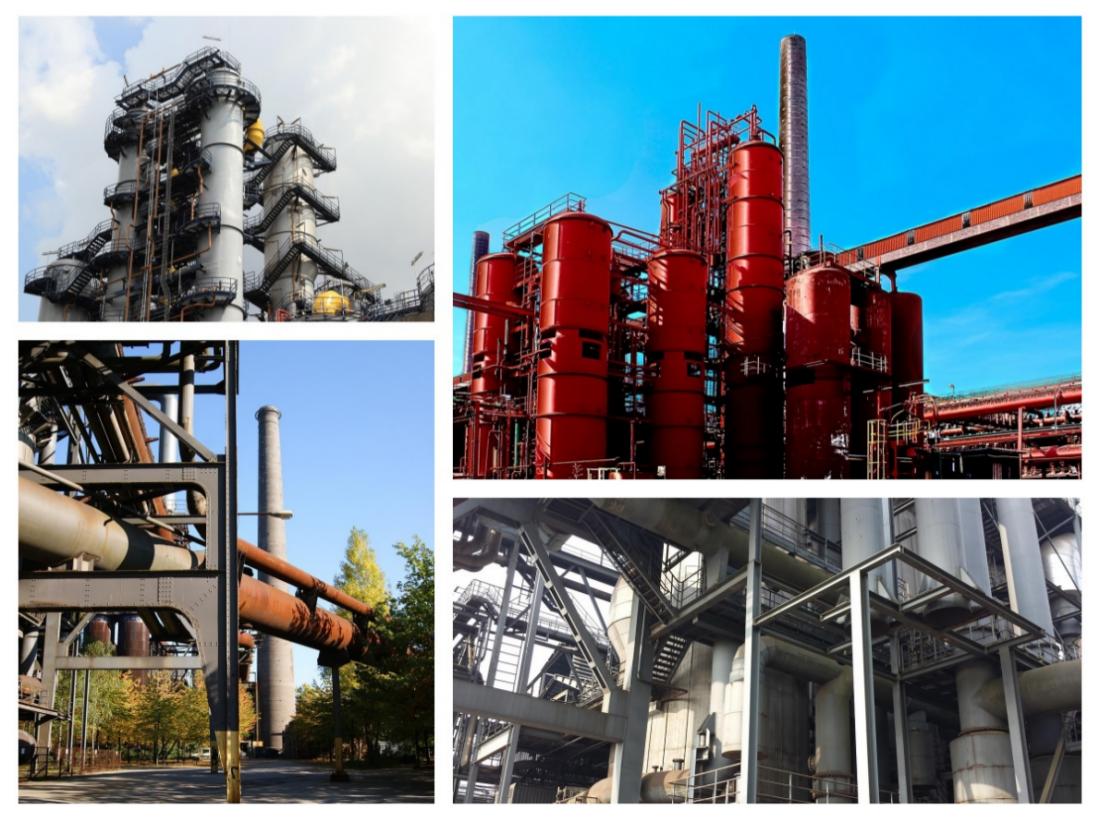
Scanning technology is also commonly used in equipment maintenance and repair
7.Customized applications for specific industries
Industrial scanning is also used to solve core challenges in specific industries that make it difficult to measure objects that are large, complex, or of special value. For example, applications include the digital protection and restoration of cultural relics and historical sites, customized prostheses and surgical planning in the medical field, and the creation of 3D assets for film and television special effects and video games.
In summary, industrial scanning applications have evolved beyond simple barcode recognition; they now integrate a diverse range of technologies and span virtually every industry and product lifecycle stage. As different application scenarios impose varying requirements regarding scanning precision, speed, and environmental adaptability, it is essential to select and configure the appropriate scanning equipment and lenses based on specific operational needs.
Final Thoughts:
By working with professionals at ChuangAn, both design and manufacturing are handled by highly skilled engineers. As part of the purchasing process, a company representative can explain in more detail specific information about the type of lens you wish to purchase. ChuangAn’s series of lens products are used in a wide range of applications, from surveillance, scanning, drones, cars to smart homes, etc. ChuangAn has various types of finished lenses, which can also be modified or customized according to your needs. Contact us as soon as possible.
Post time: May-12-2026


