
In low-light surveillance scenarios, insufficient illumination poses the greatest challenge. Low distortion lenses offer superior image quality and detail reproduction capabilities, thereby providing distinct advantages for night-time surveillance applications.
Low distortion lenses demonstrate excellent performance in night-time surveillance, primarily reflected in the following aspects:
1.Realistic imaging and high recognition accuracy
Nighttime surveillance frequently requires the identification of critical information, such as license plates and faces; low-distortion lenses are capable of delivering high-resolution images, thereby ensuring that fine details remain clearly visible.
In nighttime surveillance, high resolution and low distortion characteristics ensure that straight lines at the edges of the image do not bend, minimizing image stretching and distortion, and providing a more realistic visual effect. Crucially, this authentic imaging quality eliminates the need for post-processing correction, thereby facilitating the rapid verification of targets.
For example, surveillance equipment equipped with low-distortion lenses can clearly capture the license plate information of vehicles 100 meters away in nighttime scenarios such as transportation hubs, and can also restore the facial features of people inside the vehicle.
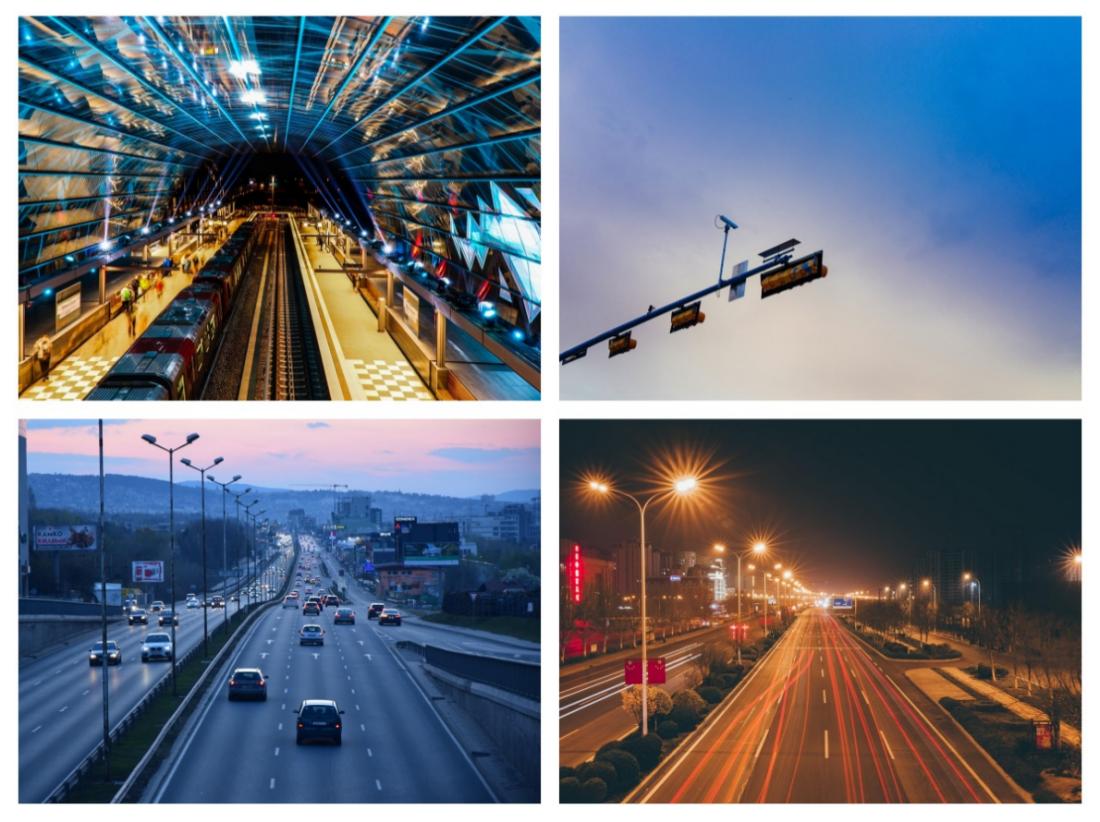
Low distortion lenses offer high recognition accuracy at night
2.Large aperture ensures clear night vision
Most low distortion lenses are equipped with a large aperture, so more light enters the lens, which can enhance the utilization of light at night and significantly improve the brightness of the image in low-light environments.
For example, when paired with a low-distortion surveillance lens with a large F1.0 aperture and a multi-frame noise reduction algorithm, it can display full-color images in low-light environments at night in suburban areas without the need for supplementary lighting, clearly identifying the clothing of people and vehicle details in the distance.
3.Strong environmental adaptability
Low distortion lenses have strong environmental adaptability, and most can work stably in a wide temperature range of -40℃ to +80℃, avoiding focus shift (out of focus) caused by temperature changes, thus ensuring the continuous reliability of nighttime monitoring.
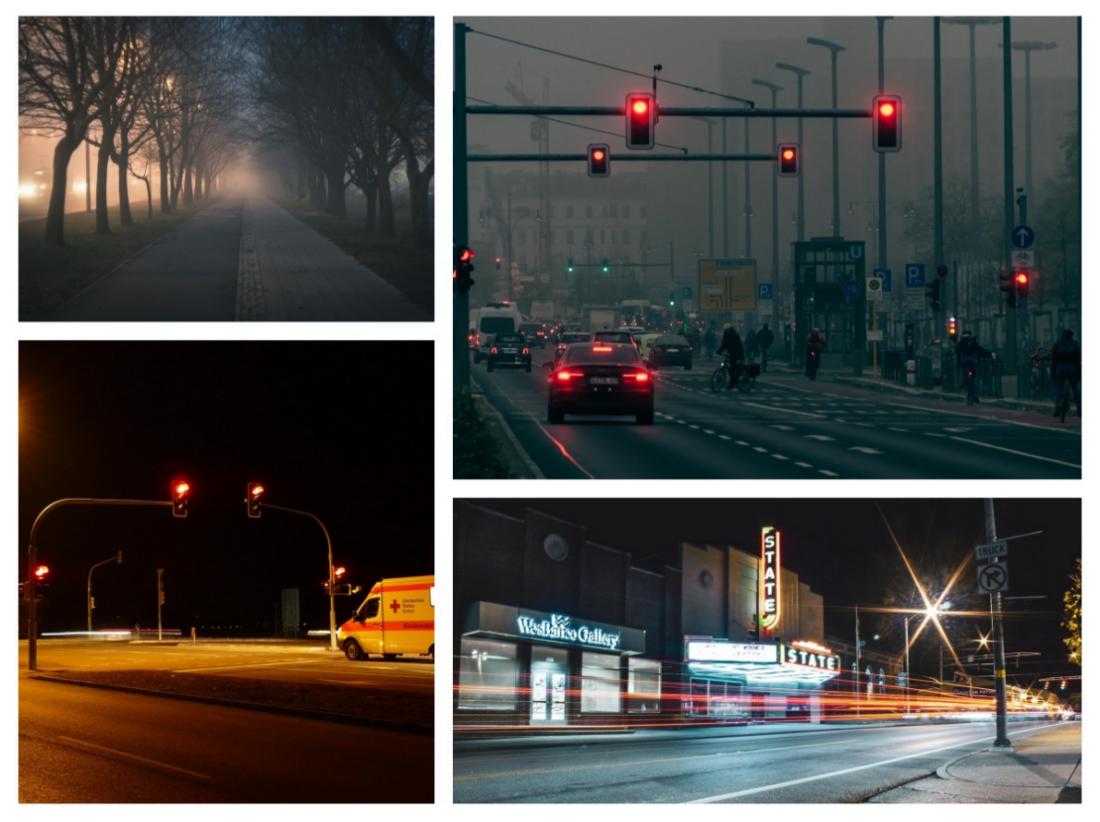
Low distortion lenses have strong environmental adaptability
4.Compatible fill-light technology
Nighttime surveillance often requires the assistance of supplementary lighting equipment such as infrared and laser. Low distortion lenses have good compatibility with supplementary lighting technology.
For example, an ultra-low distortion lens paired with a stepless dimming laser fill light can avoid the burn-in effect of traditional infrared fill light. When monitoring ATMs and community entrances at close range at night, it can clearly present the operation of personnel without losing details due to local overexposure caused by fill light.
5.Day and night co-focus: all-weather consistency
Many low distortion lenses now support “day and night co-focus” technology, meaning that the focus does not need to be readjusted when switching between day and night modes, thus ensuring the continuity of monitoring.
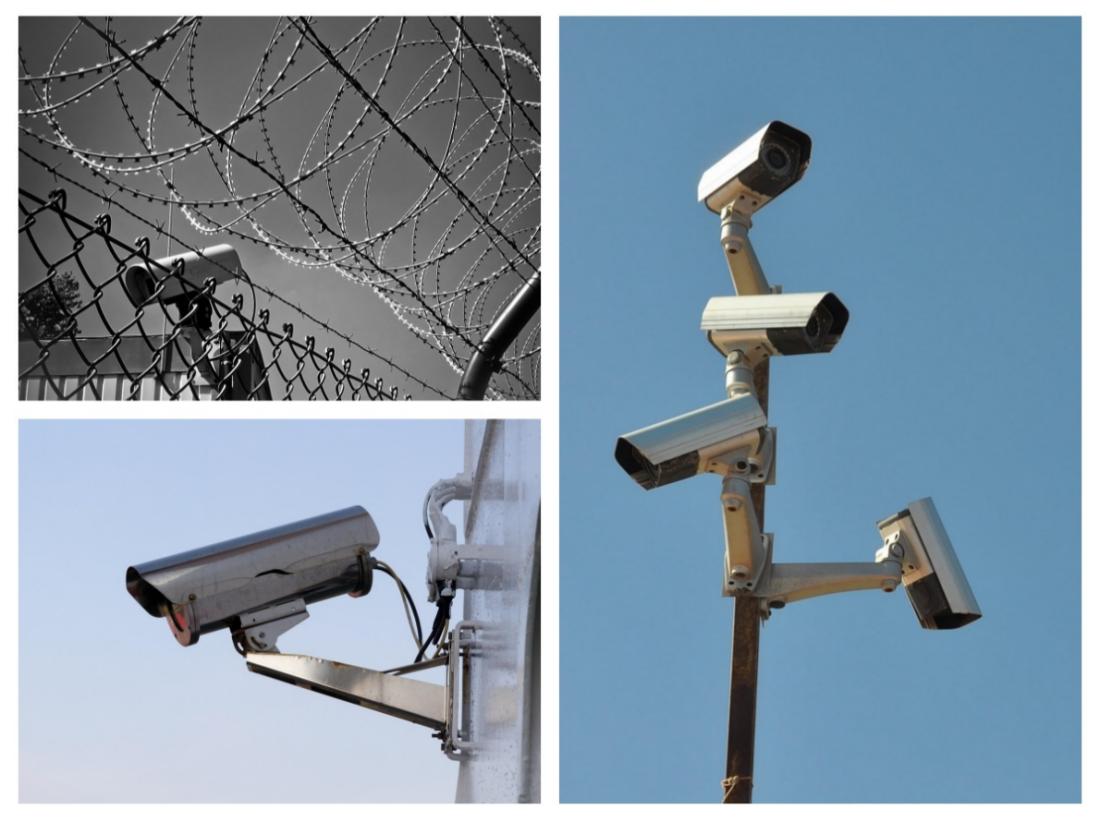
Some low distortion lenses support day and night co-focus
Of course, low distortion lenses also have certain limitations in night-time surveillance:
(1)The investment cost is relatively high. The manufacturing process of some high-precision aspherical lenses is complex, which makes these lenses typically more expensive than ordinary spherical lenses. Generally, the nighttime performance of low-distortion lenses can only be fully realized when paired with high-performance sensors and intelligent image processing algorithms. When high-performance, low-distortion lenses are combined with premium hardware, the overall cost increases significantly, creating substantial financial pressure regarding initial investment during large-scale deployment.
(2)Field of view issues: To eliminate distortion, low distortion lenses often sacrifice a certain degree of field of view; if the angular coverage is insufficient, it may compromise surveillance in the peripheral corners, thereby creating blind spots. Furthermore, if a low distortion lens is designed to feature an exceptionally wide field of view, the relative illumination at the edges of the frame may diminish when monitoring dimly lit dead zones—such as room corners—at night, making it prone to a loss of fine detail.
In summary, compared with ordinary lenses, low distortion lenses, with their high resolution and low distortion performance, have significant advantages in nighttime monitoring due to their advanced optical design, making them important for use in the security monitoring field. By combining image enhancement algorithms and infrared illumination technology, low distortion lenses will be more widely used in nighttime surveillance, providing stronger support for security monitoring.
Final Thoughts:
ChuangAn has carried out the preliminary design and production of low distortion lenses, which are widely used in various fields. If you are interested in or have needs for low distortion lenses, please contact us as soon as possible.
Post time: May-09-2026


