
Telephoto lenses have a long focal length and a narrow field of view, allowing them to bring distant objects closer, compress perspective, blur the background, and capture more detail in distant scenes. They are widely used in portrait, landscape, wildlife, and sports photography.
However, telephoto lenses also have obvious drawbacks, requiring certain usage skills to be mastered when shooting.
Telephoto lenses are heavy and have a shallow depth of field, making them susceptible to camera shake during shooting. Therefore, it’s important to master the proper techniques when using them:
1.Use a tripod or stabilizer to stabilize the image
Telephoto lenses have a long focal length and are susceptible to camera shake, which can result in blurry images. Using a tripod or stabilizer can significantly improve image stability and sharpness. If possible, using a lens or camera with image stabilization capabilities can also reduce camera shake.
When shooting dynamic subjects (such as sports or street photography), tripods may lack the necessary flexibility. In such cases, a monopod can be used instead, reducing arm strain without hindering quick movement and framing. If a tripod is unavailable, you can also utilize objects in the environment, such as placing the lens on railings, rocks, or chair backs, to provide stable support.
2.Maintain the correct posture when holding the device
When using a telephoto lens, proper camera handling is crucial. Ensure you stand firmly, keep your arms close to your body, grip the camera tightly with both hands, hold the camera close to your face, hold your breath, and gently press the shutter button (do not press it forcefully). If possible, lean against a wall or tree trunk for added stability.
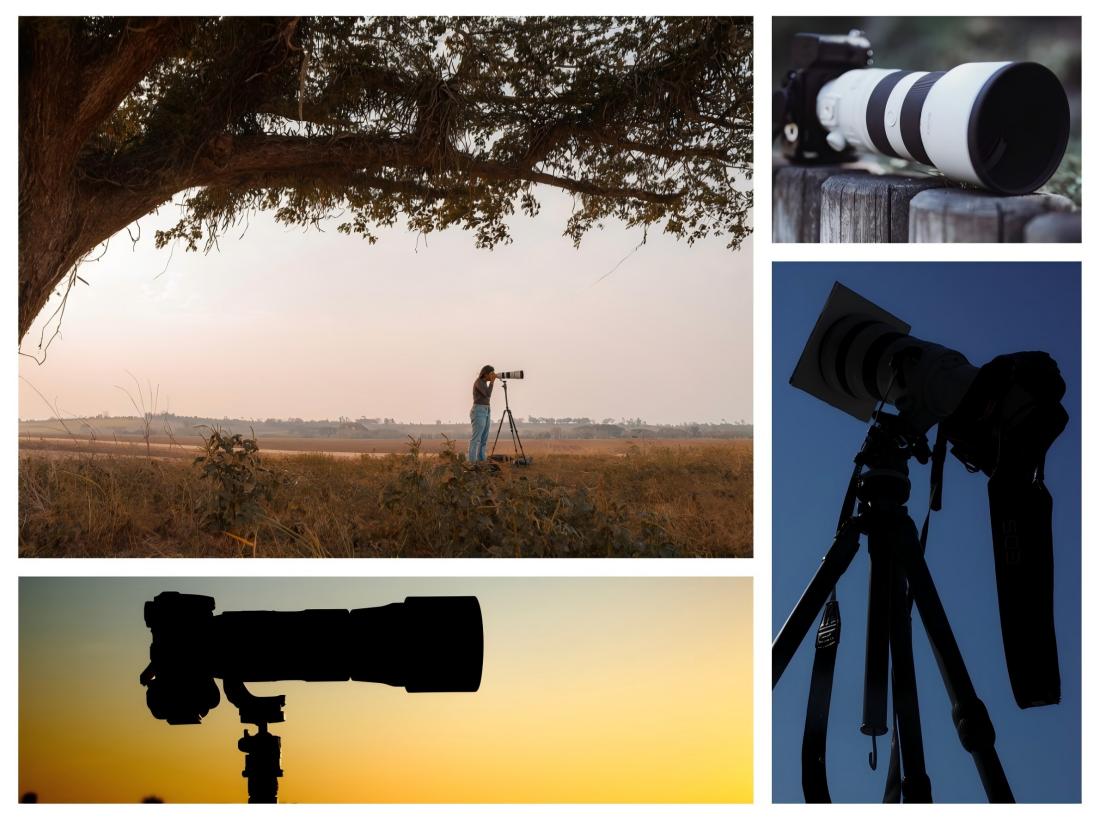
Stability is crucial when shooting with telephoto lenses
3.Properly set ISO and shutter speed
The ISO setting needs to be adjusted according to the ambient light to ensure image brightness and clarity. In low-light conditions, increasing the ISO appropriately can ensure a sufficiently fast shutter speed and good image brightness, preventing blur caused by slow shutter speeds. For example, when shooting wildlife or sports, a shutter speed of 1/500 second or even faster is often used to capture fast-moving moments.
4.Choosing the appropriate aperture and depth of field
Using a large aperture (such as F2.8 or F4) can achieve a shallow depth of field effect, blurring the background and highlighting the subject. This is particularly effective for portraits and wildlife photography, but precise focusing is crucial.
Using a medium aperture (such as F5.6 or F8) provides a balance between sufficient depth of field and background blur, avoiding the focusing problems or excessively shallow depth of field that can result from using very large apertures.
When a greater depth of field is needed, a smaller aperture (such as F8 or F11) can be used to ensure sharpness from the foreground to the background.
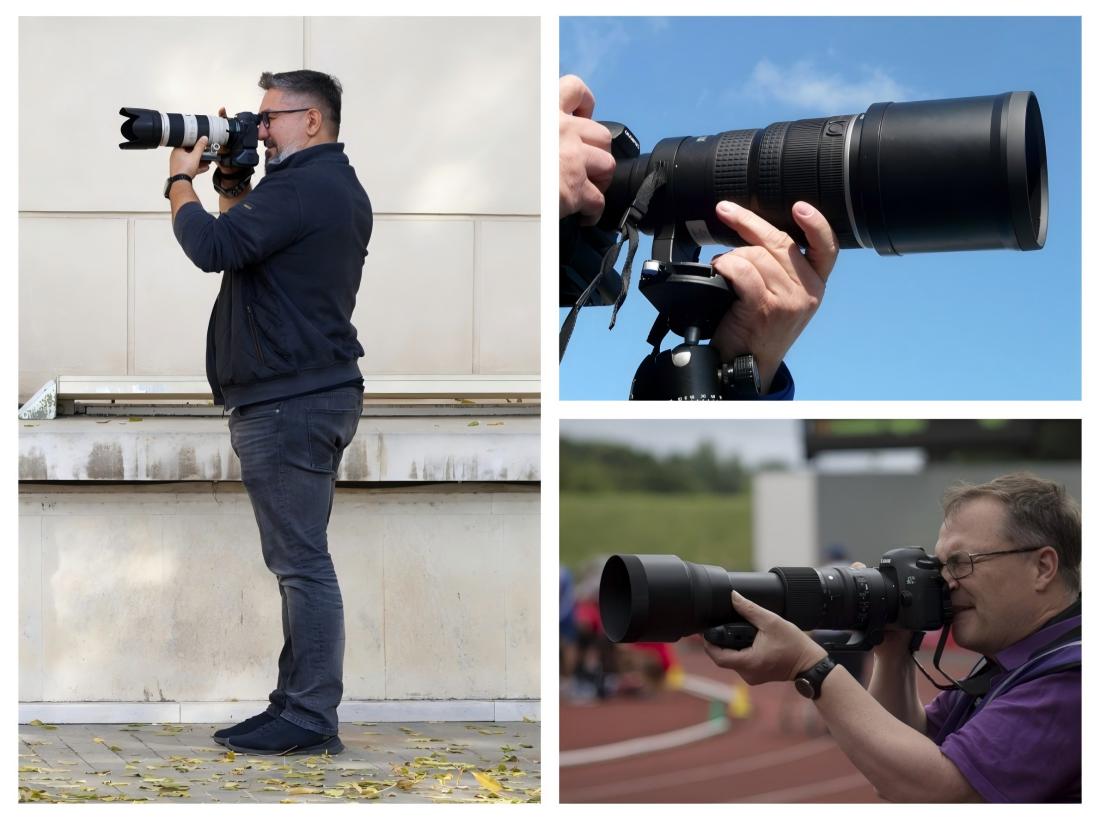
Using a telephoto lens and setting the camera parameters appropriately is also crucial
5.Understand and make good use of the “sense of spatial compression”
Telephoto lenses can “compress” objects at different distances within the frame, making them appear closer and more compact than they actually are. This simplifies composition and enhances the sense of depth and dramatic effect in the image. This is very useful in landscape photography and street photography.
For example, in landscape photography, a telephoto lens can make distant mountains and foreground trees appear superimposed, creating a layered image; in street photography, a telephoto lens can create a stronger connection between the background buildings and the subjects, preventing the background from being blurred beyond recognition and instead making it an integral part of the image’s narrative.
6.Pay attention to lighting and weather factors
Dust, moisture, and ultraviolet light in the air can reduce the contrast and color saturation of distant objects. Telephoto lenses are particularly sensitive to this, resulting in hazy-looking images. When shooting in backlit or bright light conditions, a lens hood or polarizing filter can be used to reduce glare and improve image clarity and color.
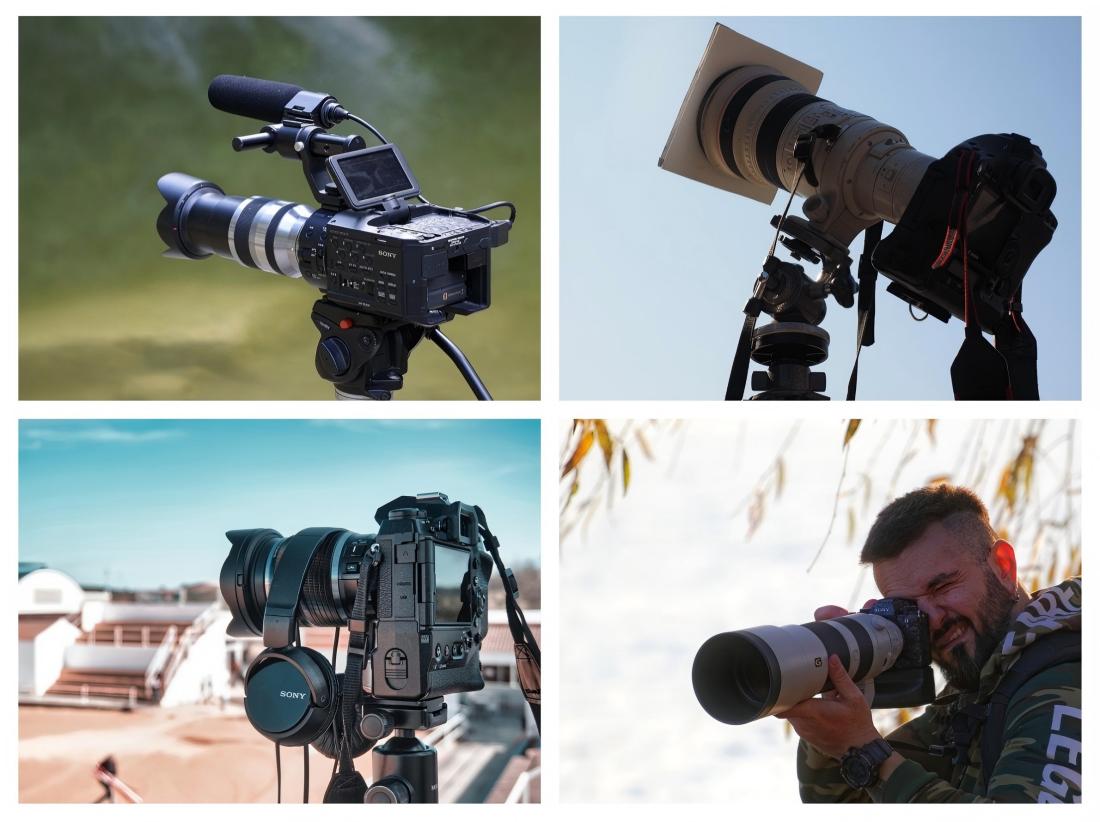
When using a telephoto lens, pay attention to lighting and weather conditions
7.Pay attention to precise focus
Telephoto lenses have a shallow depth of field, making them prone to focus shifts, so precise focusing is crucial. It’s recommended to use the camera’s single-point autofocus or back-button focus function, and aim at the key part of the subject, such as a person’s eyes or the highlight of a still object.
When shooting moving subjects (birds, athletes), maintain focus lock. Before shooting, you can manually set the focus distance range to reduce the autofocus search time and improve focusing speed. When shooting static scenes, you can switch to manual focus, focusing on the subject first before locking the focus.
8.Choose the appropriate focal length and settings based on the different scenarios
Telephoto lenses are not a one-size-fits-all solution. When shooting, you need to choose the appropriate focal length and parameters based on different subjects and scenes to capture satisfactory images.
For example, when shooting portraits, you can choose a focal length of 85mm-135mm, an aperture of F1.8-F2.8, an ISO setting of 100-400, a shutter speed of ≥1/200 second, shooting from a distance of 3-5 meters from the subject, and focusing on the eyes; when shooting sporting events, you can choose a focal length of 200-400mm, an aperture of F2.8-F4, an ISO setting of 800-3200, a shutter speed of ≥1/1000 second, and use continuous shooting to track moving subjects.
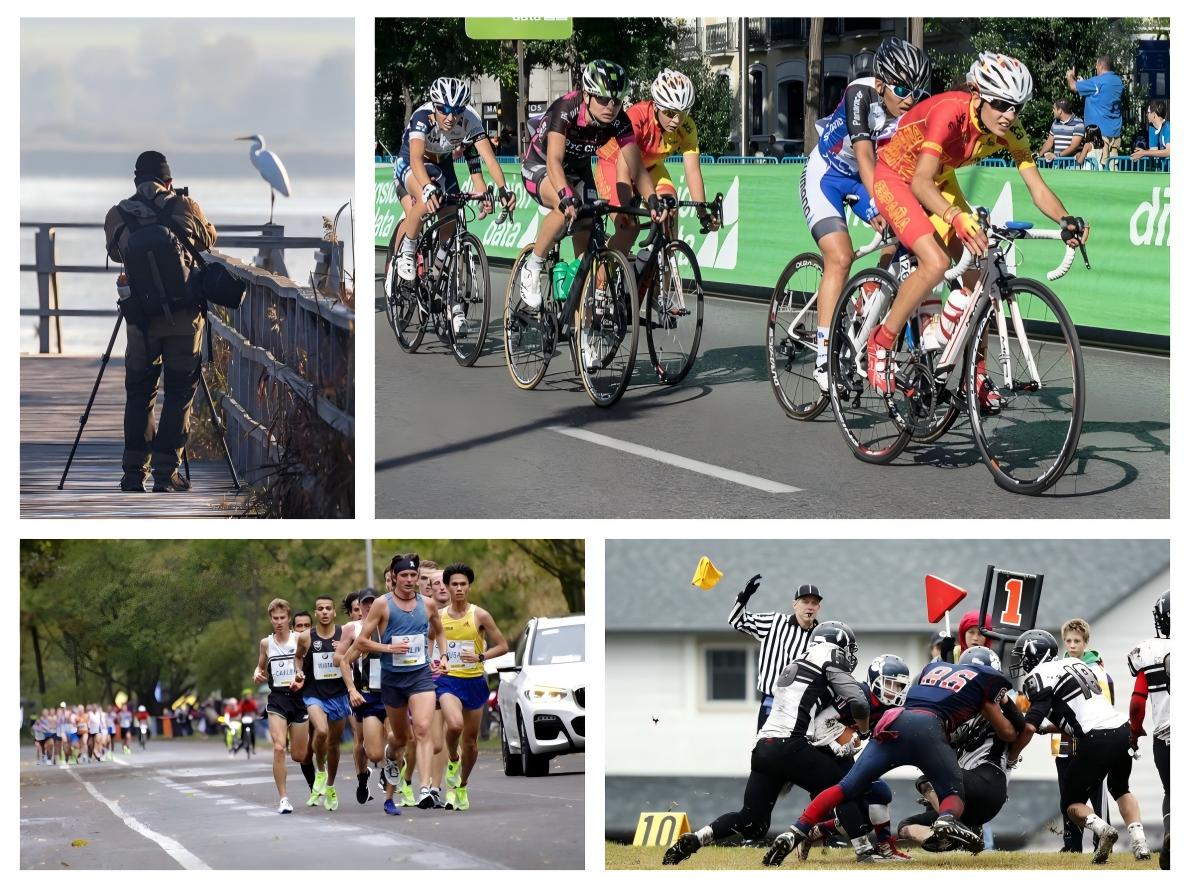
Telephoto lenses require different settings depending on the scene
9.Pay attention to composition techniques
When using telephoto lenses, it’s important to pay attention to composition techniques, such as utilizing foreground elements, symmetry, and leading lines. When shooting with a telephoto lens, adding foreground elements in front of the subject, such as flowers or rocks, can increase the sense of depth and layering in the image.
If the subject has symmetry, symmetrical composition can also be used to enhance the aesthetic appeal of the image. Natural leading lines, such as roads, railings, or rivers, can also be used to guide the viewer’s eye from the foreground to the subject.
Additionally, when shooting with a telephoto lens, it is recommended to save the images in RAW format, which allows for appropriate post-processing, such as adjusting exposure, sharpening, and noise reduction.
Final Thoughts:
By working with professionals at ChuangAn, both design and manufacturing are handled by highly skilled engineers. As part of the purchasing process, a company representative can explain in more detail specific information about the type of lens you wish to purchase. ChuangAn’s series of lens products are used in a wide range of applications, from surveillance, scanning, drones, cars to smart homes, etc. ChuangAn has various types of finished lenses, which can also be modified or customized according to your needs. Contact us as soon as possible.
Post time: Mar-24-2026


