
Fixed focus lenses have a fixed focal length and a large aperture, maintaining high image quality even in low-light conditions, and are often used for night scene photography. Shooting night scenes with a fixed focus lens requires mastering certain techniques:
1.Choose an appropriate focal length
Fixed focus lenses have a fixed focal length, so when shooting night scenes, you need to choose your subject based on the characteristics of that focal length to avoid compositional limitations.
Fixed focus lenses with focal lengths like 35mm and 50mm allow more light to enter the sensor at their widest aperture (f/1.4-f/2.8), improving image quality and achieving a soft background blur. They are suitable for shooting in street scenes, shop windows, and other similar environments, encompassing the background and creating a strong sense of story.
Medium telephoto fixed focus lenses of 85mm and above are suitable for shooting portraits or compressing space, compressing distant, scattered lights into continuous bokeh to create a dreamy background while avoiding disturbing the subject.
2.Skilled at choosing shooting time
The best time for night scene photography is not late at night, but rather the “blue hour” after sunset, when the sky is not yet completely dark. At this time, the sky is a deep blue, creating a beautiful contrast with the city lights, resulting in richer colors and layers in the image.
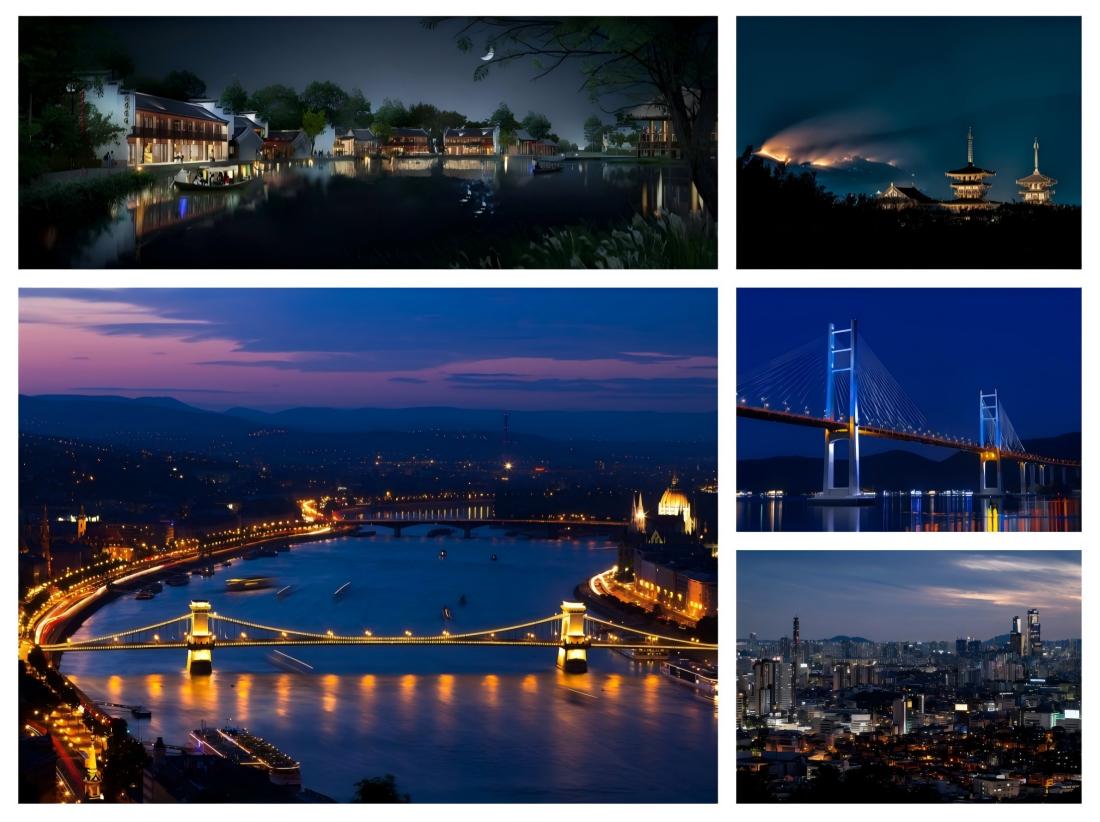
Choosing the right time to shoot night scenes is very important
3.Use a tripod for stable support
Most fixed focus lenses lack image stabilization, and shutter speeds are slower in nighttime shooting, making equipment stability crucial. Using a tripod effectively prevents blurring caused by camera shake. Choose a tripod with sufficient load-bearing capacity and tighten all locking mechanisms during shooting to prevent equipment movement from wind or physical contact. In windy conditions, hang your camera bag on the tripod to further reduce vibration.
Additionally, if your camera has image stabilization, remember to turn it off when mounted on a tripod.
4.Shooting using existing light sources
When shooting night scenes, look for existing light sources such as shop window lights or billboard lights as the main light source. These lights are usually more suitable for illuminating people than streetlights, bringing more natural skin tones and a sense of depth, while streetlights can be used as background accents.
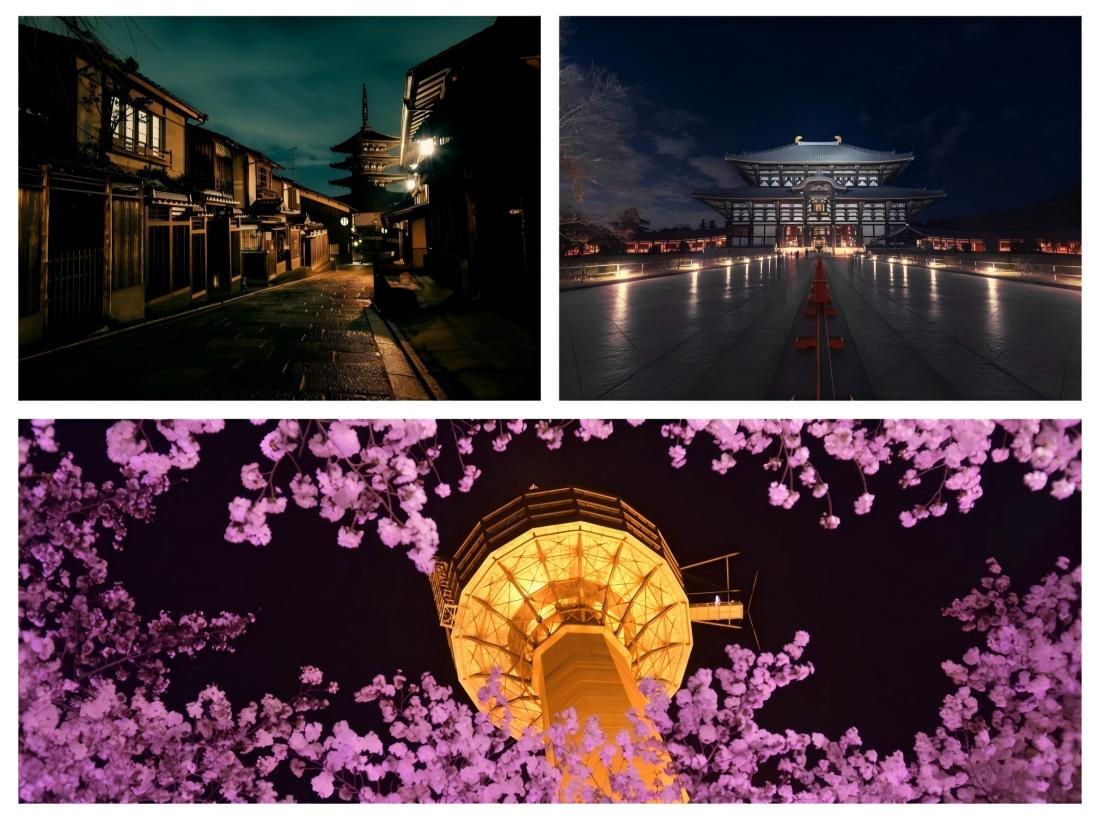
Night scene photography requires making good use of existing light sources
5.Manual focus or lock focus point
Night scenes are often difficult to capture due to complex lighting conditions, making it easy for the camera’s autofocus to malfunction and fail to achieve focus. It’s recommended to first focus on the nearest bright spot, such as streetlights or neon lights, half-press the shutter button to lock focus, and then switch to manual focus mode to compose the shot.
For shooting distant landscapes or the starry sky, you can adjust the focus ring to infinity and fine-tune it to ensure overall image sharpness. If your camera supports it, you can enable focus peaking. The area in focus will be highlighted, which is very intuitive.
6.Pay attention to the angle of the light
When shooting portraits, try to have the model’s face facing the light source to avoid creating unsightly shadows. Using side lighting can enhance the sense of three-dimensionality.
7.Shot in RAW format
Night scenes have a high contrast ratio, and using RAW format can retain more image information such as highlight and shadow details, providing a lot of room for post-processing adjustments. It has a significant advantage, especially when correcting the complex white balance and exposure of night scenes, and offers more adjustment space than JPG format.
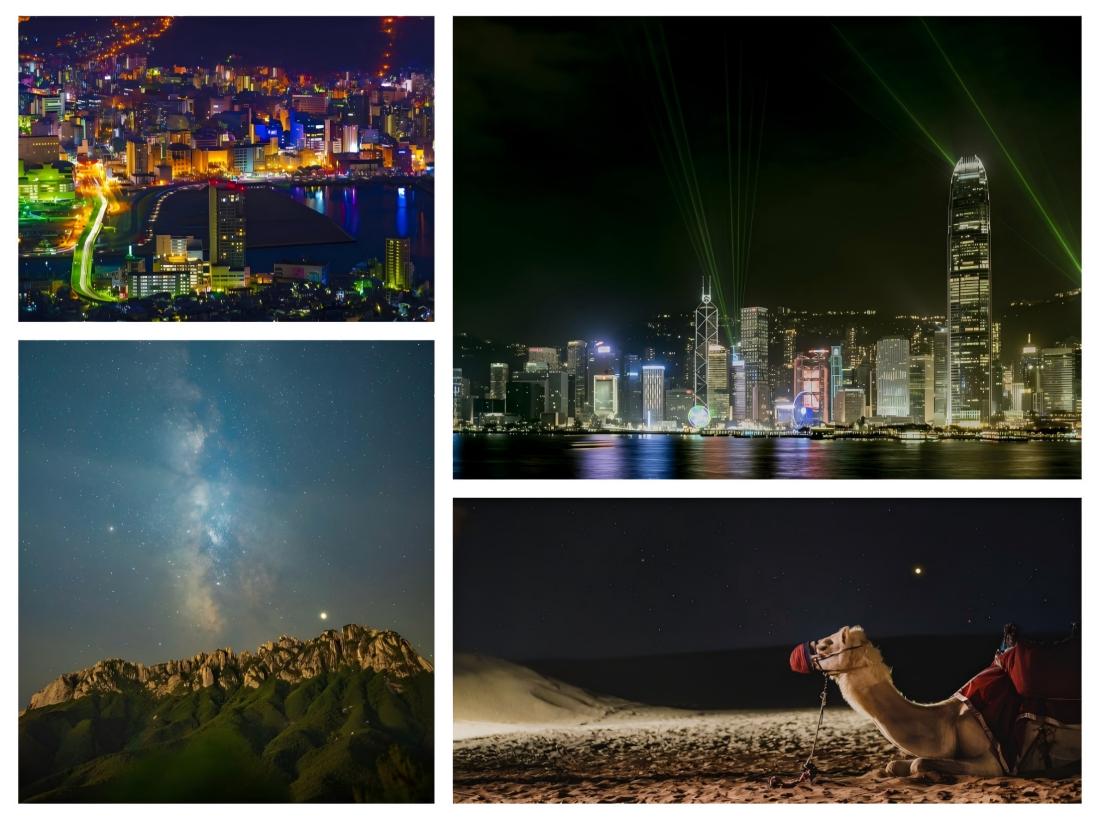
The focus and angle of light are also important in night scene photography
8.Use composition methods appropriately
Using basic composition principles such as the rule of thirds and leading lines effectively can create a clear sense of depth in the image. For example, using the rule of thirds to place the main elements at their intersections or along the lines can increase the balance and visual appeal of the image; leading lines can guide the viewer’s eye using lines within the image, enhancing its depth and sense of layering; and adding foreground elements such as trees, buildings, or people can increase the depth and add points of interest to the image.
By mastering the above shooting techniques, you can better utilize fixed focus lenses to shoot night scenes in low-light conditions, capturing clear, bright, and artistic night scene images.
Final Thoughts:
If you are interested in purchasing various types of lenses for surveillance, scanning, drones, smart home, or any other use, we have what you need. Contact us today to learn more about our lenses and other accessories.
Post time: Apr-03-2026


