
Wide angle lenses offer an expansive field of view, allowing them to capture a broader scope of the scene. However, due to the limited lighting conditions inherent in night photography, they impose strict requirements on exposure settings and demand the application of specific technical skills.
1.Aperture settings
Setting the aperture requires balancing depth of field with image quality; to achieve greater depth of field and the “starburst” effect from light sources, it is recommended to use an aperture within the f/8 to f/16 range. Most lenses deliver their optimal resolution and sharpness around f/8 to f/11; when the aperture is stopped down to f/11 or smaller (e.g., f/16), point light sources within the scene—such as streetlights—will undergo diffraction to produce beautiful starburst effects.
For instance, when shooting standard cityscapes at night, setting the aperture to f/8–f/11 ensures that both the foreground and background remain sharp; however, for specialized scenes such as astrophotography or star trails, a wider aperture setting is required—specifically a large aperture between f/2.8 and f/4—to capture sufficient light.
2.Shutter settings
Shutter speed determines the duration of light exposure and the rendering of motion effects; typically, it should be adjusted according to ambient lighting conditions, with standard settings ranging from 2 to 10 seconds. The longer the shutter remains open, the more light enters the camera, resulting in an overall brighter image; consequently, extending the shutter duration can help enhance detail in the shadows.
For instance, to capture the trails of moving traffic or light streaks, you might extend the shutter speed to between 10 and 30 seconds. Conversely, if the ambient light is relatively bright (such as in a bustling commercial district), the shutter speed can be shortened to 1–2 seconds to prevent overexposure in the highlights.
It is crucial to note that a tripod must be used during the shoot. Although wide angle lenses offer a wide field of view, even slight camera shake during long exposures can still blur the image, making handheld shooting impractical.
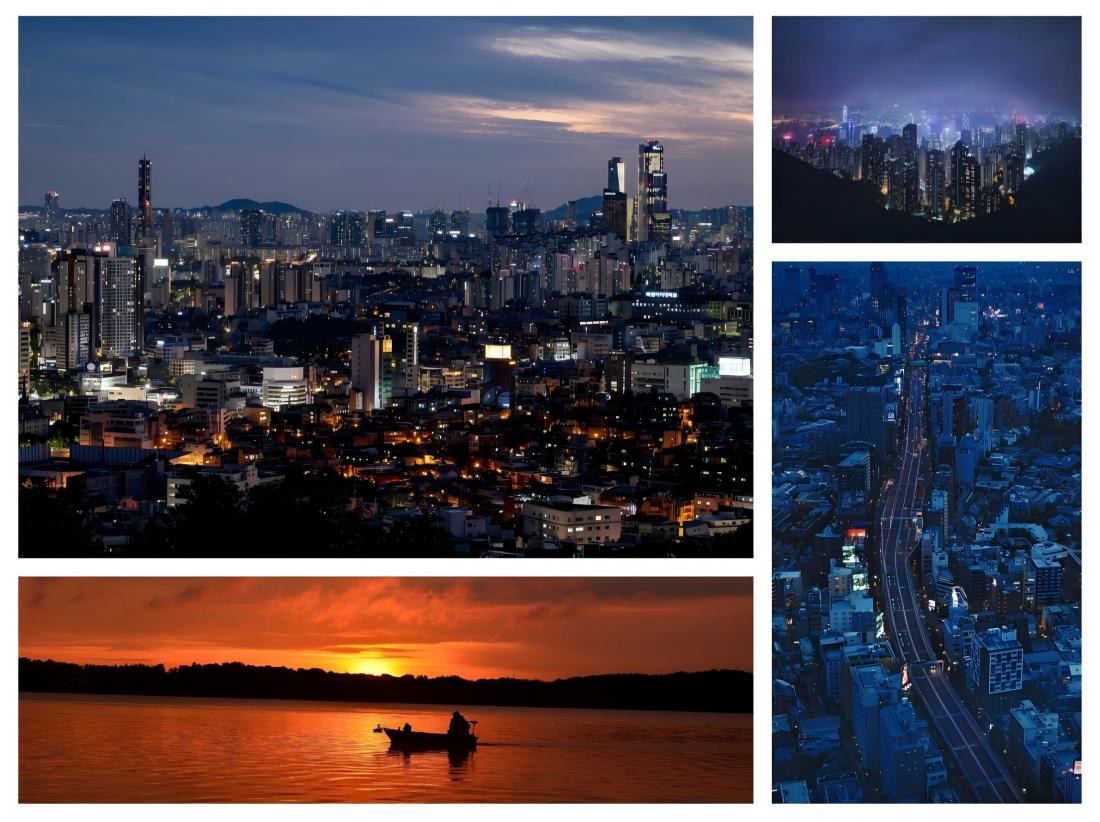
Wide angle lenses require attention to aperture and shutter speed settings
3.ISO sensitivity setting
ISO is the primary culprit behind image noise; while a high ISO setting can boost brightness, it also increases noise. Provided that proper exposure is maintained, you should always prioritize using the camera’s native base ISO (typically ISO 100) to achieve the cleanest, least noisy images.
Only consider raising the ISO—for instance, to 800 or 1600—when both the aperture and shutter speed have already been pushed to their limits, yet the image remains too dark.
4.Focus settings
In low-light conditions, autofocus may not be entirely accurate. Therefore, for night photography, it is recommended to prioritize manual focus and set the focus point to infinity (∞) or focus directly on the brightest star.
You can utilize the Live View function to magnify the image and verify focus accuracy, thereby ensuring that both the foreground and background remain sharp. If your camera supports on-screen magnification for focusing, you can zoom in on the image to confirm that the focus is precise.
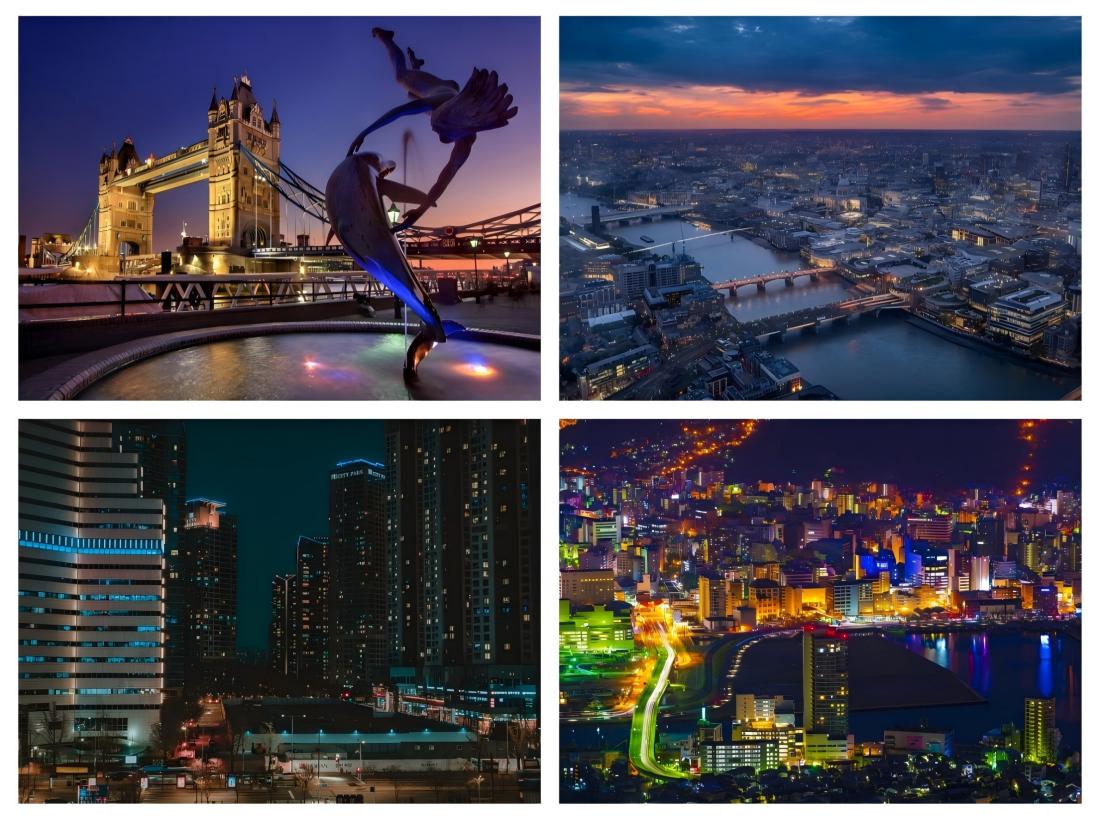
The ISO and focus settings for wide-angle lenses are also crucial
5.Exposure compensation settings
When photographing cityscapes at night, localized sources of intense light—such as streetlights or neon signs—are frequently present. Under these conditions, the camera’s metering system tends to favor a darker overall exposure, which can result in the brightest areas of the image becoming overexposed.
To address this, it is necessary to apply appropriate exposure compensation—typically by reducing the exposure by 0.3 to 0.7 EV—to prevent the loss of detail in the highlights; alternatively, exposure adjustments can be performed during post-processing.
6.Shooting format settings
When shooting night scenes with a wide angle lens, it is recommended to use the RAW format; this preserves the maximum dynamic range, facilitating the recovery of highlight and shadow details, as well as white balance adjustments, during post-processing.
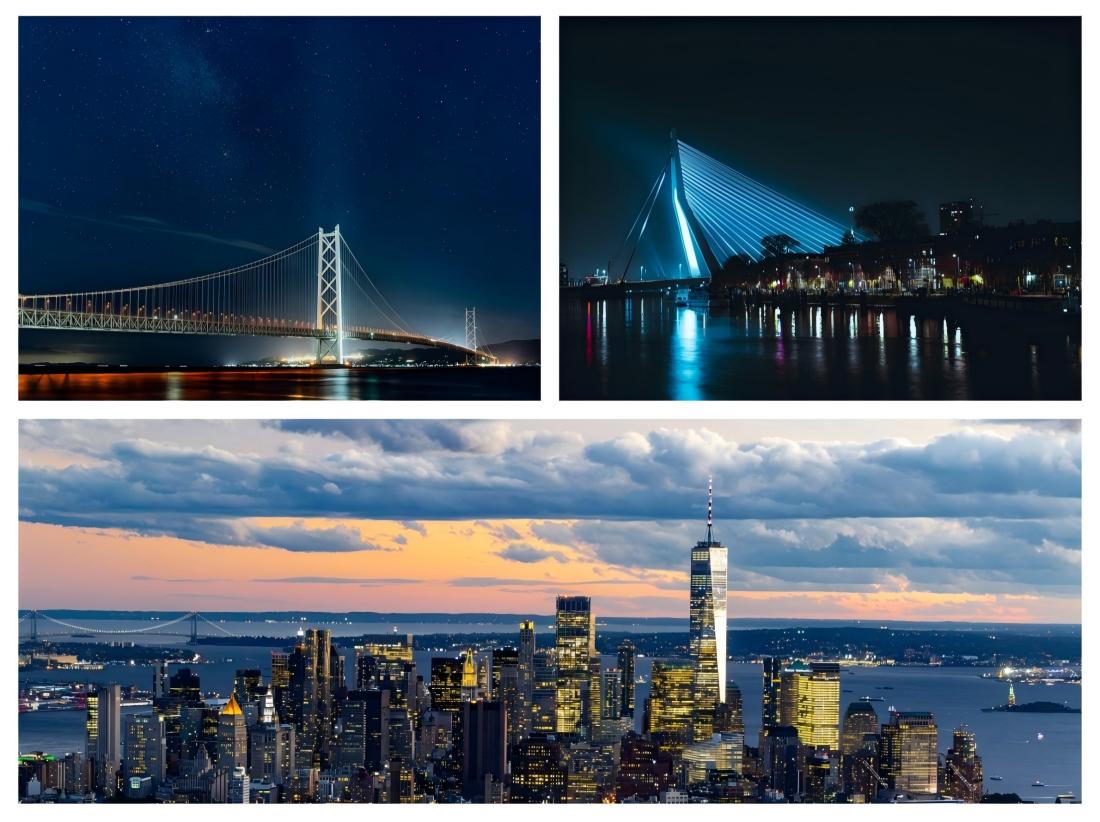
When shooting night scenes with a wide angle lens, pay close attention to the exposure compensation settings
7.Metering mode settings
Under conditions of uniform lighting, the Evaluative Metering mode can be used to measure the overall exposure of the scene. This mode takes into account both the bright and dark areas of the frame to provide a relatively balanced exposure value.
If the scene features strong contrast—such as when photographing architecture where illuminated areas stand in stark contrast to deep shadows—you may opt for Center-weighted Average or Spot Metering. By directing the metering toward the brighter or darker sections of the frame, you can ensure that the exposure for those specific areas is accurate.
Furthermore, since wide angle lenses capture a greater number of scene elements, particular attention must be paid to exposure control at the edges of the frame. Beyond exposure settings, mastering certain shooting techniques—such as choosing to shoot during the “golden hour”—can enrich the visual details and significantly enhance the quality of the final image.
In summary, by appropriately adjusting parameters such as aperture, shutter speed, and ISO sensitivity—combined with specific shooting techniques—one can effectively control exposure and capture high-quality nightscape photographs.
Final Thoughts:
By working with professionals at ChuangAn, both design and manufacturing are handled by highly skilled engineers. As part of the purchasing process, a company representative can explain in more detail specific information about the type of lens you wish to purchase. ChuangAn’s series of lens products are used in a wide range of applications, from surveillance, scanning, drones, cars to smart homes, etc. ChuangAn has various types of finished lenses, which can also be modified or customized according to your needs. Contact us as soon as possible.
Post time: Apr-17-2026


