
ToF (Time-of-Flight) lenses can rapidly and accurately measure object distances and enable 3D modeling; acting like “eyes capable of sensing distance,” they play a vital role in AR (Augmented Reality) and VR (Virtual Reality) devices by providing high-precision 3D depth information.
The specific applications of ToF lenses in AR and VR devices are primarily reflected in the following aspects:
1.Spatial positioning and three-dimensional composition
In AR and VR applications, ToF lenses can detect the user’s surrounding environment in real time and build 3D environment maps, identifying the locations of walls, floors, tables, chairs, doors, windows, and other objects. This not only enhances blind-spot monitoring for dual-camera systems but also ensures user safety by preventing collisions with walls, furniture, or other objects while moving.
Additionally, it provides spatial positioning capabilities for features such as AR gaming and virtual furniture placement. For example, in AR games, virtual monsters can jump out from behind your real sofa or crawl on the wall without clipping through the screen.
2.Gesture recognition and spatial interaction
ToF depth-sensing cameras precisely capture user movements, thereby enhancing gesture control capabilities in VR headsets. Supporting gestures such as mid-air tapping, swiping, and pinching, they recognize and track 3D hand movements to deliver a more realistic, immersive interactive experience or boost productivity.
ToF lenses can accurately track the movement and position of objects by capturing depth information. Without the need for gloves or handles, users can control AR virtual buttons, drag 3D models, and zoom virtual images remotely. They can also filter out background clutter and stably recognize hands even in low-light or complex desktop environments.
In addition to the hands, ToF can also achieve full-body tracking, capturing the deep contours of the human skeleton and recognizing full-body movements such as standing, squatting, raising hands, and bending over. For example, in VR social and fitness applications, users’ virtual avatars can synchronize their physical movements in real time.
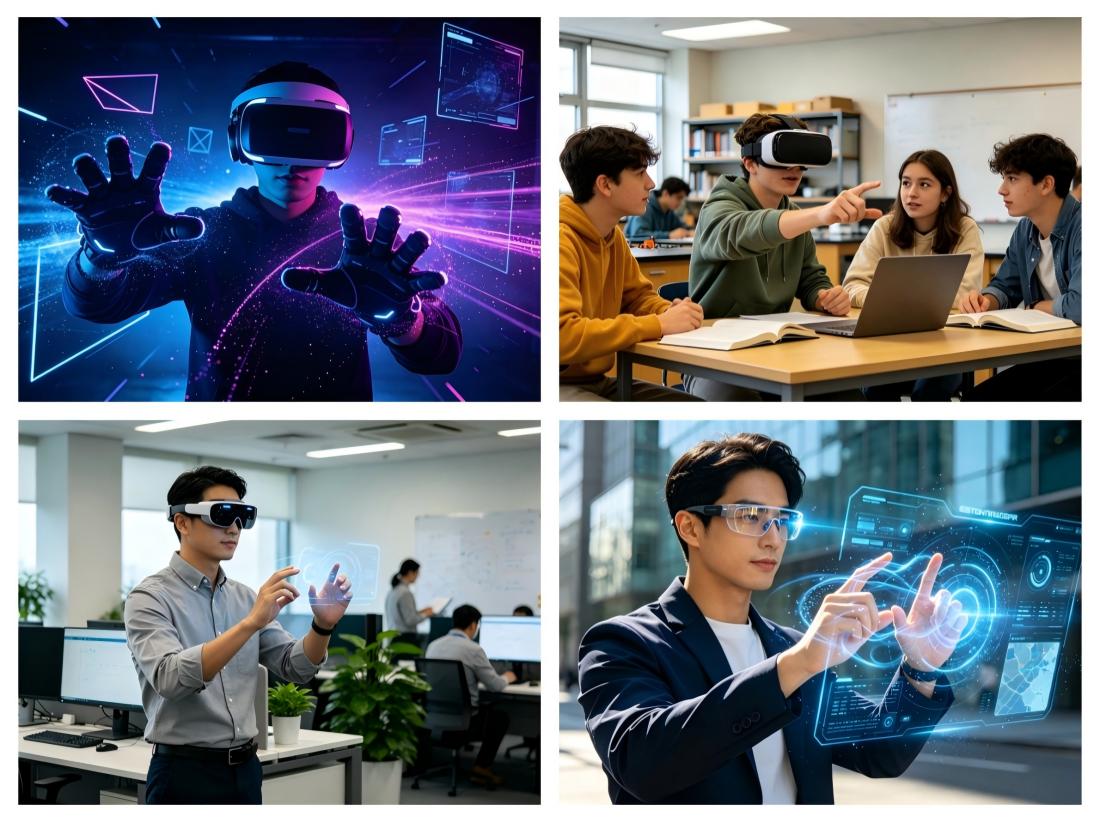
ToF lenses are used for gesture recognition and spatial interaction
3.Construction of spaces integrating the virtual and the real
In mixed reality (MR) applications, ToF sensors enable the seamless integration of virtual images into the real world by accurately mapping physical objects and their surroundings—a key use case for ToF technology in AR/VR.
For instance, they facilitate the 3D scanning and digitization of real-world objects or allow participants to be inserted into a real-world view during virtual meetings, thereby enhancing the realism of interactions.
They also enable the precise alignment of virtual objects with real-world surfaces—such as placing a virtual sofa on the floor, mounting a virtual screen on a wall, or setting a 3D model on a table—ensuring the objects do not float, clip through other geometry, or appear misaligned.
4.Environmental understanding and obstacle avoidance
ToF technology enables real-time sensing of the positions and shapes of actual objects in the environment. When a user moves vigorously in VR and approaches obstacles like walls, the system issues timely alerts or displays virtual boundaries to prevent collisions.
The system can also intelligently determine where virtual objects should be placed, such as ensuring they can be stably placed on a real desktop, or knowing that objects should not be generated where there are obstacles, thus enabling obstacle avoidance and interaction.
5.Immersive interactive experience
The real-time depth information provided by ToF sensors can significantly enhance the immersion and interactivity of AR/VR experiences. For example, in AR games or virtual try-on, ToF cameras can capture the user’s real-time movements and accurately display virtual objects in the correct positions in the real world.
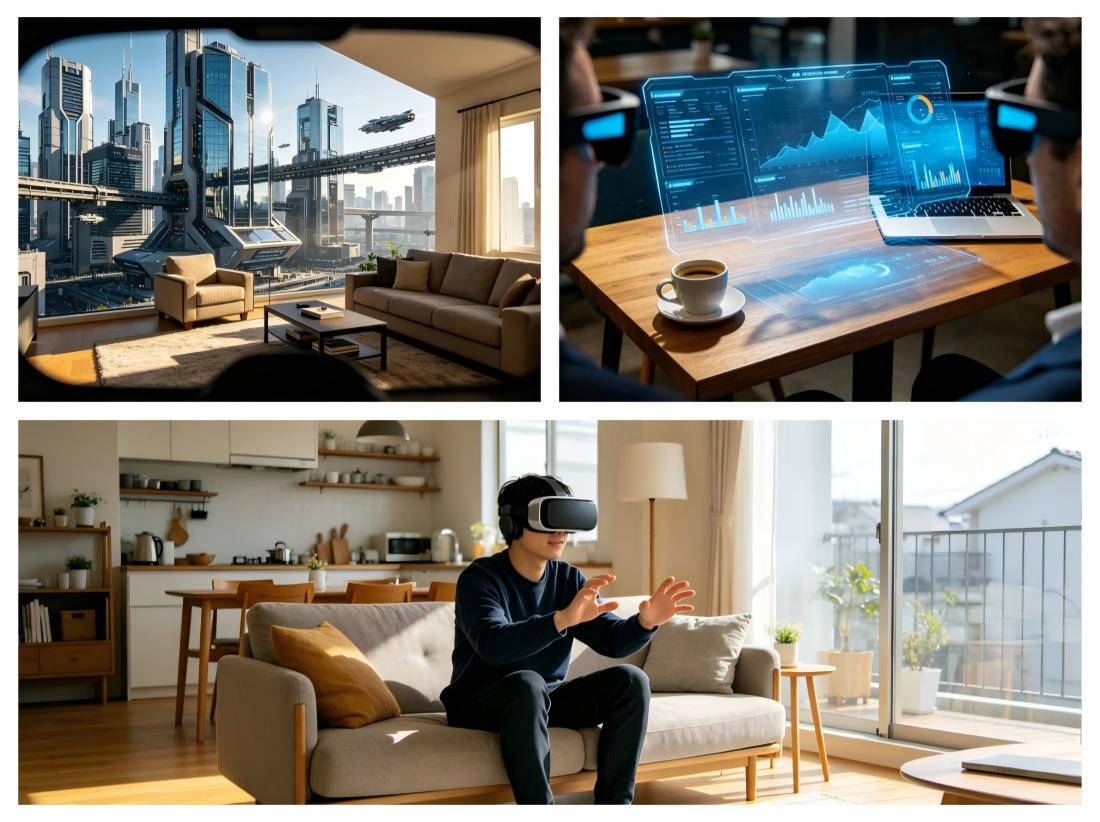
ToF lenses can provide an immersive interactive experience
6.3D face anti-counterfeiting recognition
ToF technology can also be used to construct 3D point cloud models of faces, enabling 3D facial anti-spoofing capabilities; this effectively guards against attacks using photos, videos, or masks, thereby enhancing device security and the accuracy of identity verification.
Furthermore, some advanced ToF systems can track eye movements, distinguishing in detail the contours of the eye sockets and eyelids to enable gaze-based rendering and eye-tracking interaction, allowing game or application interfaces to adjust based on the user’s point of gaze.
In summary, ToF lenses have upgraded the interaction method of AR/VR, transforming the virtual world from “images on a screen” into “spaces that can blend with the real environment,” thus creating a truly immersive experience.
Post time: Sep-21-2026


