
Fisheye stitching technology uses multiple photos with overlapping perspectives taken with a fisheye lens, combined with software algorithms for distortion correction and image stitching, to greatly expand the field of view. It can achieve panoramic coverage or special visual effects in a limited space and has wide and important applications in indoor photography.
Below, let’s take a look at the specific application scenarios of fisheye stitching technology in indoor photography:
1.Real estate and interior space showcase
The fisheye lens’s ultra-wide field of view can capture the entire view of the interior ceiling, floor, walls, and other surfaces from all angles at once. Using fisheye stitching software to generate panoramic images, real estate viewers can freely rotate the view on their mobile phones to view every corner of the room, creating an immersive experience and a great viewing experience.
Ordinary lenses struggle to capture the full view of a small indoor space, but fisheye lenses combined with stitching technology can achieve this. Fisheye lenses can capture the entire interior space at extremely close range. After splicing and correction, they can make a small space look more spacious and transparent, fully showcasing the interior layout.
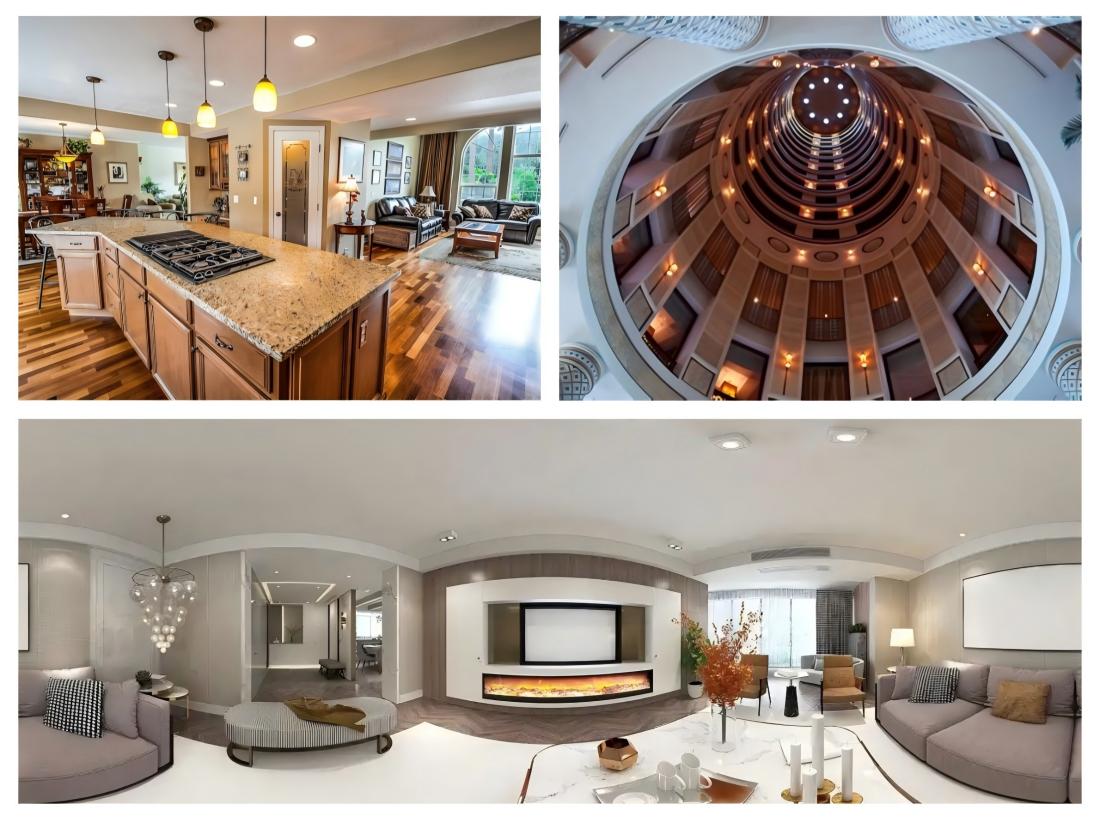
Fisheye splicing technology is often used in interior space displays
2.Commercial space and hotel showcase
In the commercial sector, fisheye stitching is frequently employed to showcase commercial spaces—such as hotels, museums, and exhibition halls—where the objective is to highlight large-scale interior structures and intricate details.
Large conference rooms, hotel banquet halls, or exhibition halls often have huge spaces. Using fisheye stitching technology, a panoramic view can be achieved with fewer images, showcasing the venue’s capacity and overall atmosphere, and helping customers intuitively understand the scale of the hotel’s facilities and the level of its decoration.
3.Architectural and engineering surveying records
Fisheye stitching enables the rapid acquisition of comprehensive indoor spatial data, facilitating floor plan measurements, area calculations, structural inspections, and renovation assessments—a process significantly more efficient than traditional surveying methods.
Within construction sites or renovation zones, engineers can utilize fisheye cameras to quickly capture panoramic images, documenting the state of construction at specific points in time to facilitate archiving and progress tracking.
Furthermore, prior to the installation of suspended ceilings or flooring, fisheye panoramas can be used to document concealed infrastructure—such as plumbing routes and electrical wiring layouts—thereby simplifying future maintenance and troubleshooting.
Concurrently, capturing panoramic images of office buildings, shopping malls, and industrial facilities allows for the permanent preservation of the spatial status quo, thereby supporting property maintenance, equipment management, and the collection of evidence for dispute resolution.
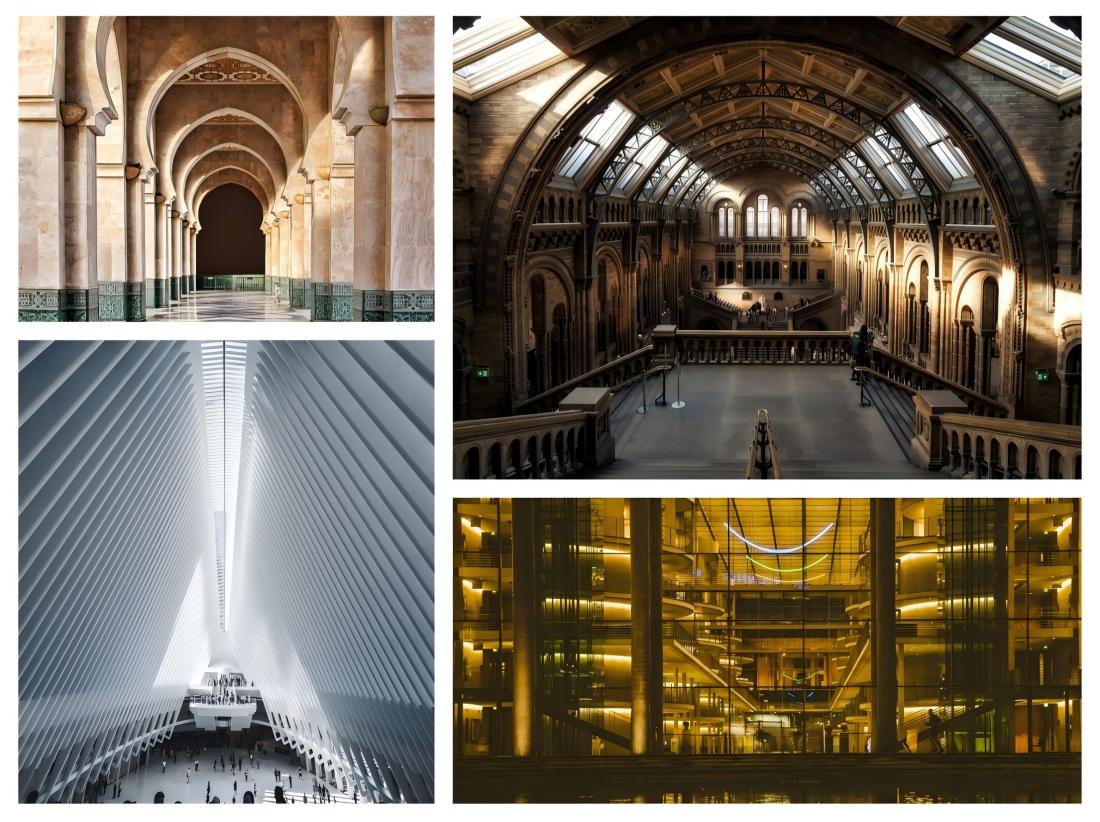
Fisheye stitching technology is frequently used in architectural and engineering surveying and documentation
4.Creative photography and artistic expression
In certain artistic endeavors, the distortion inherent in fisheye lenses is no longer viewed as a drawback, but rather as a powerful tool for creative expression. By harnessing the intense perspective and distortion effects of a fisheye lens—often in conjunction with stitching techniques—photographers can create interior artworks of immense visual tension, accentuating both the spatial depth and geometric aesthetics of a setting.
For example, the distortion of a fisheye lens can bend straight lines in an interior building into curves, creating a surreal and exaggerated visual tension that makes ordinary interior scenes artistic and impactful.
5.Indoor monitoring and security
Fisheye lenses, with their ultra-wide field of view, have become a key component of indoor panoramic surveillance. Particularly in large indoor venues, the stitching together of images from multiple fisheye lenses enables comprehensive, blind-spot-free surveillance coverage of vast interior spaces, thereby enhancing security efficiency.
For example, fisheye splicing technology can be used to build indoor monitoring systems with no blind spots in museums, libraries, or high-end office areas. Furthermore, fisheye stitching can provide high-precision panoramic visual data for robotic navigation or indoor positioning systems, facilitating the construction of 3D indoor models.
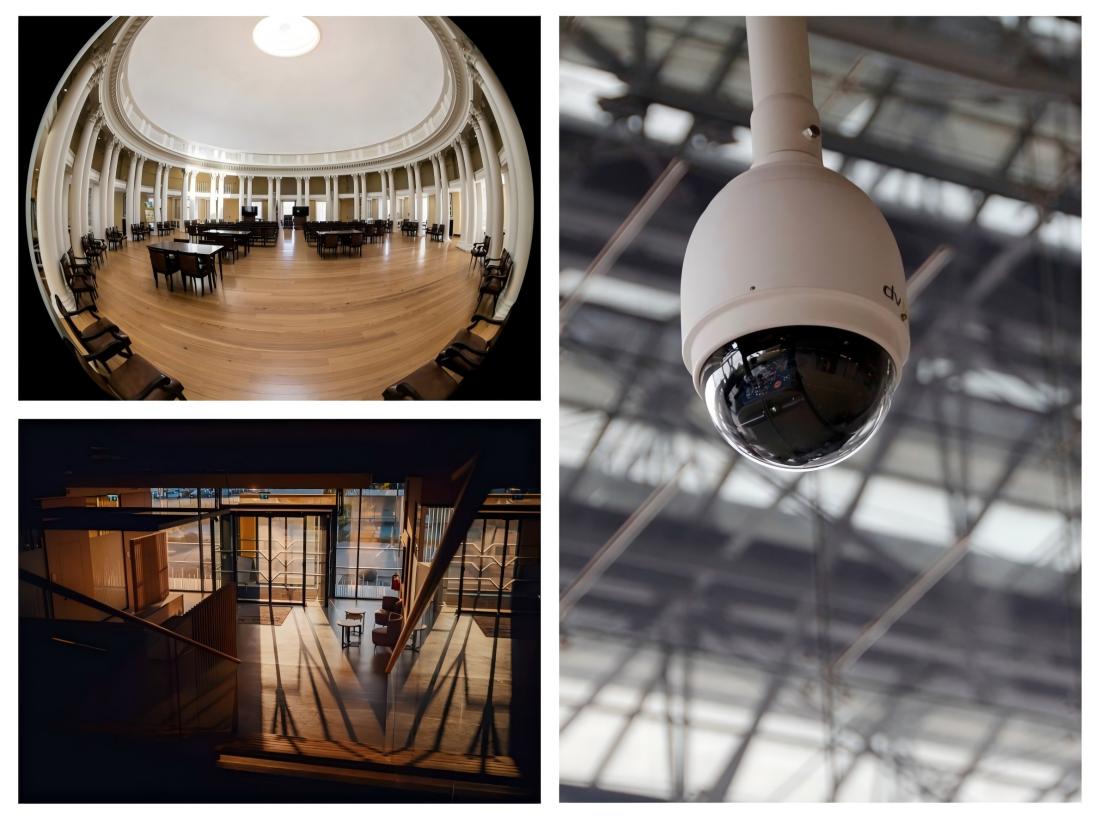
Fisheye splicing technology is also used in indoor monitoring and security
6.Business and event records
Fisheye stitching technology also plays an important role in commercial event photography.
For example, in commercial photography, photographers can use fisheye distortion to highlight the volume of a product or create dramatic advertising visuals; in indoor events such as weddings, press conferences, and concerts, using a fisheye lens can encompass a wider scene and more people in a single photograph, while also capturing the atmosphere of the environment.
In addition, fisheye stitching technology also has key applications in VR shooting. Using fisheye stitching technology to shoot panoramic videos in indoor environments for VR device viewing provides users with an immersive experience, and is often used in education, training and entertainment fields.
In summary, fisheye stitching serves as both a documentary tool and a creative medium in interior photography; its core value lies in transcending spatial constraints and enhancing visual immersion. Whether for commercial shoots prioritizing realism or artistic endeavors exploring aesthetics, the judicious application of fisheye stitching can imbue interior imagery with an entirely new level of expressive power.
Post time: Jun-30-2026


