
A fisheye lens is a specialized type of wide-angle lens designed with a pronounced spherical curvature—resembling the spherical crystalline lens of a fish’s eye—and an image plane positioned closer to the lens elements, mimicking the short distance between a fish’s lens and its retina.
Fisheye lenses have a field of view that can approach or exceed 180 degrees. Due to the extremely large field of view, the distortion is also very large. Generally, straight lines around the edges of the image will be bent, while only straight lines in the center of the lens can maintain their original state.
The principle and function of a fisheye lens
Fisheye lenses achieve their distinctive effect by utilizing very short focal lengths and highly curved lens elements. It typically consists of multiple lenses, each with a large curvature, allowing light to enter from various angles and be projected onto the photographic film or image sensor.
Because they capture a field of view that exceeds that of the human eye, fisheye lenses can dramatically expand the visible scope of a scene.
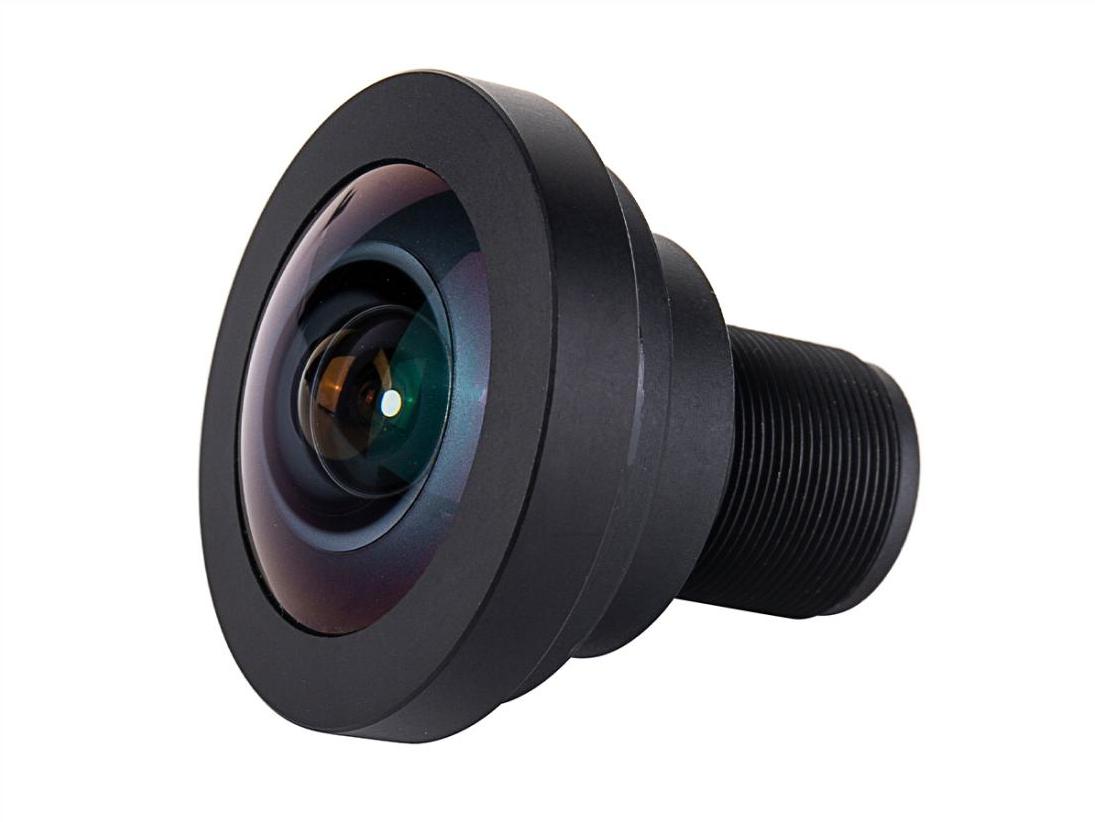
The principle and function of a fisheye lens
The biggest function of a fisheye lens is its wide field of view, typically reaching 220° or 230°, which allows for close-up shooting of large-scale scenes.
When shooting close to the subject, a fisheye lens can create a very strong perspective effect, emphasizing the contrast between near and far objects, giving the captured image a powerful and moving impact.
Fisheye lenses also have a considerable depth of field, which is beneficial for expressing the effect of a long depth of field in photographs.
Fisheye lenses produce two types of images: one that fills the entire frame—much like standard lenses—and another that appears as a circle.
Regardless of the imaging method, images captured with a fisheye lens exhibit significant distortion and a strong sense of convergence of perspective.
Consequently, they are often used for special effects; for instance, an arm extended toward the lens will appear twice its actual length.
Fisheye lenses have many uses. Due to their wide field of view, they can capture more scenes and adapt to shooting needs in many confined spaces.
With the popularization of digitalization, fisheye lenses have made it very convenient to achieve a 360° surround view effect, and they are also more convenient to use than ordinary lenses.

Imaging characteristics of fisheye lenses
It should be noted that while fisheye lenses have a significant advantage in expanding the field of view, they also bring some problems. For example, it exhibits noticeable distortion at the edges of the image, and the distortion effect may not conform to the shape of the actual scene.
Therefore, when using a fisheye lens for photography or videography, one must carefully manage the use of this distinctive effect to achieve the desired image quality.
Tips for using fisheye lenses
There are also some techniques to keep in mind when using a fisheye lens:
1.Pay attention to the shooting distance
Shooting at close range accentuates the distortion effect of a fisheye lens—the closer you are, the more pronounced the effect becomes; shooting from a standard distance fails to produce that exaggerated, warped look.
In portrait photography, getting closer creates a more distinct “big-head” (or “bobblehead”) effect. Beyond portraits of people or animals, this technique can also be applied to still-life photography to add a touch of fun.
2.Be careful to keep it level
This is particularly important when shooting landscapes, as the distortion inherent in fisheye lenses can make it difficult to judge alignment by eye, requiring extra care. If the photo is not taken at a level position, the imbalance effect will be very obvious.
Additionally, when photographing skyscrapers, shooting from a low angle looking upwards is a common technique; this allows you to capture the entire building in the frame, creating a more spectacular image.
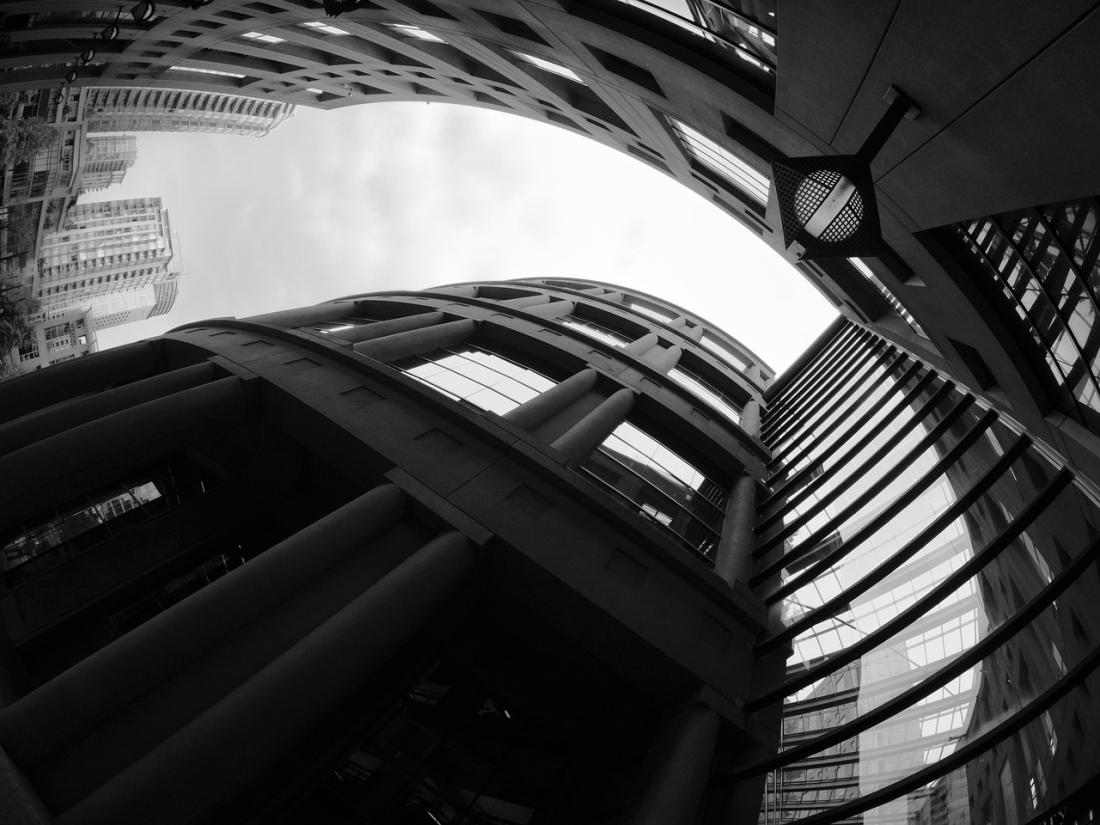
Fisheye lenses can be used to shoot buildings from a low angle
3.Focus on highlighting the subject
The center of a fisheye lens captures the brightest and sharpest part of the image; therefore, to accentuate the fisheye effect, you should position your subject as close to the center as possible.
When composing the shot, aim to emphasize the main subject and avoid crowding the frame with too many elements. An overly cluttered composition can be visually overwhelming, obscuring the theme and causing the image to lose its focal point.
Additionally, since fisheye lenses distort subjects—particularly in portrait photography—you can direct your subject to strike unique poses to further exaggerate the effect.
4.Be mindful of distortion
Fisheye lenses distort images at the edges of the frame. When shooting portraits, the subject should be placed as close to the center of the frame as possible, rather than on the side, otherwise it will not look human.
Therefore, when shooting with a fisheye lens, the subject should be placed in the center of the photo; otherwise, distortion is likely to occur. For example, if the subject is placed on either side of the image, their body will become disproportionate.
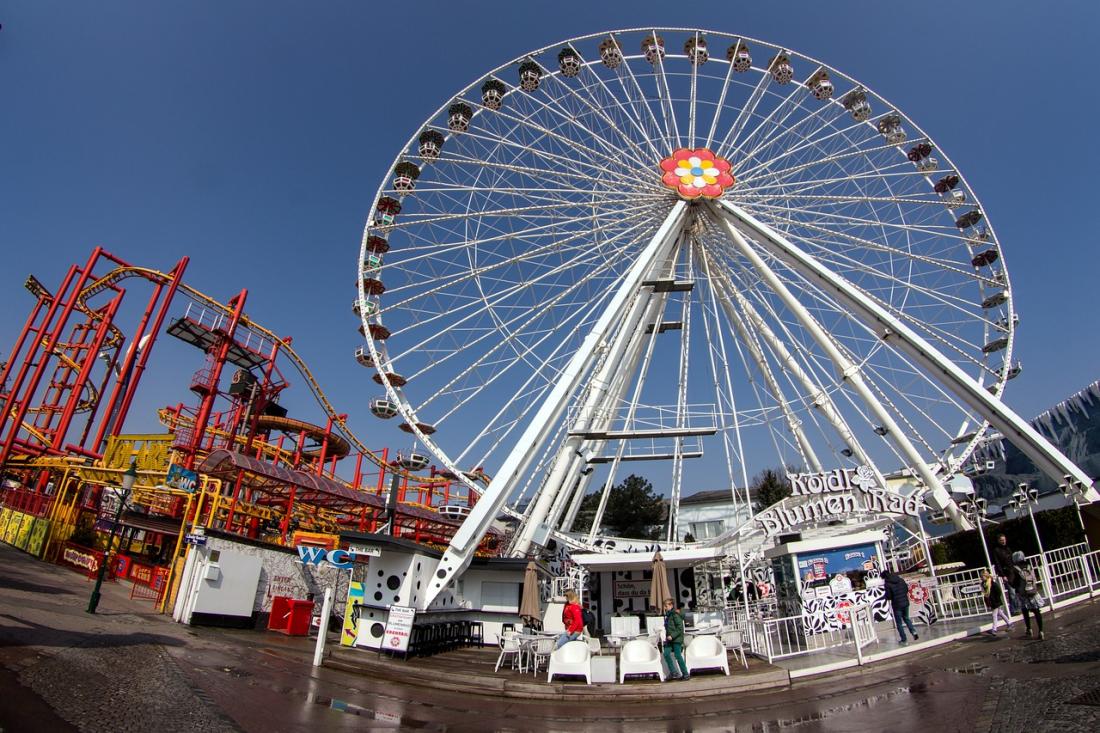
Avoid distortion when shooting with a fisheye lens
5.Pay attention to the foreground and background
Since fisheye lenses capture a wide view of both, you need to balance them when composing your shot. Try placing interesting foreground elements close to the camera while ensuring the background elements are also visually compelling.
6.Pay attention to post-processing
The curvature and distortion effects of a fisheye lens may sometimes require correction during post-processing. Using image editing software allows you to adjust the distortion or crop the photo to achieve a more desirable result.
Post time: Nov-06-2026


