
Iris recognition technology primarily achieves identity verification by capturing the unique texture features of the human iris, offering advantages such as high accuracy, uniqueness, non-contact operation, and resistance to interference. Iris recognition lenses are mainly used in electronic devices for identity verification and data security. Although not yet widely adopted, it is expected to become one of the important directions for future development.
1.Application of iris recognition lenses in mobile phones
(1)Unlock phone screen
Iris recognition lenses can be used for unlocking mobile phones. They identify the user by scanning their iris image, thus unlocking the phone and improving security and convenience. The main working principle is as follows: The phone’s front-facing camera is equipped with an iris recognition lens. When the user looks at the screen, the lens emits infrared light (avoiding the harmful effects of visible light on the eyes), capturing the iris pattern and matching it with pre-stored data.
Because iris textures are stable throughout life and difficult to replicate, iris recognition is more secure than fingerprint recognition, especially suitable for scenarios where fingerprints are inconvenient, such as when hands are wet or gloves are on.

Iris recognition lenses are commonly used for unlocking mobile phone screens
(2)Encrypt files or applications
Users can set iris locks on photos, videos, private documents, or sensitive applications (such as photo albums, chat software, banking apps, etc.) on their phones to prevent privacy leaks. Users can quickly unlock their phones simply by looking at the lens, without needing to remember passwords, making it both secure and convenient.
(3)Secure payment and financial verification
Iris recognition lenses can be used for identity authentication and transaction verification in mobile banking transfers and mobile payments (such as Alipay and WeChat Pay), replacing password or fingerprint verification. The uniqueness of iris features reduces the risk of fraudulent transactions and ensures financial-grade security.
In addition, some mobile phones use iris recognition to optimize the camera’s focusing function, thereby improving the clarity of portrait photos taken with the phone.
2.Application of iris recognition lenses in computers
(1)System login verification
Iris recognition can replace traditional login passwords for quick identity verification when powering on or waking up a computer. This feature is already implemented in some business computers, providing better security for office data.

Iris recognition cameras are commonly used for computer system login verification
(2)Enterprise-level data protection
Users can enable iris encryption for sensitive files (such as financial statements and code documents) or specialized software on their computers to prevent unauthorized access. Iris verification is required when accessing the company intranet, VPN, or confidential files to prevent account theft. This feature is commonly found in computers used in the government, healthcare, and financial industries, primarily to protect sensitive data.
(3)Remote work security protection
In remote work, such as when using a VPN, the authenticity of the remote connection can be ensured; similarly, before a video conference, the software can verify the identity of the participant through iris recognition to prevent others from impersonating the account to access confidential meetings.
3.Applications of iris recognition lenses in other electronic devices
(1)Smart home control
In smart home applications, iris recognition can be used to authorize smart door locks, home security systems, or voice assistants, thus protecting home safety.
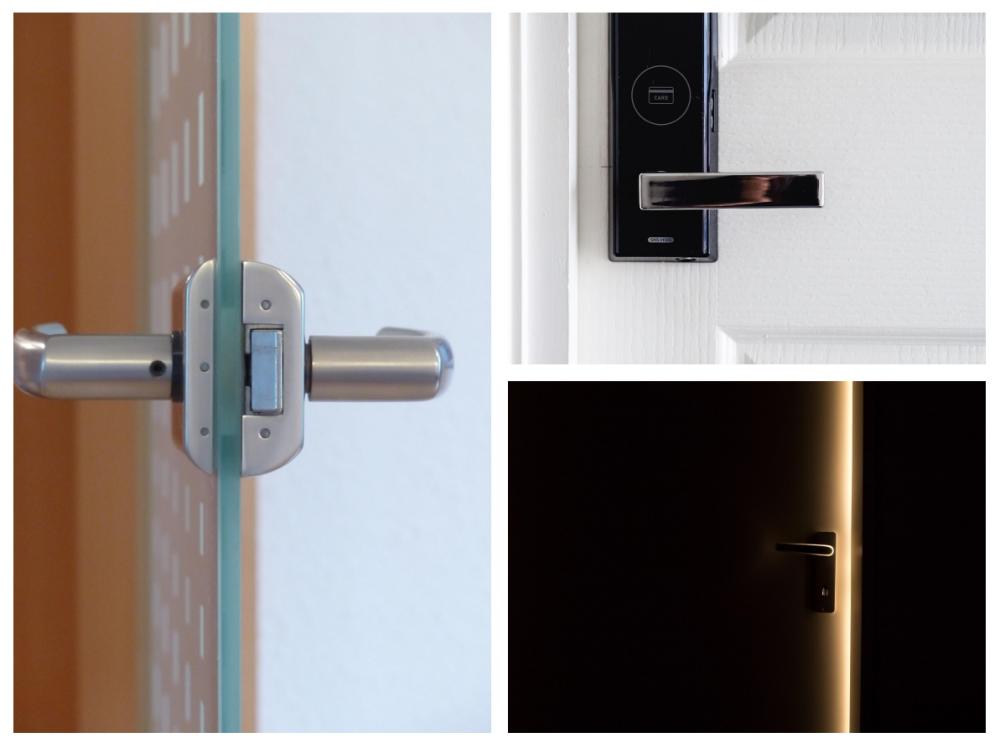
Iris recognition cameras are also used in smart home devices
(2)Medical device validation
In medical device systems, iris recognition can be used to verify patient identity and prevent medical errors. Hospital electronic medical record systems can also use iris recognition to ensure the legitimacy of doctors’ identities.
(3)AR/VR device applications
In AR/VR devices, combining iris recognition can enable user identity switching or personalized content delivery.
As shown above, the application of iris recognition lenses in electronic devices such as mobile phones and computers is mainly based on security considerations, such as payment and encryption. Compared with other biometric technologies, it is more secure and reliable, but it also has higher costs and technical requirements. Currently, it is mostly used in high-end devices and has not yet become widespread in the market. With the development and maturation of the technology, it may see further expansion of applications in the future.
Final Thoughts:
By working with professionals at ChuangAn, both design and manufacturing are handled by highly skilled engineers. As part of the purchasing process, a company representative can explain in more detail specific information about the type of lens you wish to purchase. ChuangAn’s series of lens products are used in a wide range of applications, from surveillance, scanning, drones, cars to smart homes, etc. ChuangAn has various types of finished lenses, which can also be modified or customized according to your needs. Contact us as soon as possible.
Post time: Dec-05-2025


