
Short focal length lenses have a wide field of view and a large depth of field, which can produce a strong perspective distortion effect. They are very suitable for shooting extreme sports that need to show the atmosphere and dynamic tension of the environment, making the action look more intense and the environment more grand.
Ⅰ.Extreme sports suitable for shooting with short focal length lenses
Here are some extreme sports that are perfect for shooting with a short focal length lens:
1.Skateboard/Rollerblading
Extreme sports such as skateboarding are typically performed in compact settings—including streets, skate parks, and bowls—allowing photographers to shoot from close range and low angles while tracking the athletes.
The perspective distortion effect of a short focal length lens can exaggerate the height of the jump, the posture of the board, and the power of the athlete, while also including the curves of the field, the railings, the crowd of onlookers, etc., in the picture, creating a strong sense of atmosphere.
2.Parkour/Free Running
Parkour typically involves navigating through dense urban obstacles—such as buildings, staircases, and railings—emphasizing the dynamic interaction between the individual and the urban environment.
A short focal length lens allows for the simultaneous capture of the athlete’s facial expressions, physical movements, and the surrounding architectural context from an extremely close distance; this approach not only accommodates the complex urban backdrop but also accentuates the athlete’s sense of power, effectively conveying both the spatial depth of the architecture and the fluidity of the movement.
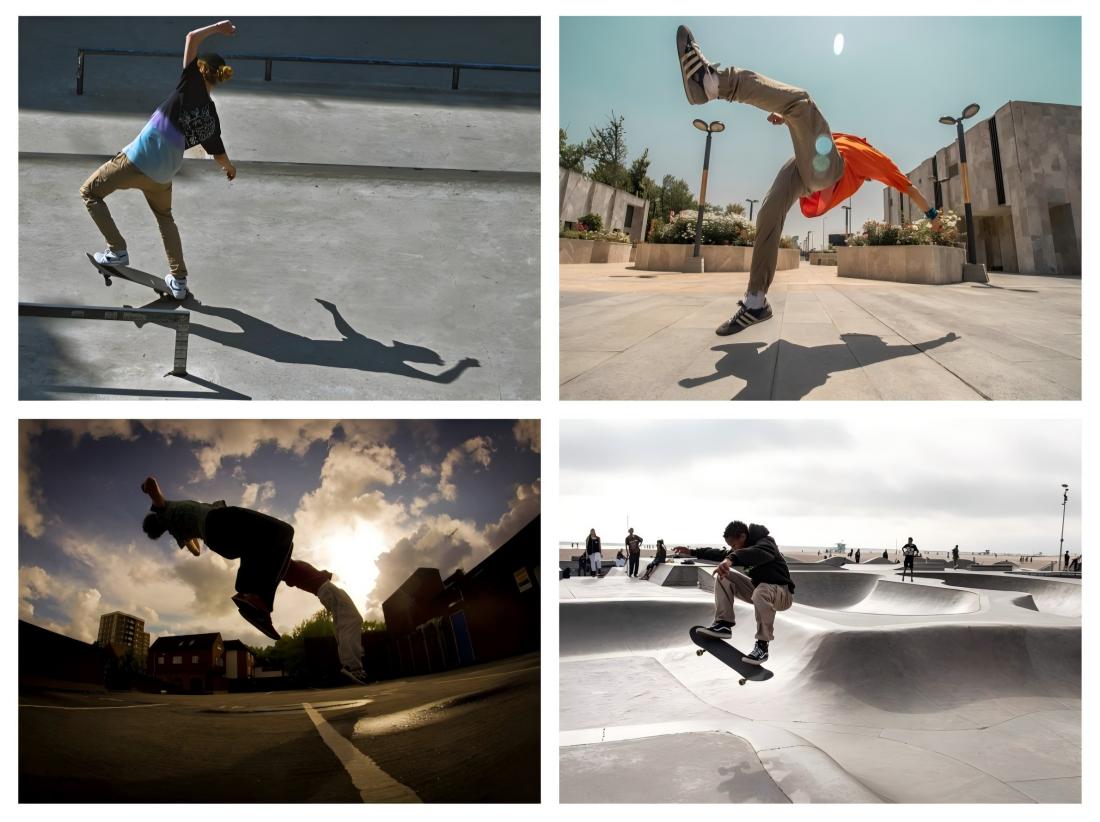
Short focal length lenses are often used to photograph sports such as skateboarding and parkour
3.BMX/Extreme cycling
BMX bikes feature a compact frame structure, facilitating movements of great amplitude within confined spaces—such as U-ramps, dirt mounds, and street obstacles. Consequently, riders are frequently required to execute dramatic aerial maneuvers and spins.
By positioning a short focal length lens right at the edge of a ramp or beneath a jump platform, the wide-angle perspective creates a sense of spatial distortion that accentuates the sheer height and velocity of the rider the instant they leave the ground; this technique emphasizes their raw power and vividly captures the dynamic synergy between rider and machine.
4.Rock climbing/Bouldering
Although rock climbing is not a high-speed sport, its scenes usually have a large vertical space, making it suitable for short-focus, close-up shooting from below.
Using a short focal length lens to shoot from the bottom up can capture the athlete’s entire body, the texture of the rock face, and protective gear at the same time.
The low angle can exaggerate the steepness of the rock face, show the climber’s physical tension and the proportion of the environment, and create a tense atmosphere. In indoor spaces like bouldering gyms, using a short focal length lens allows you to capture the entire climbing route and dynamics without having to step back far.
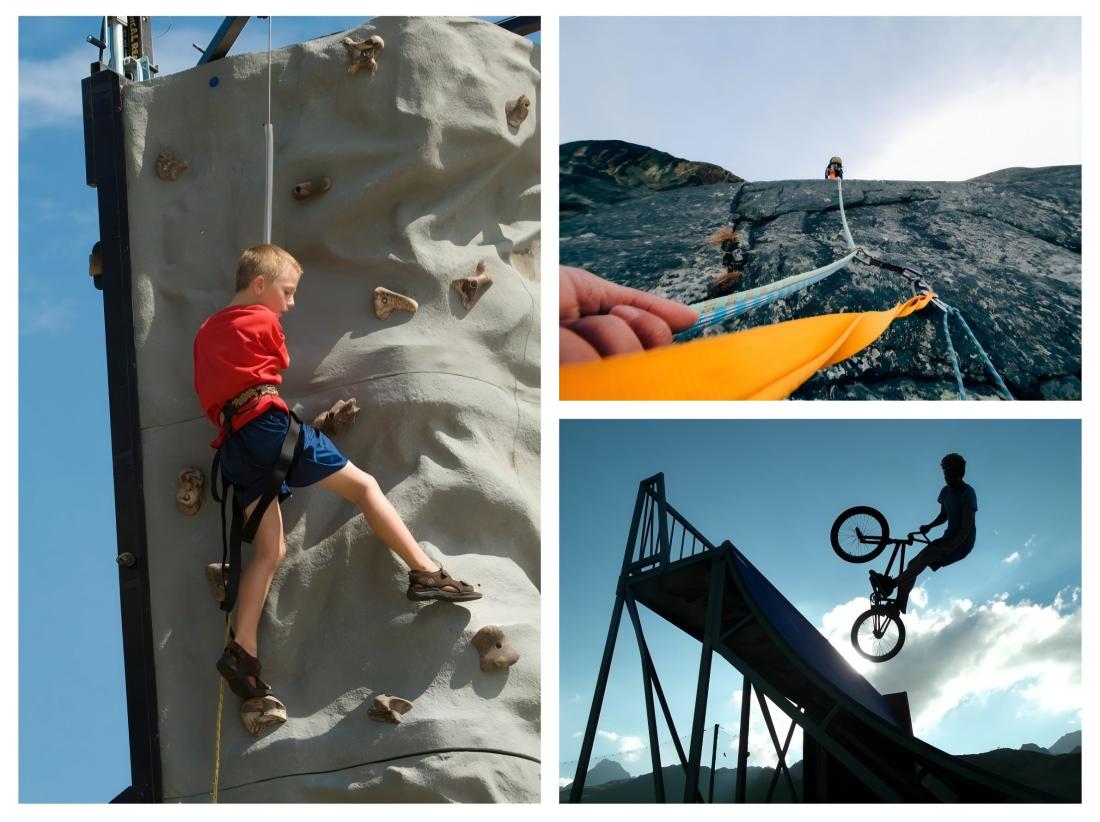
Short focal length lenses are also suitable for rock climbing photography
5.Skiing/Snowboarding
The ski resort’s jumps, halfpipes, and equipment areas are concentrated in one space, allowing for low-angle shots from the edge of the slopes with a short focal length lens. Perspective distortion can be used to enhance the snow fog created by the skis and the athletes’ aerial postures.
The wide-angle capability of a short focal length lens can capture both the athlete’s movements and the magnificent snow-capped mountain background. Low-angle shooting can enhance the sense of speed and height, making it especially suitable for shooting large scenes with multiple people in the same frame or combining the environment with people.
6.Surfing/Water extreme sports
When photographing extreme water sports such as surfing, photographers can venture into shallow areas—positioning themselves along the shoreline or amidst the reefs—to shoot close to the water’s surface using short focal length lenses.
This approach allows them to capture the athletes’ postures within the barrel of the wave, while simultaneously showcasing the expansive backdrop of the surfer, the spray, the sky, and the horizon, thereby conveying the majestic power of the ocean.
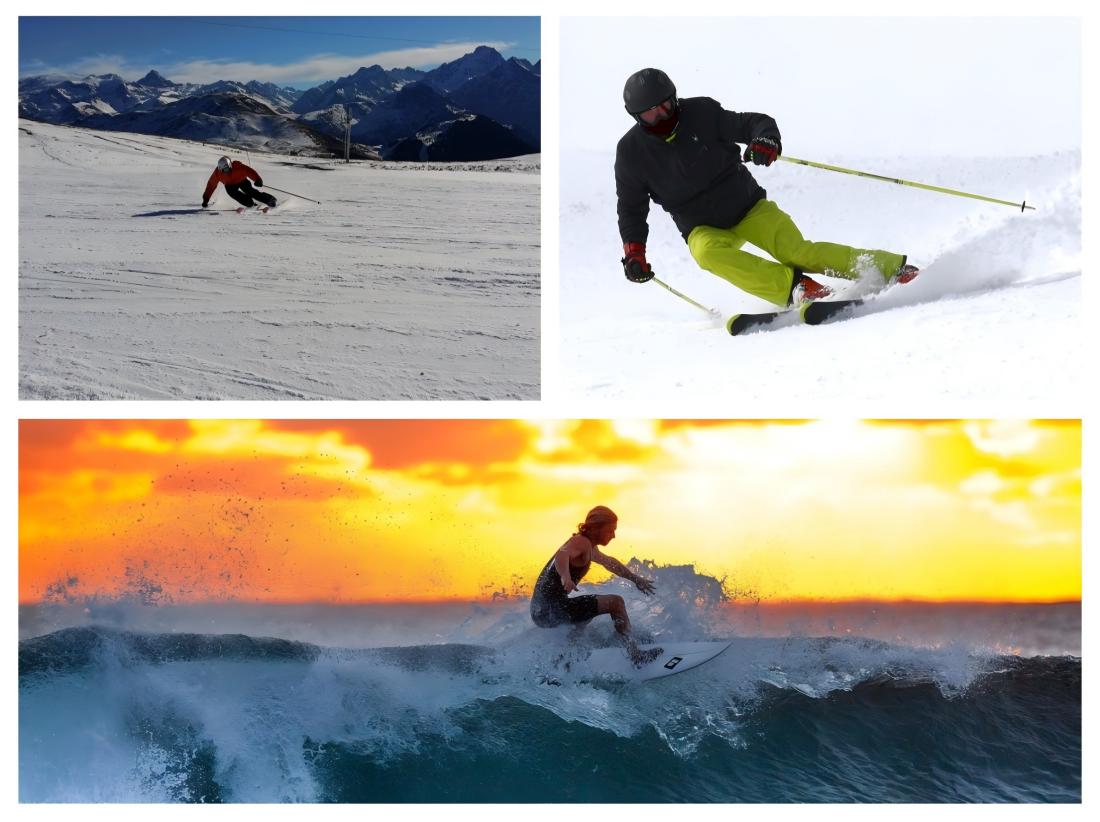
Short focal length lenses are also commonly used for shooting sports such as surfing
7.Skydiving/Air extreme sports
When shooting extreme aerial sports such as skydiving, photographers need to maintain a safe distance when athletes jump from airplanes or freefall. However, the wide-angle characteristics of short focal length lenses can capture the full-body posture of athletes in the air and include a wide sky or ground landscape to create a visual impact. For example, a short focal length lens can capture the stunning contrast between skydivers and mountains and valleys.
In summary, the wide field of view offered by short focal length lenses allows for close-range shooting, producing an exaggerated perspective effect—where nearby objects appear larger and distant ones smaller—that lends greater impact to an athlete’s movements and generates heightened visual tension when photographing extreme sports.
Ⅱ.Techniques for shooting extreme sports with a short focal length lens
When filming extreme sports with a short focal length lens, in addition to selecting the right discipline, you also need to master several key techniques:
1.Shoot from a low angle
Shooting from a low angle is a classic technique. The photographer lies flat on the ground—or positions the camera right at ground level—to shoot upwards. This utilizes the perspective distortion of a short focal length lens to make the athlete appear taller, and the jumping motions look higher and more powerful, while also using a simple sky as a background to highlight the subject.
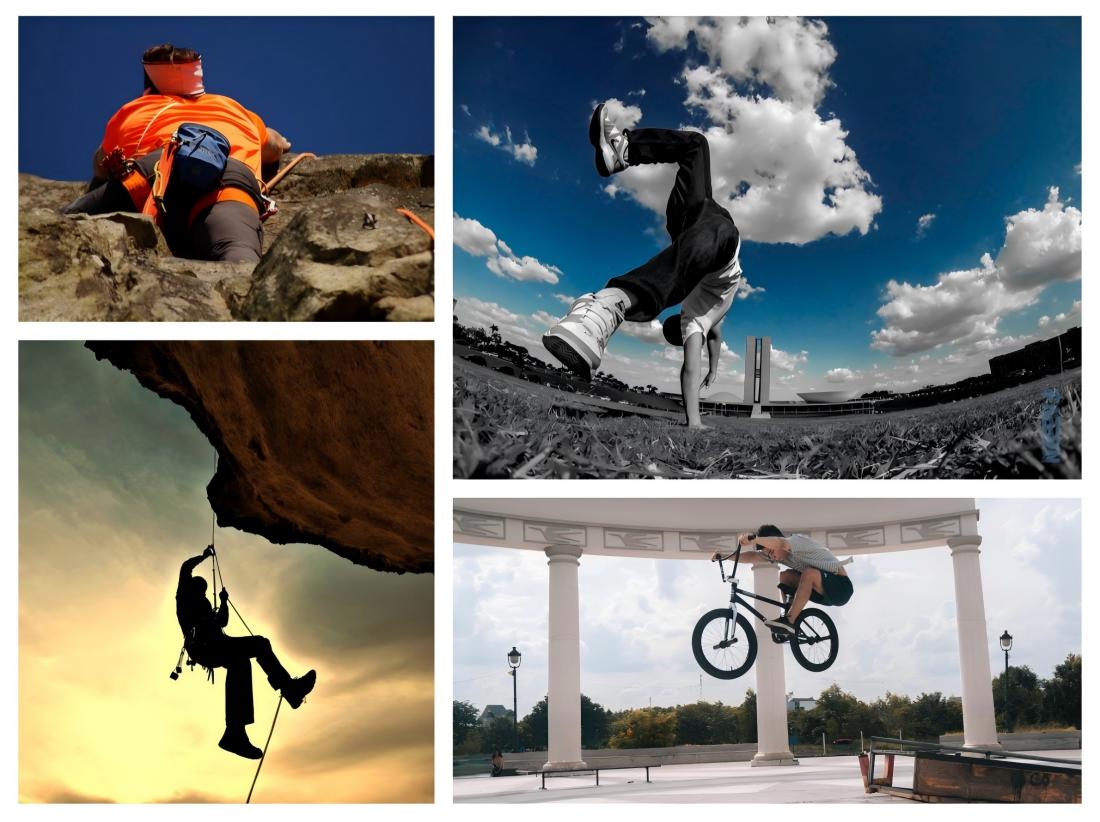
Short focal length lenses can be used to shoot from a low angle upwards
2.Shoot close to the subject
When using a short focal length lens, you must get close to the subject to shoot. If you stand far away, the portrait taken with a short focal length lens will be very small and the image will look empty.
Only by boldly moving in close to the subject can you harness the perspective distortion inherent to wide-angle lenses to create a powerful visual impact—emphasizing the “larger-when-near, smaller-when-far” effect—and thereby enhance the sense of spatial depth.
3.Pay attention to controlling distortion
The distortion characteristics of short focal length lenses are a double-edged sword. If this characteristic can be controlled and utilized well, there is an opportunity to create dramatic effects and increase the sense of speed and tension in motion.
When shooting, it is crucial to position the subject in the center of the frame to prevent excessive distortion at the edges. In particular, avoid framing the shot too tightly on the face; instead, prioritize utilizing the distortion to accentuate the subject’s limbs and movement trajectories.
4.Use shutter priority mode
Using shutter priority mode and setting the shutter speed to 1/500 second or faster can clearly capture exciting moments such as athletes taking off and turning. Using continuous shooting mode ensures that key moments are captured.
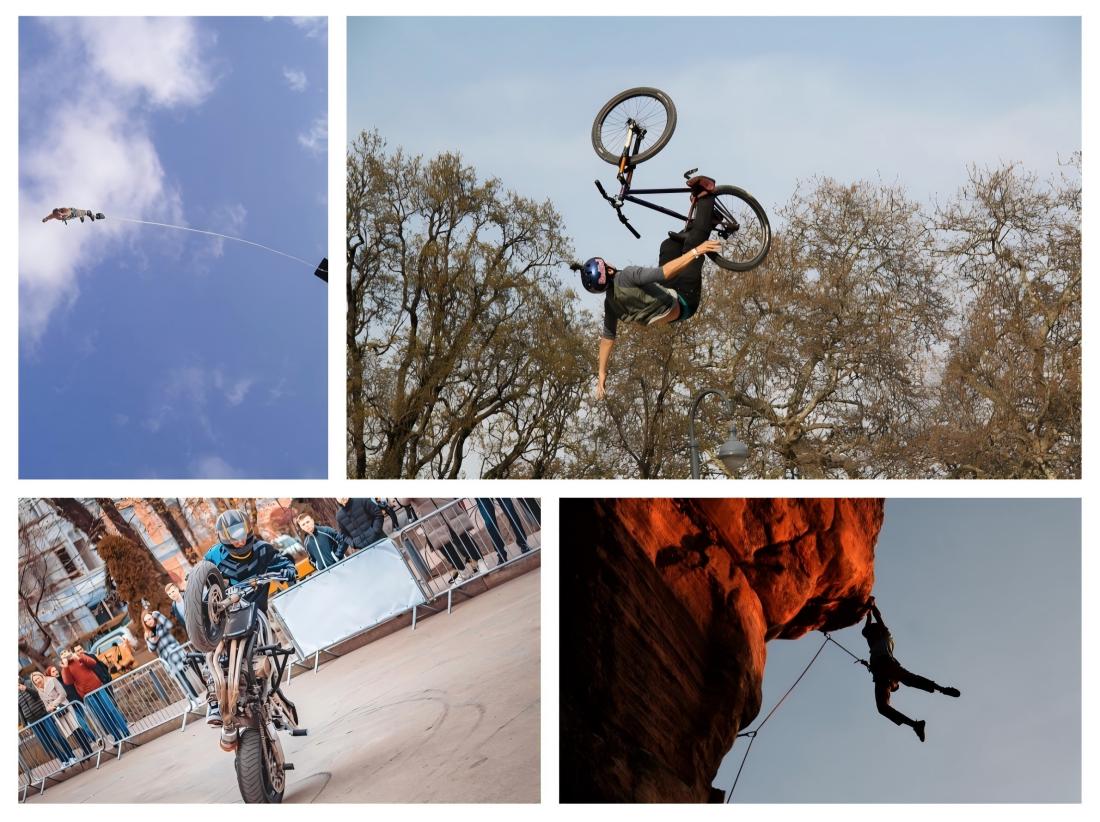
When using a short focal length lens, be sure to get close to the subject and control distortion
5.Explain the environment
The advantage of short focal length lenses is their wide field of view. When shooting, be careful not to focus solely on the subjects; instead, incorporate the surrounding atmosphere and environment—such as cheering crowds, rugged mountain peaks, surging waves, or city streets—into the frame to tell a more complete story.
Furthermore, special attention is required: short focal length lenses place extremely high demands on a photographer’s nerve and positioning. It is imperative to conduct shooting only after ensuring the safety of both yourself and the athletes.
Post time: Jul-10-2026


