
As a key component of security monitoring systems, the performance of CCTV lenses directly affects the monitoring effect, and their performance is mainly influenced by core parameters. Therefore, understanding the parameters of CCTV lenses is essential.
1.Analysis of key parameters of CCTV lenses
(1)Focal length
Focal length is one of the core parameters of a lens, determining the size of the field of view, that is, the angle of view and magnification of the monitored image. Generally, the smaller the focal length, the larger the field of view (wide-angle), and the closer the monitoring distance, suitable for observing wide scenes at close range, such as entrances and exits; the larger the focal length, the smaller the field of view (telephoto), and the farther the monitoring distance, suitable for observing close-up shots at a distance.
Generally, CCTV lenses offer two focal length options: fixed focal length (fixed focal length lens) and variable focal length (zoom lens). Different focal length types are suitable for different application scenarios. For example, fixed focal length lenses have a fixed focal length and a fixed field of view, making them suitable for daily monitoring in fixed scenarios.
(2)Aperture
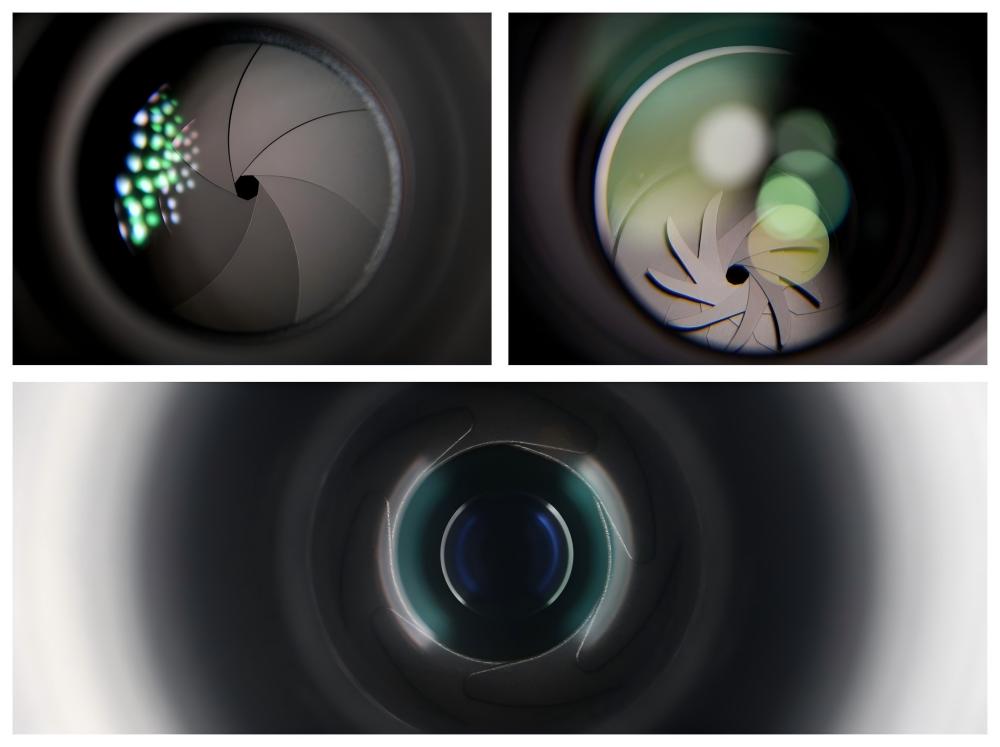
The size of a lens aperture affects the amount of light passing through it. A large aperture allows more light, making it suitable for low-light environments but resulting in a shallow depth of field. A small aperture allows less light, resulting in a large depth of field, suitable for bright light or scenes requiring overall sharpness.
Aperture can also be selected manually or automatically. Manual aperture is generally suitable for stable lighting conditions (indoor environments), while automatic aperture is suitable for scenes with frequently changing lighting (outdoor environments).
Aperture size affects pass rate
(3)Sensor size
The sensor size of the lens, such as 1/1.8″ or 1/2.7″, needs to match the sensor size of the camera to avoid imaging problems that could compromise the quality of surveillance.
(4)Field of view
The field of view is also an important parameter of security monitoring lenses, determining the field of view range that the lens can cover. It is divided into horizontal, vertical and diagonal field of view angles. The field of view is usually inversely proportional to the focal length; the larger the focal length, the smaller the field of view. For the same focal length, the larger the sensor size, the larger the field of view.
(5)Resolution
The resolution of a lens determines the sharpness of the image. Under normal circumstances, the resolution of the lens needs to match the resolution of the camera sensor. High-resolution lenses can provide clearer images and videos, suitable for scenarios requiring high-precision monitoring; while low-resolution lenses may result in blurry high-definition images.
(6)Mount type
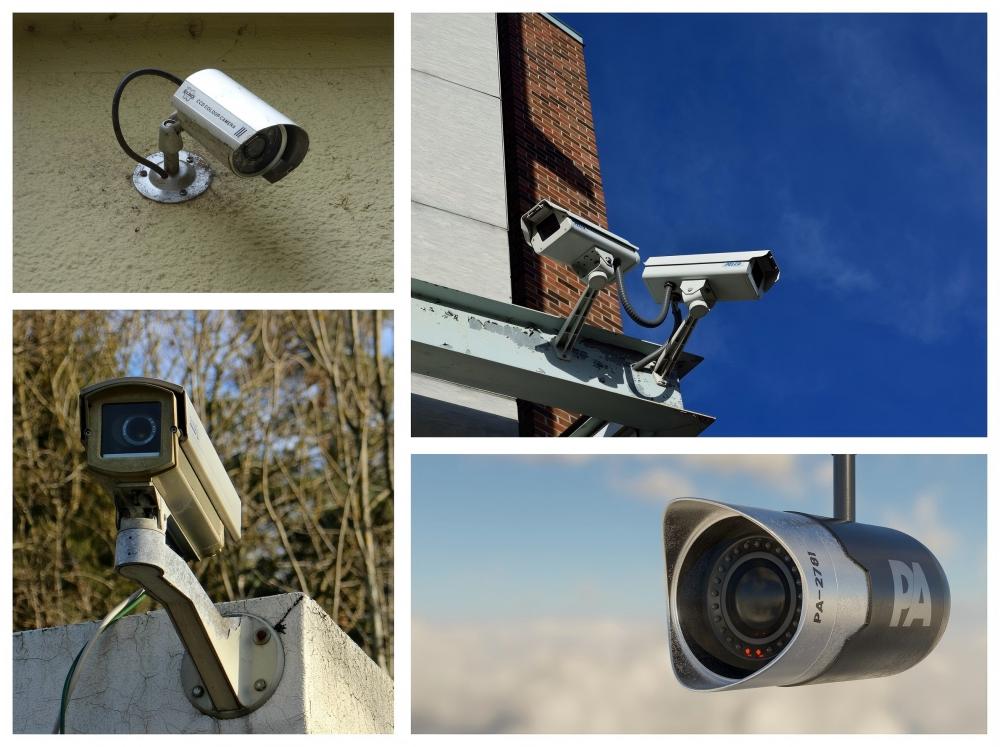
CCTV lenses mainly come in C-mount, CS-mount, and M12-mount. It is important to note that the selected lens mount type must be consistent with the camera’s mount type.
CCTV lenses have various mount types
2.Key considerations for selecting CCTV lenses
The selection of CCTV lenses needs to take into account factors such as the monitoring target, system requirements, and environmental conditions, and should follow these key points:
(1)Select based on the situation of the monitoring target
When selecting CCTV lenses, factors such as the distance and location of the target need to be considered. Choosing an appropriate focal length ensures the integrity of the monitored area. For example, lenses used for road monitoring require a longer focal length, while lenses used for production line monitoring require a shorter focal length.
(2)Select based on the lighting conditions of the monitored area
The lighting conditions in the monitored area greatly influence lens selection. In environments with a fixed light source or little change in light, such as indoor environments, a manual aperture lens is generally suitable. In outdoor environments with significant light variations, an automatic aperture lens is preferable. For low-light environments with weak light, a lens with a larger aperture is recommended; for strong light environments, a lens with a smaller aperture is preferable.
(3)Select according to the relevant dimensions of the camera
The selected lens sensor size, resolution, and other parameters need to match the camera’s sensor size. For example, a camera with a 1/2 inch sensor should be matched with a lens with a 1/2 inch sensor, and a camera with 4K pixels needs to be matched with a lens with 8 megapixels or more.
(4)Choose according to the suitability of the usage environment
The selection of CCTV lenses also needs to be based on the usage environment to ensure that the lens can adapt to the requirements of the environment. For example, lenses used in highways, mountainous areas, etc., need to be selected that can penetrate fog; lenses used outdoors or in high-risk areas need to be selected with high protection levels such as waterproof and dustproof, and may also require a vandal-proof housing.

Select CCTV lenses based on their suitability for the usage environment
(5)Select according to installation and maintenance conditions
CCTV lenses can also be selected based on the installation situation. For example, fixed-focus lenses are chosen for fixed installation in a certain location because they offer high stability and low cost. For lenses used in transportation hubs that require remote control in conjunction with PTZ cameras, motorized zoom lenses are generally recommended because they offer more flexible remote control.
3.Typical application scenarios of CCTV lenses
CCTV lenses have a wide range of applications, covering public safety, transportation, industry, commerce, and many other fields. Below are some typical application scenarios:
(1)Indoor key area monitoring
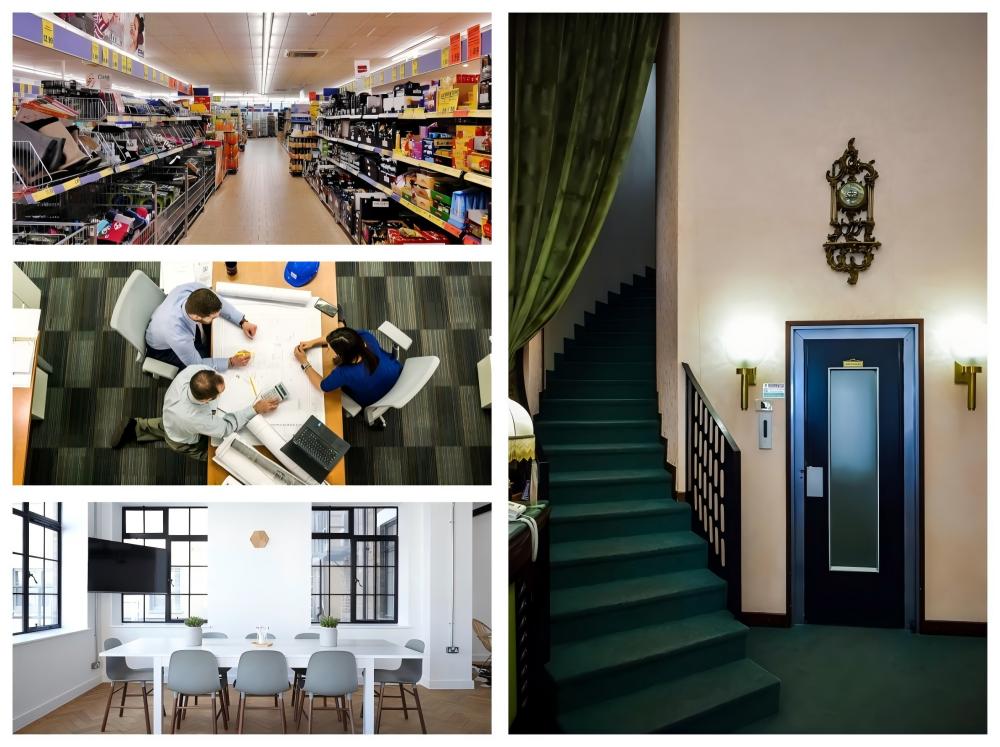
CCTV lenses are commonly used for indoor monitoring. The choice of lens varies depending on the specific needs of different indoor areas. For example, in indoor environments such as offices and conference rooms, where blind-spot-free monitoring is required while also protecting privacy, wide-angle lenses are typically chosen to capture clear images with a large field of view. Installation should also consider concealment and aesthetics. For larger indoor areas such as shops and supermarkets, where monitoring needs to cover key areas like cash registers, shelves, and aisles, and also requires motion detection and tracking of personnel, high-resolution, large-aperture, wide-angle fixed-focus lenses are usually chosen to ensure no blind spots. For monitoring confined indoor spaces such as elevators and staircases, ultra-wide-angle fisheye lenses are typically used for panoramic monitoring to ensure comprehensive coverage.
CCTV lenses are commonly used for indoor monitoring
(2)Large public place monitoring
For surveillance in large public places such as train stations, airports, and shopping malls, it is necessary to monitor a large flow of people and identify abnormal situations and emergencies. Wide-angle and zoom lenses are usually used in combination to ensure both wide coverage and the ability to capture details.
(3)Traffic management and monitoring
For traffic management, monitoring needs to cover areas such as normal roads, intersections, and tunnels. It needs to monitor traffic flow, capture violations, and monitor accidents. It usually requires the use of telephoto lenses to ensure long-distance capture. At night or in bad weather conditions, the lenses also need to have infrared correction functions, so there is a great demand for day and night lenses.
(4)Urban security monitoring
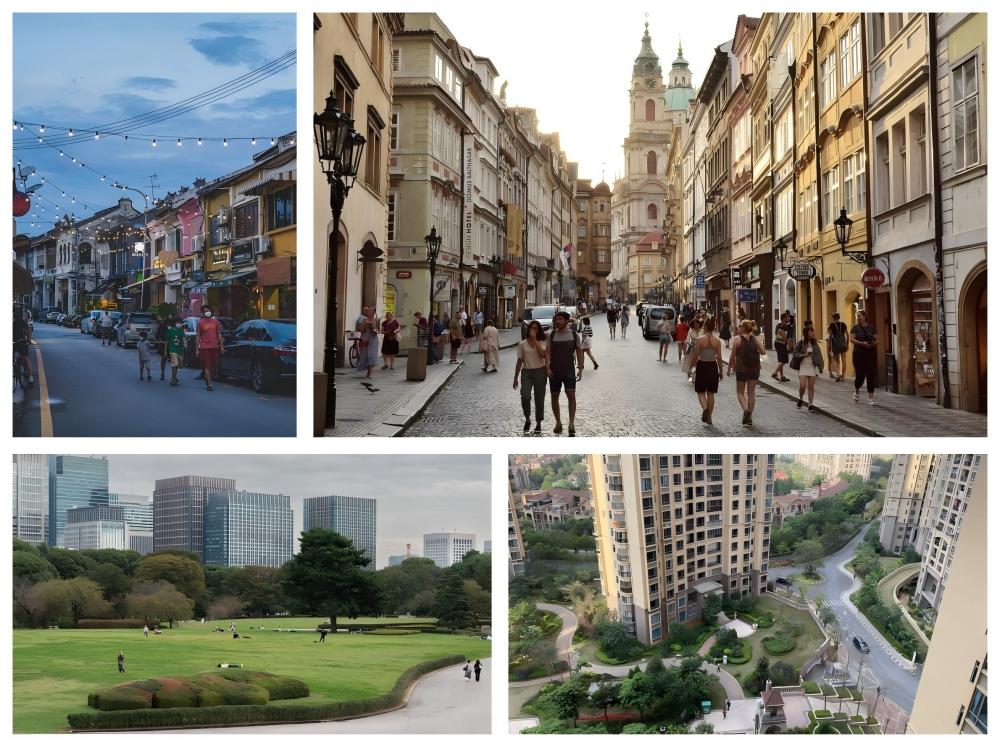
Routine security monitoring in normal cities, including monitoring in common scenarios such as streets, parks, and communities, typically uses lenses capable of 24/7 monitoring, facial recognition, and behavior analysis. Fisheye lenses and lenses with infrared capabilities are commonly used.
CCTV lenses are commonly used for routine urban surveillance
(5)Industrial and production monitoring
In industrial production, CCTV lenses are mainly used to monitor the operating status of production lines and equipment, personnel safety, etc., to improve production efficiency and safety. Different lens types, such as telephoto lenses and zoom lenses, may be selected for different monitoring areas.
(6)Smart home and home security monitoring
More and more families are now using smart home products, such as smart access control and video doorbells, and they are also installing surveillance cameras inside their homes. These home surveillance cameras typically use pinhole lenses, fixed-focus lenses, and other types of lenses.
(7)Special environment monitoring
In some special environments, such as forest fire prevention, border areas, and wildlife reserves, long-distance and all-weather monitoring is required, which typically uses telephoto lenses, infrared lenses, and other lens types.
In conclusion, CCTV lenses are used in almost every aspect of our daily work and life, providing strong protection for social safety and stability. With the development of technology, security monitoring cameras will continue to be upgraded, moving towards becoming more intelligent and multifunctional.
Final Thoughts:
By working with professionals at ChuangAn, both design and manufacturing are handled by highly skilled engineers. As part of the purchasing process, a company representative can explain in more detail specific information about the type of lens you wish to purchase. ChuangAn’s series of lens products are used in a wide range of applications, from surveillance, scanning, drones, cars to smart homes, etc. ChuangAn has various types of finished lenses, which can also be modified or customized according to your needs. Contact us as soon as possible.
Post time: Dec-19-2025


