
Wide angle lenses offer a broad field of view, allowing you to capture a more expansive night sky and intricate details of the Milky Way when photographing the stars. So, how do you choose the right wide angle lens when shooting the starry sky?
Choosing the right wide angle lens requires considering several factors. Let’s take a look at the main influencing factors:
1.Focal length selection
A focal length of 14-24mm is the best focal length for wide-angle lenses to shoot the starry sky. It can capture the entire Milky Way while ensuring the image quality at the edges is clear, making it suitable for shooting panoramic views of the Milky Way and scenes that combine star fields with landscapes.
For example, using a 14mm focal length allows you to photograph a vast sky and capture the full view of the Milky Way, while using a 24mm focal length allows you to capture more of the scene.
2.Aperture selection
When shooting the starry sky, it is best to choose a wide angle lens with the largest possible aperture, as a large aperture has a significant advantage in low-light environments. A wide aperture ensures sufficient light intake, effectively preventing star trails while simultaneously allowing for a lower ISO setting—thereby reducing noise and yielding images with superior clarity and purity.
When shooting the starry sky, it is recommended to choose a maximum aperture of F2.8 or higher. F2.8 is a baseline that is suitable for most scenes, while F1.4-1.8 is the best and is suitable for low-light environments.
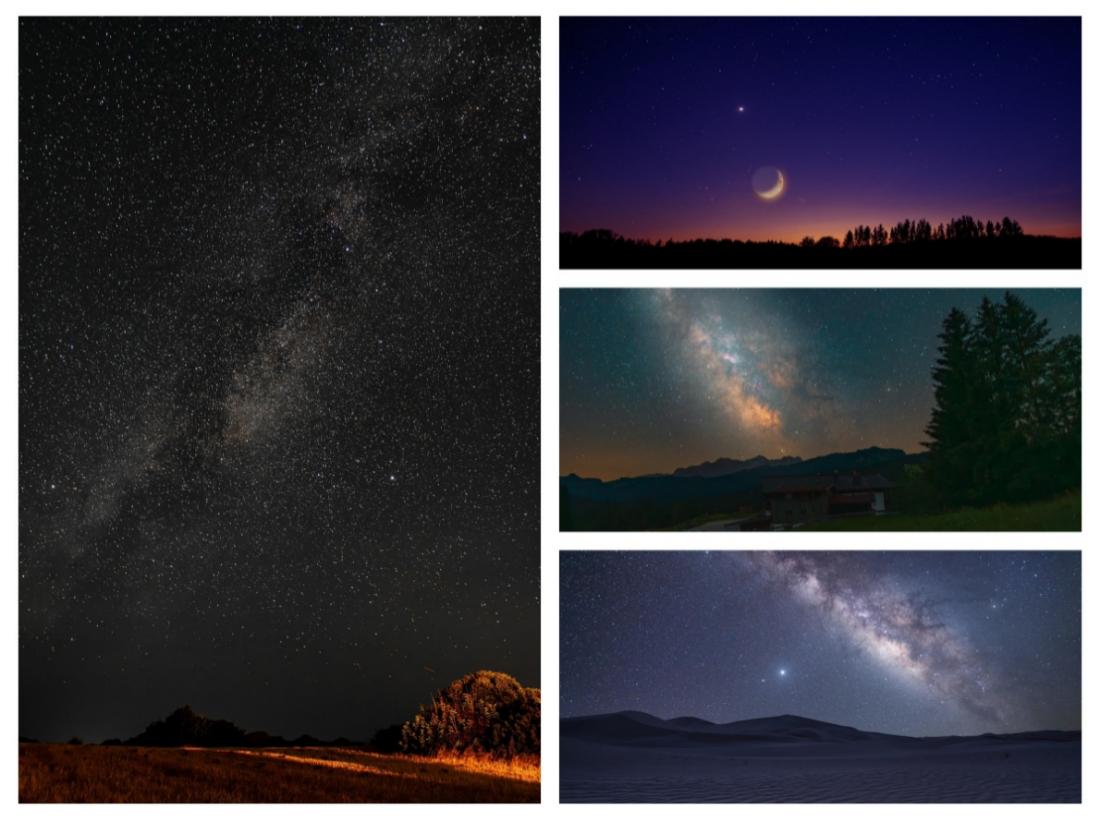
When shooting the starry sky with a wide angle lens, aperture needs to be considered
3.Image quality control
Wide angle lenses are prone to chromatic aberration and barrel distortion issues; an excellent lens should be able to control chromatic aberration and distortion well. When shooting the starry sky, if the lens does not control chromatic aberration well, purple fringing may appear around the stars, while distortion will cause the image to be distorted, affecting the overall effect.
Therefore, it is essential to select a lens that demonstrates superior control over both chromatic aberration and distortion. In addition, it is important to choose a high-resolution lens to ensure that the stars appear as clear and sharp points, avoiding blurriness.
4.Precise manual focus
In dark environments, a camera’s autofocus function typically becomes ineffective, necessitating manual focus adjustment—specifically, setting the focus ring to the infinity (∞) mark. However, it is important to note that the infinity mark on a lens’s distance scale often exhibits slight inaccuracies in practice and cannot be relied upon exclusively.
Therefore, it is important to choose a lens with moderate focus ring damping and a long travel to facilitate precise focus adjustment and ensure that the stars are clear and sharp.
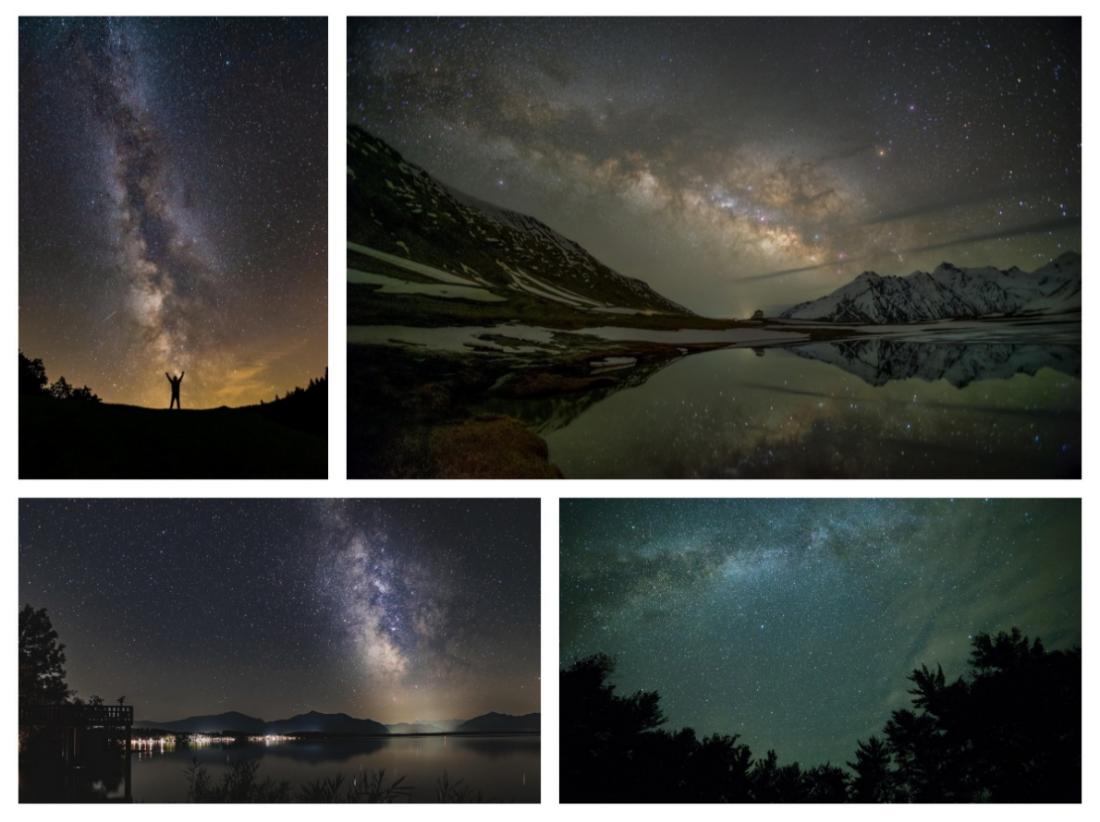
Shooting the starry sky with a wide-angle lens often requires manual focusing
5.Weight and volume
If you need to carry the lens outdoors for extended periods of time, you need to consider the lens’s weight and size. For example, when carrying equipment for outdoor activities that require a long time, such as mountain climbing or hiking, it is important to choose a lens with a lightweight design so that you can travel light and reduce your burden.
Furthermore, it is necessary to select a suitable lens based on your budget. If you have a generous budget, you may opt for a high-end lens; however, if your budget is limited, it is generally advisable to choose a lens that meets your basic shooting requirements.
Final Thoughts:
If you are interested in purchasing various types of lenses for surveillance, scanning, drones, smart home, or any other use, we have what you need. Contact us today to learn more about our lenses and other accessories.
Post time: May-06-2026


