
Varifocal lenses allow you to adjust the focal length without changing your shooting position, offering great flexibility and adaptability to different shooting needs, and are widely used in landscape photography.
When photographing landscapes, choosing the right varifocal lens requires considering factors such as focal length, shooting intentions, and scene characteristics. In this article, we will explore these factors together.
1.Large-scale landscape
When photographing large-scale landscapes, such as mountains, grasslands, deserts, and coastlines, where the overall grandeur of the environment needs to be captured, a wide field of view, a sense of extension, or spatial depth is required. In these situations, an ultra-wide-angle varifocal lens is suitable, with focal lengths such as 10-24mm or 16-35mm.
For example, when shooting a panoramic view of a snow-capped mountain, a varifocal lens using an ultra-wide-angle lens can simultaneously capture the rocks in the foreground, the vegetation in the midground, and the snow-capped mountain in the background, highlighting the sense of depth in the space.
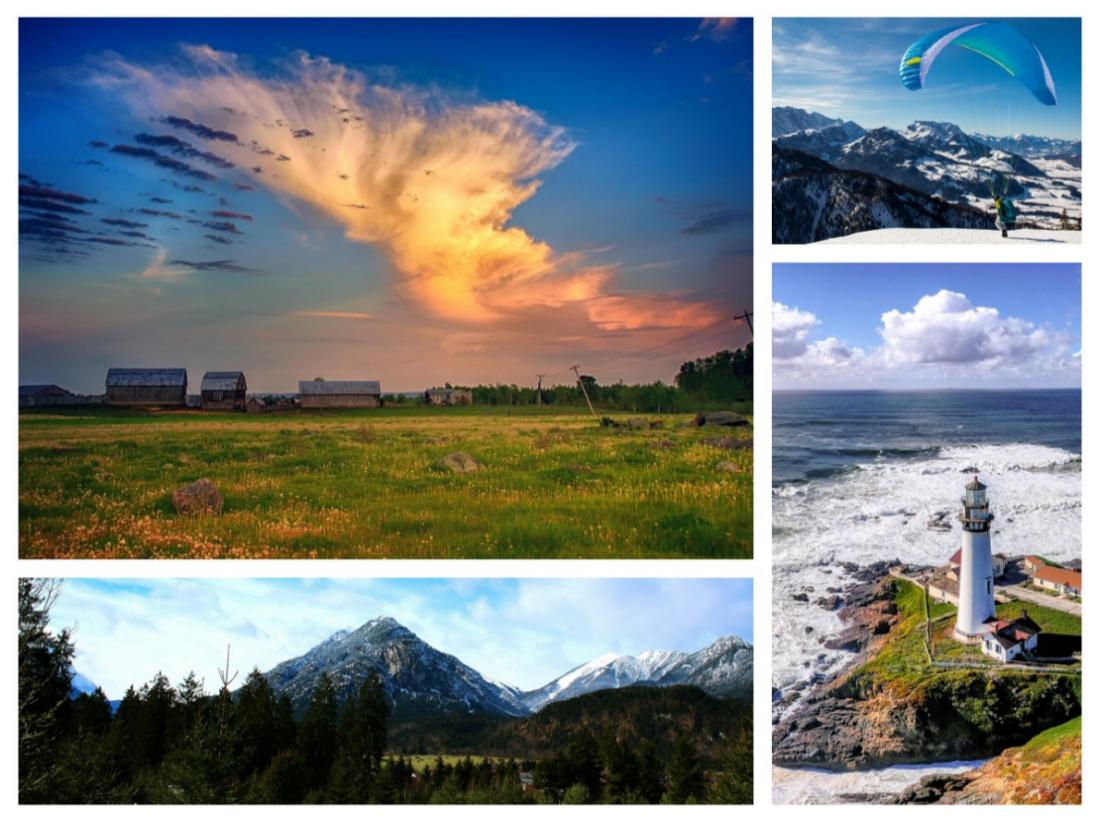
Ultra wide angle varifocal lens for shooting large-scale landscapes
2.Medium-sized landscape
When photographing medium-scale landscapes, such as lakes, fields, or city skylines, it’s necessary to highlight specific details or the relationship between the subject and its environment. Standard varifocal lenses, with focal lengths such as 24-70mm or 24-105mm, are suitable for this purpose, as they naturally render the proportions and spatial relationships of the scene.
The focal range of standard varifocal lenses covers commonly used perspectives, allowing for flexible composition and balancing both the overall scene and detailed elements. For example, a focal length of around 50mm can be used to capture light and shadow in a forest, while the compression effect of a 70mm focal length can be used to emphasize a small boat on a lake.
3.Distant scenery
Photographing distant landscapes, such as mountains and wildlife, or other inaccessible scenes, requires a lens capable of capturing distant subjects, compressing space, or highlighting details. In these situations, a telephoto varifocal lens with focal lengths such as 70-200mm or 100-400mm is suitable. The compression effect of a telephoto lens can layer distant elements, or isolate the subject from the background, while shooting from a distance also helps avoid disturbing the environment or ensuring personal safety.
For example, when photographing the contours of distant mountains, the texture of clouds, or snow on mountaintops, a telephoto lens can bring the subject closer, highlighting details and textures; when photographing layered mountains, terraced fields, or forests, the spatial compression effect of a telephoto lens can create a sense of depth and layering in the image.
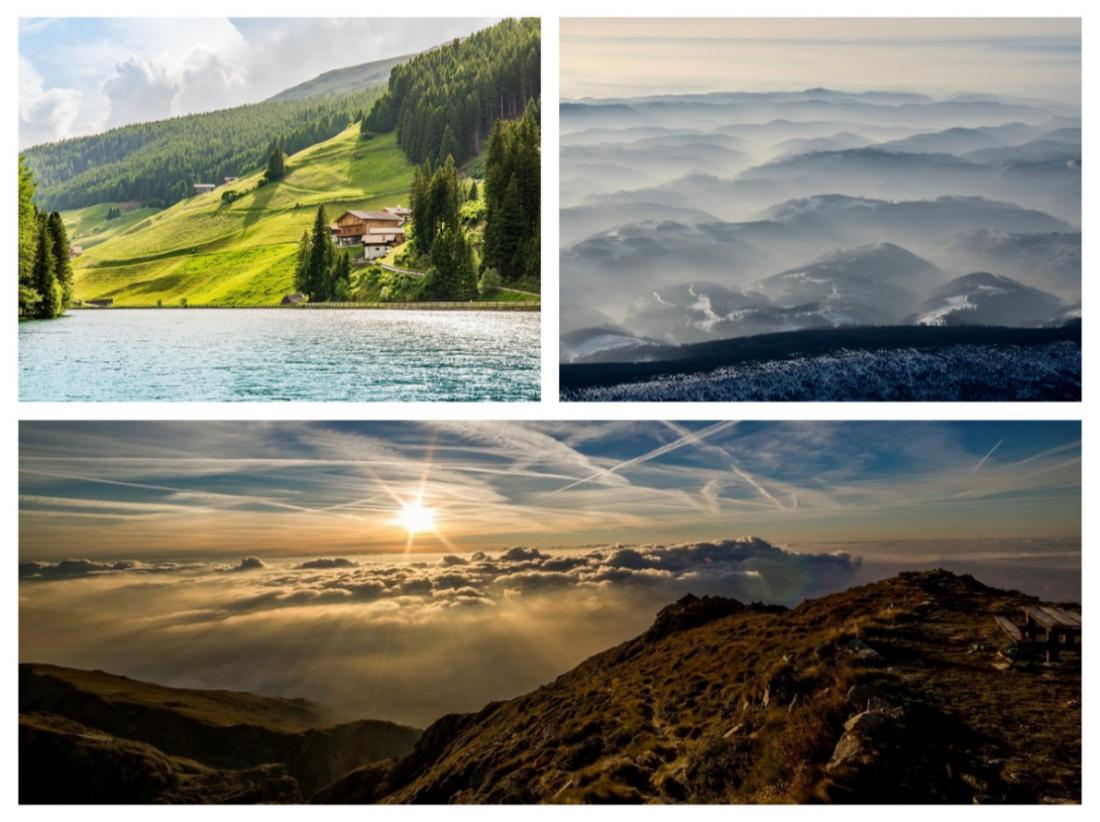
Telephoto varifocal lenses are used to photograph distant landscapes
4.Landscapes incorporating human elements
When photographing landscapes that include human elements, such as scenes with people and buildings (e.g., herdsmen and grasslands, ancient temples and forests), it is recommended to use a standard varifocal lens. This will help avoid unnatural distortion of people or buildings due to perspective.
5.Panoramic view in a confined space
When shooting panoramas in confined spaces such as canyons or forest trails, using an ultra-wide-angle lens is ideal, as it allows you to capture a more complete view of the environment from a limited position.
6.Daily travel recording and shooting
For capturing everyday travel moments, a lens needs to be portable, flexible in composition, and able to quickly switch scenes (such as from foreground flowers and grass to midground mountains), with a wide focal length coverage so that frequent changes are not required. A standard varifocal lens is suitable for this purpose.
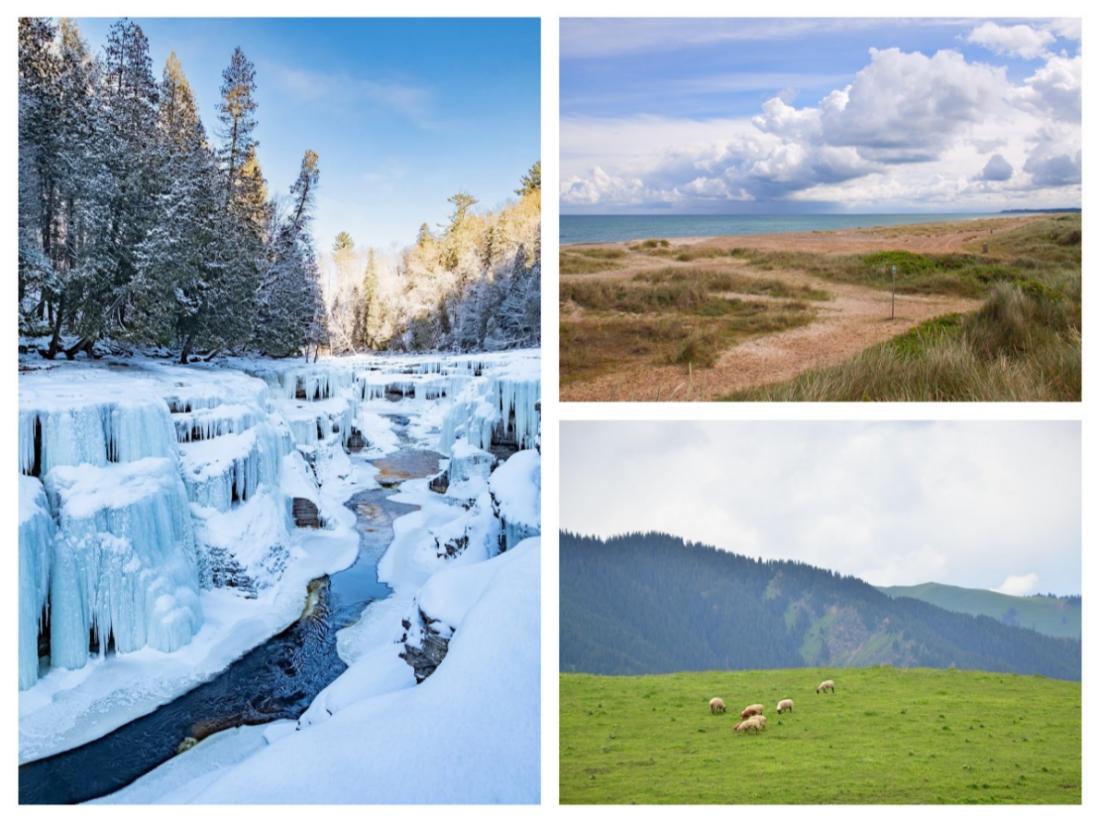
Standard varifocal lenses are suitable for everyday travel recording
7.Shooting in low light conditions
When shooting in low-light conditions, such as during sunrise, sunset, or on cloudy days, it’s best to choose a large-aperture varifocal lens, such as a 16-35mm or 24-70mm lens with a constant f/2.8 aperture. This ensures a faster shutter speed and reduces image blur. Conversely, in bright light conditions, such as at midday, you can use a varifocal lens with a smaller aperture (such as f/4 or f/5.6) to keep both near and distant objects in focus.
In summary, when photographing landscapes, you should consider factors such as the distance to the subject, the characteristics of the scenery, and the lighting conditions to select the appropriate varifocal lens, thereby maximizing the expressive power of your landscape photographs.
Final Thoughts:
If you are interested in purchasing various types of lenses for surveillance, scanning, drones, smart home, or any other use, we have what you need. Contact us today to learn more about our lenses and other accessories.
Post time: Feb-03-2026


