
The M12 lens is a miniaturized lens that is compact, lightweight, highly compatible, and suitable for a wide range of applications. So, how do you choose the right M12 lens for your specific shooting needs in everyday use?
Choosing the right M12 lens requires considering various factors, including the subject of the shot, focal length, and resolution:
1.Clarify the shooting target
First, you need to clarify your shooting goal and core needs, such as whether it’s a wide-angle scene, obtaining a bright image in low light, measuring object size, or a special environmental application.
For example, to capture a wide-area scene, you should prioritize focal length and field of view, generally choosing a short focal length and a wide field of view to achieve large-scene coverage at close range.
2.Consider the focal length selection
Focal length directly determines how wide or far your lens can capture. The size of the focal length determines the size of the field of view; a smaller focal length results in a wider field of view and a larger area of observation, while a larger focal length results in a narrower field of view and a smaller area of observation.
If you need to photograph a wide scene, such as monitoring a large area, you can choose a short focal length M12 lens, such as 2.8mm or 3.6mm; if you need to photograph distant objects or take close-ups of objects, you need to choose a longer focal length lens, such as 12mm or 16mm.
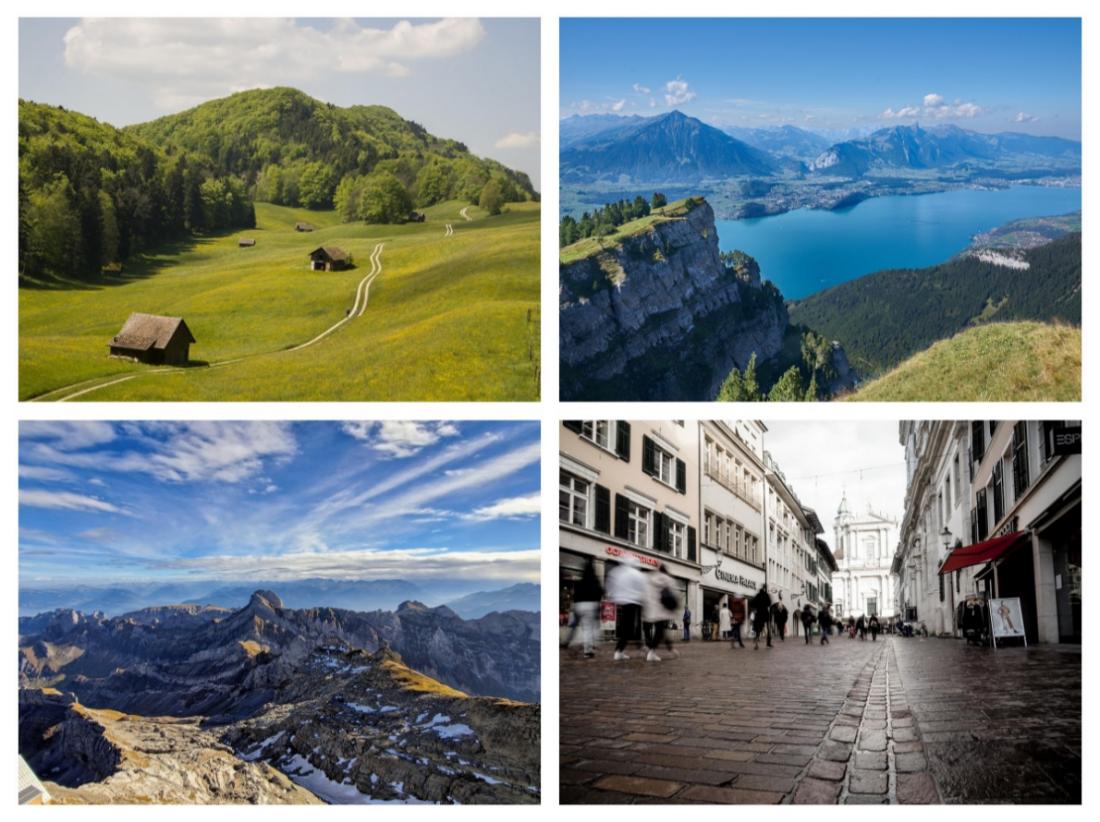
Choose the appropriate focal length based on the shooting requirements
3.Consider the sensor size
The maximum CCD or CMOS chip size that a lens’s image circle can cover is called the corresponding maximum sensor size. M12 lenses are typically used with sensors ranging from 1/4 inch to 1/1.8 inch.
When choosing a lens, ensure that its image circle fully covers the camera’s sensor size; otherwise, vignetting or incomplete images may occur at the edges of the photo. Therefore, it is crucial to select a lens whose maximum supported sensor size is greater than or equal to the size of the camera’s sensor.
4.Consider the resolution
Resolution represents the lens’s ability to capture details of an object. The lens resolution should match the camera’s resolution. Generally, to fully utilize the camera’s pixels, an M12 lens with a resolution greater than or equal to the camera’s resolution should be selected.
At the same time, to unleash the full potential of the camera sensor, the lens resolution needs to match the sensor’s pixel size. For example, a high-resolution sensor requires a higher-resolution lens; otherwise, it will result in blurry images and an inability to show fine details.
Resolution is also a key factor to consider
5.Consider the aperture size
Aperture is represented by F, and the smaller the F-number, the larger the aperture, the more light enters, and the shallower the depth of field; the larger the F-number, the smaller the aperture, the less light enters, and the greater the depth of field.
If shooting in low-light conditions or needing to photograph fast-moving objects, a larger aperture M12 lens should be chosen, such as F1.8 or F2.0, to increase image brightness and freeze the action; if a greater depth of field is required, so that the entire scene is in focus, a lens with a smaller aperture can be chosen, such as F5.6 or F8.0.
Furthermore, if the lighting conditions of the shooting environment are relatively stable, a manual aperture lens can be used; however, if the lighting conditions vary significantly, such as in transitional areas between indoor and outdoor environments or outdoor scenes during day-night transitions, an automatic aperture lens can automatically adjust the aperture size according to the light intensity, ensuring accurate exposure without the need for frequent manual adjustments.
6.Consider the working distance
M12 lenses with different focal lengths have different working distances, and the appropriate lens should be selected based on the actual distance between the object being photographed and the camera.
For example, short focal length lenses have a shorter working distance and are suitable for close-range shooting; long focal length lenses have a longer working distance and are suitable for long-distance shooting.
The working distance also needs to be considered
7.Consider lens distortion
Lens distortion can cause image distortion and deformation. For general surveillance and consumer electronics applications where distortion requirements are not particularly strict, ordinary M12 lenses are sufficient, typically with a distortion rate of around 1%-2%.
However, for applications such as industrial inspection and surveying, which require high geometric accuracy of images, low-distortion M12 lenses should be selected to ensure image accuracy.
8.Consider the work environment
If your application scenario involves factors such as vibration, humidity, oil stains, or drastic temperature changes, and the usage environment is relatively harsh, you need to choose a lens with a corresponding reinforced structure and protection level (such as IP67) to reduce pixel shift caused by impact and vibration, while being waterproof and dustproof, ensuring long-term application in harsh environments.

The work environment also needs to be considered
9.Consider the interface and compatibility
M12 lenses typically come with an M12×0.5 threaded mount. When using them, it is necessary to ensure that the mount specifications of the M12 lens are fully compatible with the camera. At the same time, the compatibility between the lens and the camera sensor must also be considered to ensure proper installation and use, and to obtain good imaging results.
In addition, if you need to capture ultra-wide panoramic images, such as to ensure no blind spots in surveillance or to capture panoramic images with drones, you can choose the M12 fisheye lens, which generally has an angle greater than 180° and can cover ultra-large scenes with a single lens.
Final Thoughts:
ChuangAn has carried out the preliminary design and production of M12 low distortion lenses, which are widely used in various fields. If you are interested in or have needs for M12 low distortion lenses, please contact us as soon as possible.
Post time: Jan-30-2026


