
Fixed focus lenses are an important tool for night scene photography, especially large-aperture fixed focus lenses. They can use shallow depth of field to highlight the subject, blur the background, separate the person from the background, and increase the aesthetic appeal of the image.
In night scene photography, the following techniques can be used to highlight the subject when using a large aperture fixed focus lens:
1.Creating shallow depth of field using a large aperture
Large aperture fixed focus lenses typically use apertures such as F1.4, F1.8, or F2.0. When shooting night scenes, opening the aperture wide can produce a very shallow depth of field, allowing the subject to be displayed very clearly while the background becomes blurred, making the subject stand out more in the picture.
2.Use light contrast to highlight the subject
When shooting night scenes, you can use artificial light sources in the environment to fill in the light. For example, shop window lights, neon lights, street lights, car lights, etc. are all natural props that can fill in the light for the subject, creating a visual contrast between the bright subject and the dark environment, so that the focus will naturally fall on the subject.
It is important to note that the greater the difference in brightness between the subject and the background, the more the subject stands out; you should avoid letting the subject blend into the background environment.
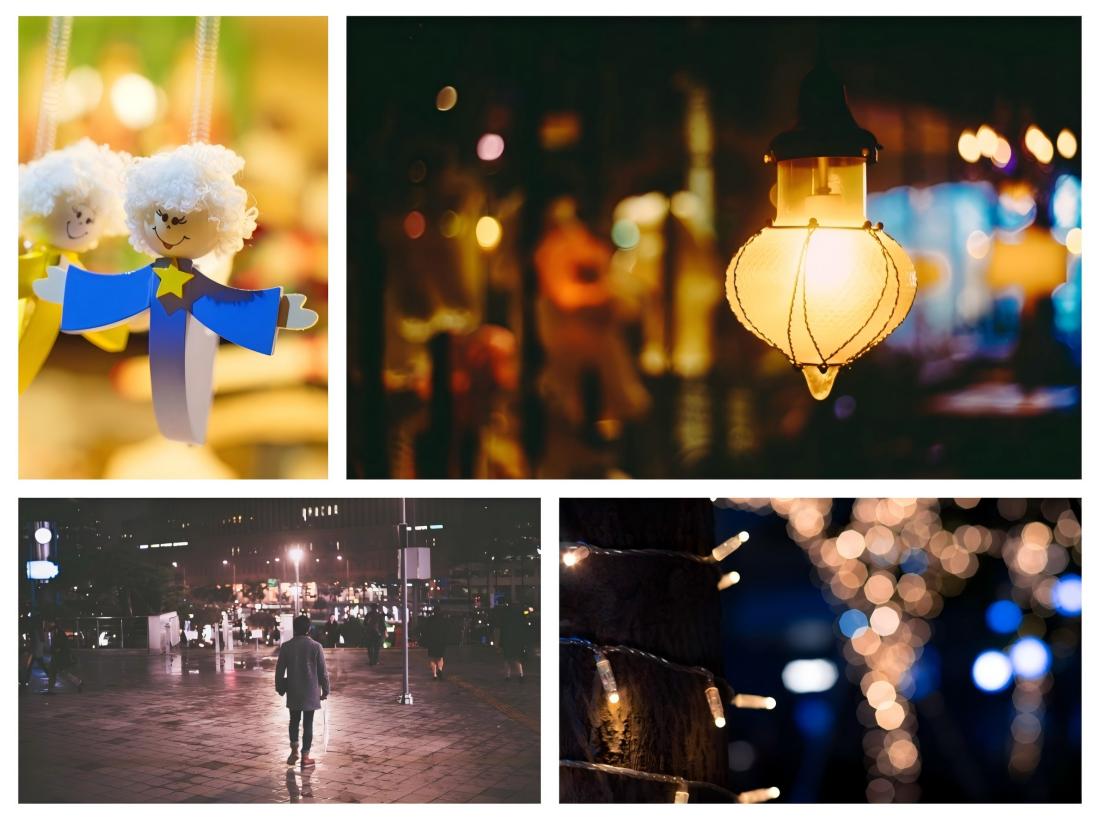
You can use light contrast to highlight the subject
3.Use night scene light spots to highlight the subject
Light sources such as streetlights, car lights, signs, and shop window lights will turn into circular soft-focus bokeh under a wide aperture. This not only beautifies the image but also highlights the outline of the subject through bright color blocks, making the subject stand out in the center.
It is important to ensure there is sufficient distance between the subject and the background lights—positioning the subject closer to the lens and further away from the background.
4.Use creative composition to highlight the subject
In night scene photography, creative composition is also very important. Skillful composition allows you to guide the viewer’s eye and highlight the main subject. For example, changing the shooting angle, such as using a low angle or a high angle, can bring different visual effects and highlight different characteristics of the subject.
In addition, foreground elements can be used to guide the viewer’s eye. For example, use tree branches, windows, etc. to frame the subject and blur them into large areas of color blocks or halos. Alternatively, use symmetrical or repetitive elements to enhance the rhythm and visual impact of the image.
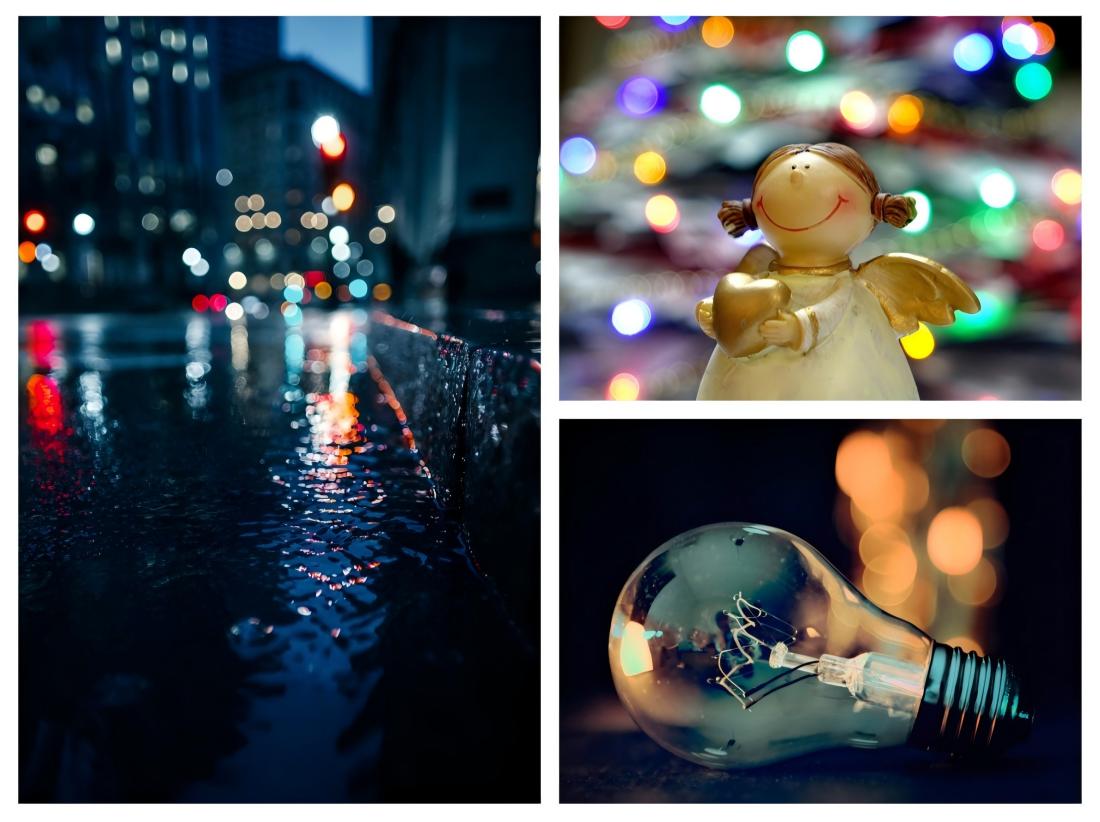
Night scene light spots can be used to highlight the subject
5.Pay attention to focusing accuracy
A large aperture results in a very shallow depth of field in night scenes, making focusing a challenge. Be careful to avoid using automatic area focus.
For example, when shooting portraits, you should focus precisely on key details such as the eyes or face of the person, and not on dark and textureless areas. If the camera is out of focus, you can use the live view function on the screen to zoom in and manually focus precisely.
6.Ensure the equipment remains stable
Although a wide aperture allows for significant light intake, ambient light levels in night scenes are extremely low. If your camera does not have image stabilization, it is recommended to keep the shutter speed at least 1/focal length second to avoid blurry subjects due to hand tremors.
Whenever conditions permit, using a tripod is recommended to stabilize the camera and avoid blur resulting from slow shutter speeds.
In addition, post-processing is a crucial step in night photography that should not be overlooked. During post-processing, you can moderately enhance the clarity and contrast of the subject, or use selective adjustment tools to increase its brightness, thereby making the subject stand out more visually.
Post time: Jul-24-2026


