
Leading lines refer to lines or shapes within an image that guide the viewer’s gaze toward the main subject; these can be either natural or man-made. In landscape photography, leading lines serve as a core compositional technique for enhancing visual layering and narrative depth. Acting as invisible visual signposts, they guide the viewer’s eye in a gradual transition from the foreground to the subject, thereby heightening the image’s sense of depth, order, and immersion.
1.Leading lines in landscape photography
In landscape photography, it is necessary to pay attention to the following common types of leading lines:
(1)Natural leading lines
Naturally occurring lines—such as rivers, coastlines, mountain ridges, rows of trees, dune textures, and cloud formations—can all serve as leading lines in landscape photography.
(2)Artificial leading lines
Some man-made leading lines, such as roads, paths, embankments, bridges, fences, field ridges, and steps, are also commonly used lines in landscape photography.
(3)Implied leading lines
Certain implied lines—such as contrasts in light and shadow, color gradients, and repeating patterns—are also types of leading lines that can be utilized.
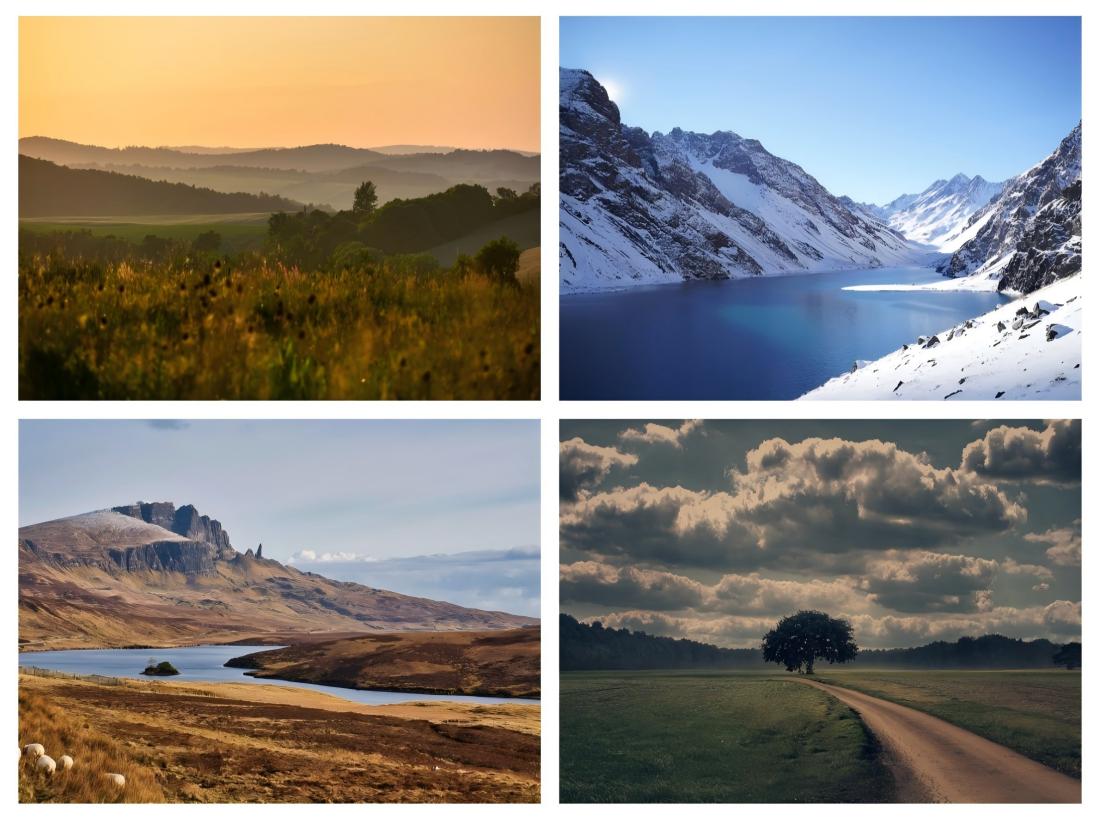
Leading lines are commonly used in landscape photography
2.How to use leading lines in composition
Leading lines serve as a compositional tool; their purpose is to support the subject—creating a visual interplay with it—while avoiding the pitfall of overshadowing the main focal point. Effective composition using leading lines requires the mastery of several specific techniques:
(1)Leading lines must point toward the focal point of the image
To ensure the leading lines start from the bottom left or bottom right corner of the image, make sure the starting point is on the main subject, such as a waterfall at the end of a stream, a snow-capped mountain at the end of a road, or the sun at the center of the clouds. This will make the overall view more natural and comfortable, forming a “closed visual loop”.
(2)Leading lines should avoid clutter, maintaining a single dominant line
In a landscape photograph, there may be multiple lines, such as roads, rivers, and railings. When composing a shot, you should choose the clearest and most impactful line as the main leading line, and use other lines as auxiliary lines. If the frame becomes cluttered with too many lines, you can simplify the composition by adjusting your shooting angle or cropping during post-processing to ensure that the visual flow remains clear and logical.
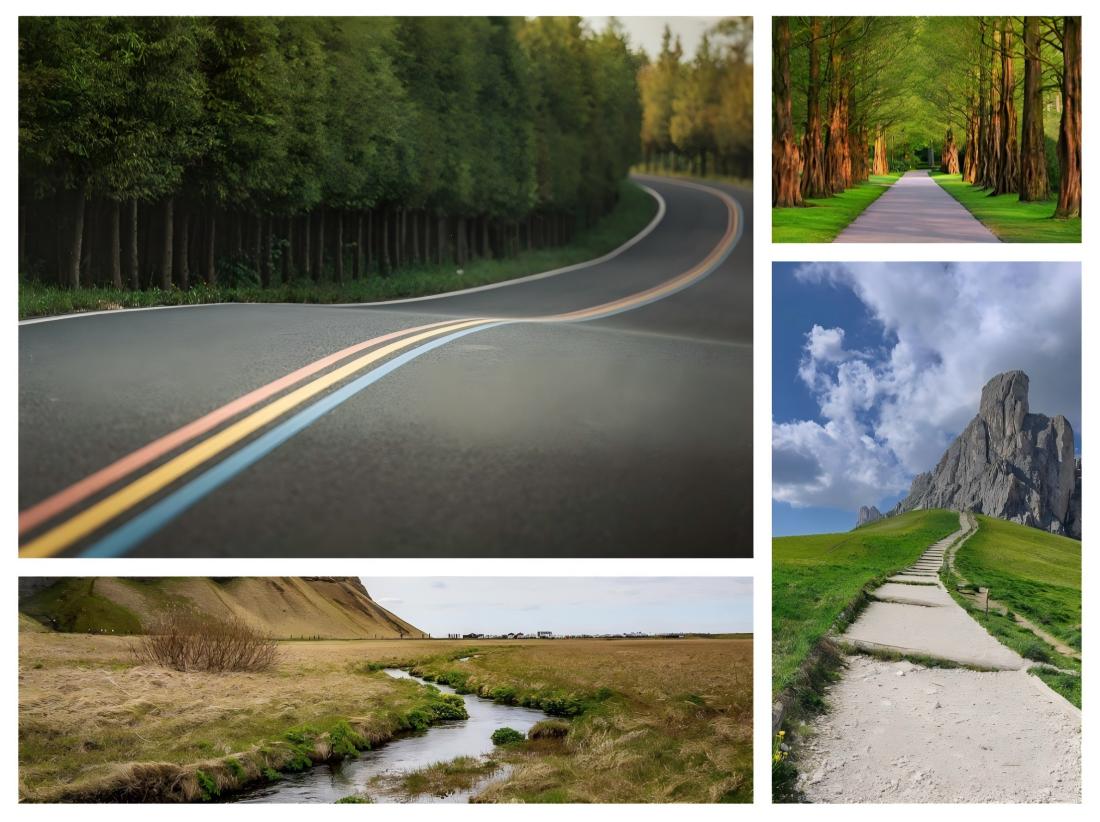
Keep the leading lines on the screen as simple as possible
(3)Integrate the leading lines with the foreground to enhance the sense of immersion
Without the support of foreground elements, leading lines can appear hollow. When shooting, you can introduce foreground elements—such as a rock, a flower, a pedestrian, or a boat—at the starting point of the leading line. This serves a dual purpose: acting as an entry point for the viewer’s gaze while simultaneously enriching the visual depth of the composition.
For example, when photographing a coastline, use seashells on the beach as the foreground and let the texture of the waves (leading lines) extend from the seashells towards the distant lighthouse.
(4)Using a wide angle lens to create a stretching effect
Wide angle lenses accentuate the perspective effect—making nearby objects appear larger and distant ones smaller—thereby rendering leading lines more dramatic and impactful. Shooting from a low angle allows foreground leading lines (such as stone steps or streams) to appear more substantial, gradually narrowing as they recede into the distance, thereby stretching the vertical depth of the frame.
For example, when shooting a plank road, shooting from a low angle can make the plank road extend from the bottom of the frame to the top of the mountain, creating a stronger sense of depth.
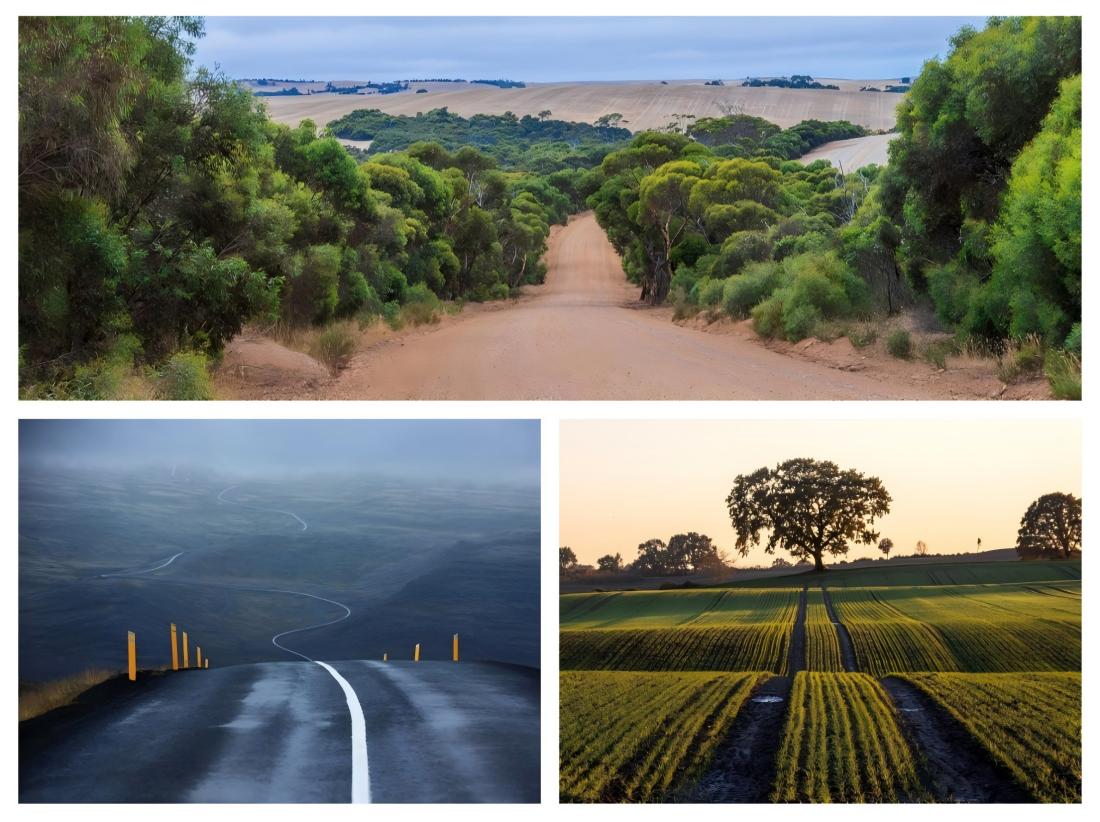
Make full use of wide-angle lenses to create a stretching effect
(5)Employ different leading lines for varying scenic atmospheres
Landscapes come in a wide variety of forms—you might be photographing majestic mountains and waters, idyllic pastoral scenes, coastlines, or something else entirely. Each type of landscape calls for a specific approach to using leading lines that harmonizes with its unique atmosphere.
For example, straight leading lines, such as highways and ridgelines, are suitable for creating a simple, grand, and rugged atmosphere, such as desert highways and snow-capped mountain ridges; while more curved leading lines, such as terraced fields, rivers, and coastlines, are suitable for creating a soft, dynamic, and rhythmic atmosphere, such as cascading terraced fields and winding streams.
In summary, the use of leading lines in landscape photography serves to guide the viewer’s attention from the foreground of the frame toward the main subject in the background. By skillfully incorporating leading lines into their compositions, photographers can create landscape images that are both more engaging and evocative of a narrative.
Post time: Apr-24-2026


