
With the advancement of automotive intelligence, the in-vehicle surround-view system, as a core visual module of ADAS (Advanced Driver Assistance Systems), has become an essential standard feature for enhancing driving safety.
By leveraging ultra-wide-angle cameras strategically positioned around the vehicle to capture real-time imagery, the system performs image stitching and distortion correction to deliver a 360-degree panoramic bird’s-eye view. This helps drivers intuitively eliminate visual blind spots, thereby effectively reducing scrapes and collisions during parking and driving.
In the hardware architecture of in-vehicle surround-view systems, the optical performance of the lens directly determines the system’s perception range and imaging quality. With its ultra-wide field of view and other distinctive features, the 200-degree fisheye lens offers significant advantages in such systems.
This paper takes the ChuangAn CH3631DB fisheye lens as its core to discuss the characteristics and application solutions of 200-degree fisheye lenses in automotive surround-view systems.
I. The Core Value of 200-Degree Fisheye Lens in Automotive Surround-View Systems
The CH3631DB is a high-performance fisheye lens designed for close-range surround-view scenarios in vehicles. Its optical parameters, structural dimensions, and protection performance are all well-matched to the complex vibration, high and low temperatures, rain, snow, and dust conditions in vehicles.
Compared with conventional 180-degree wide-angle lenses for vehicles, it has significant advantages and is an ideal optical device for all-around surround-view systems.
1.Key Optical Parameters of the CH3631DB
1)1/4-inch target surface: The 1/4-inch target surface design is compatible with mainstream automotive high-definition CMOS image sensors (such as AR0144), balancing module size and image quality, and can be adapted to the mass production design of miniaturized automotive cameras.
2)Ultra-wide field of view coverage: This lens has a field of view of 200° diagonally, 194° horizontally, and 132° vertically, which far exceeds that of ordinary wide-angle lenses and is close to the ultra-large coverage of fisheye lenses. A single lens can cover a field of view that is close to or even beyond the hemisphere, allowing for panoramic views to be achieved with fewer lenses.
3)0.99mm ultra-short focal length: The ultra-short focal length combined with the ultra-wide-angle design can capture a wide range of scenes at very close distances, making it suitable for surround-view applications installed at close range around the vehicle.
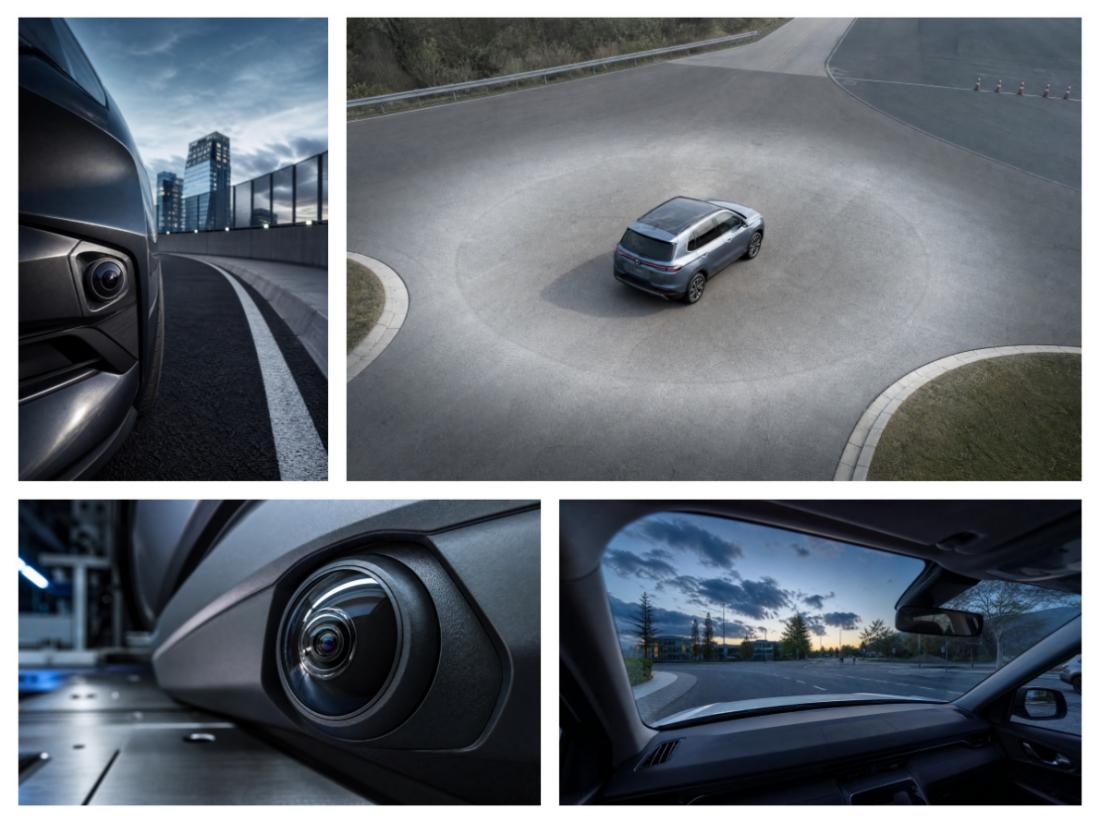
Performance of a 200-degree fisheye lens in in-vehicle surround view
4)8.8 million high-resolution pixels: This lens achieves a balance between miniaturization and high resolution through pixel process optimization. It maintains an 8.8-megapixel high-resolution output even with a wide field of view, enabling the precise identification of subtle environmental details—such as curbs, bollards, low-lying obstacles, and road markings. This provides ample image detail redundancy for subsequent processes like correction, cropping, and stitching, ensuring the clarity of the final panoramic image.
5)12.95mm compact TTL: The ultra-short body and lightweight design make it easy to integrate into the limited installation space of the vehicle body, such as rearview mirrors, front and rear bumpers, and fenders, without compromising the vehicle’s streamlined appearance.
6)F2.0 large aperture: The large aperture design ensures sufficient light intake in complex lighting environments (such as at night, underground parking garages, tunnels, and rainy weather), improving imaging capabilities in low-light environments.
7)M8 standard mount: The M8 threaded mount is a standard miniature mount, facilitating integration with vehicle wiring harnesses and modular assembly.
8)IP67 protection rating: IP67 waterproof and dustproof, can resist rain, mud and sand accumulation, and dust intrusion, supports stable operation in all-weather outdoor conditions, and meets the dustproof and waterproof reliability requirements of vehicle-mounted external cameras.
9)Strong fisheye distortion: The optical distortion of this lens is approximately -139%, which is typical of fisheye distortion. This strong distortion manifests as a noticeable bending of the image in the original image, but it is precisely this optical design that allows a single lens to cover a field of view of nearly 200 degrees. To avoid distortion affecting the viewing angle, it needs to be used in conjunction with a correction algorithm.
2.Physical requirements of near-field blind zone
The area within 0.3-1.5 meters around the vehicle is a near-field region that is easily overlooked by the driver’s naked eye, and where some ultrasonic radars have a blind spot at very close range (<0.3m). Traditional surround-view lenses with a field of view of around 190 degrees still leave near-triangular blind spots at the four corners of the vehicle.
By pushing the diagonal field of view to 200 degrees, a single camera can form a coverage cone with a horizontal angle of 194 degrees and a vertical angle of 132 degrees. Four cameras can form an overlap of about 30% around the vehicle, fundamentally eliminating visual gaps near the seams.
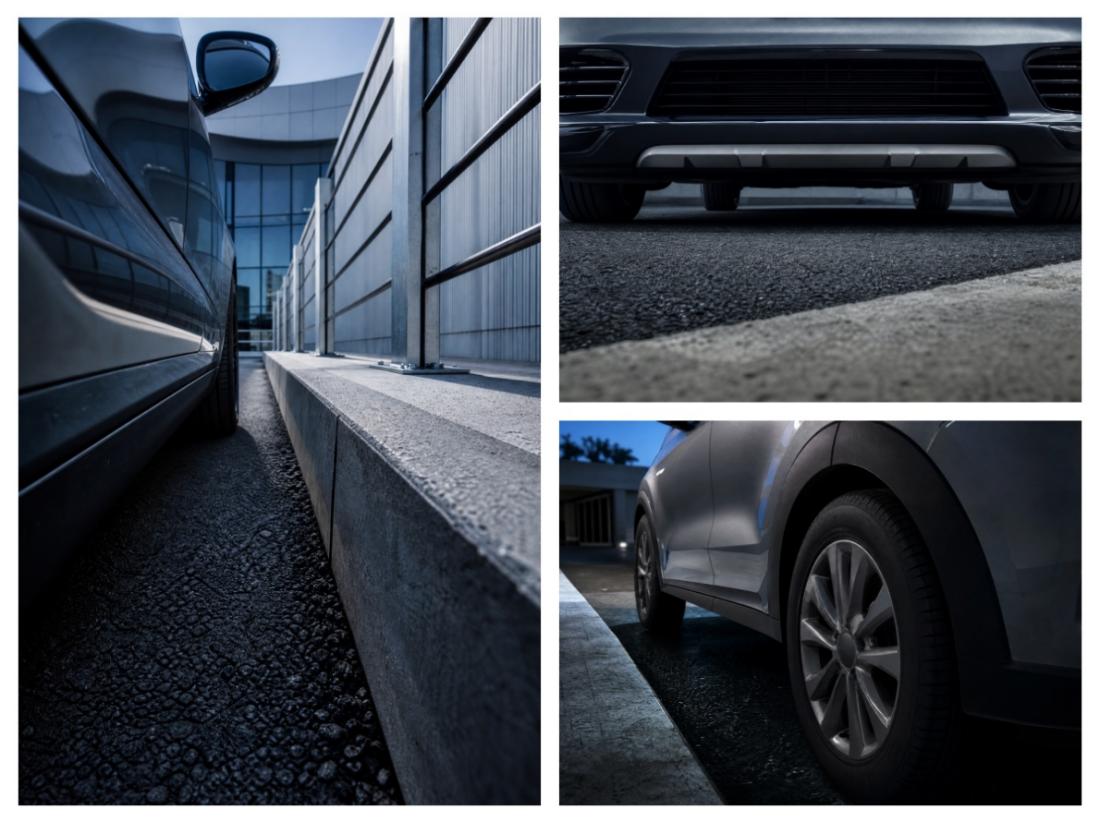
A 200-degree fisheye lens helps eliminate near-field blind spots
3.Greater layout flexibility enabled by miniaturization
With its slim and lightweight design (only 12.95mm thick, 3.2g, and M8 mount), the CH3631DB boasts excellent mechanical compatibility and ease of assembly.
It can be integrated into: the narrow space in the center of the front grille, the bottom of the left and right rearview mirror housings (the most common placement point for surround-view cameras), the sheet metal recess above the license plate frame in the trunk, and auxiliary viewpoints around the roof shark fin or high-mounted brake light (for 6-way surround view).
Compared to large-aperture fisheye lenses with a TTL exceeding 25mm, this lens does not disrupt the streamlined design of a vehicle’s exterior, offering excellent flexibility for automotive manufacturers in terms of styling.
4.Structural advantages of a 200-degree field of view
Traditional surround-view lenses typically feature a diagonal field of view (FOV) between 150 and 180 degrees. Due to the limitations of optical design, as the FOV approaches 180 degrees, the incident angle of marginal rays increases sharply, often resulting in significant vignetting and a degradation in resolution.
By utilizing an ultra-short focal length of 0.99 mm and a specialized fisheye optical structure with a negative-power front group, the CH3631DB extends the effective diagonal FOV to 200 degrees—meaning that light within a 100-degree range on either side of the lens’s optical axis can be effectively captured.
In the actual deployment of vehicle surround view systems, a 200-degree field of view can bring the following structural advantages:
1)Single-lens panoramic coverage on one side: A single 200-degree fisheye lens installed on the front bumper, rear tailgate, or below the side mirror of a vehicle can cover the transition area extending from the side of the vehicle to the front (or rear) with its imaging cone.
Combined with the overlapping field of view of adjacent lenses, it can significantly reduce the blind patching area required for stitching.
2)Near-vehicle ground blind spot compression: One of the core pain points of the surround view system is that low obstacles within 30cm around the vehicle are difficult to detect, such as curbs, ground locks, children, etc., which are often overlooked.
With a 200-degree field of view and a reasonable downward tilt installation angle, the ground area below the lens’s main optical axis exceeding 90 degrees can be included in the imaging range, achieving true ground-level perception.
3)Adaptability to vertical scenes: The 132-degree vertical field of view allows the lens to simultaneously capture three-dimensional targets such as parking lines on the ground and traffic signs, garage height restriction bars, and charging pile cantilever, avoiding the perception limitations of traditional wide-angle lenses that “look at the ground but not the sky”.
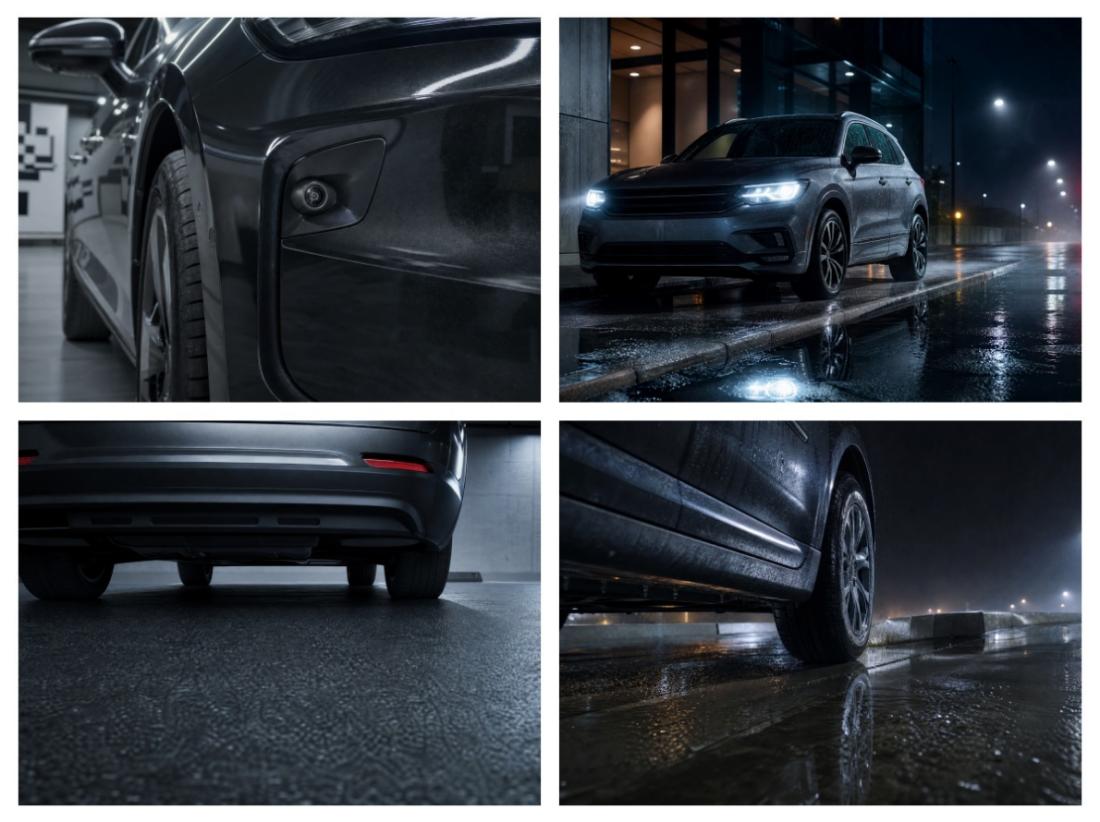
Structural advantages of a 200-degree fisheye lens field of view
II. Engineering Challenges and Solutions Brought by 200-Degree Fisheye
1.Edge resolution attenuation
The severe barrel distortion introduced by fisheye lenses represents the primary technical challenge for surround-view systems. Due to their inherent imaging characteristics—where the center is sharp while the edges are blurred—the relative illuminance of a fisheye lens can drop to as low as 50% at the periphery.
To address this, the CH3631DB utilizes an 8.8-megapixel sensor (AR0144), providing sufficient pixel redundancy for cropping after distortion correction. Furthermore, the system employs adaptive edge sharpening and vignetting compensation within the ISP (Image Signal Processor) pipeline, ensuring optimal clarity within a 1.5-meter radius around the vehicle when rendering the bird’s-eye view.
2.Complexity of distortion correction
The CH3631DB lens exhibits significant distortion (up to 139%), which causes severe stretching of pixels toward the edges. Correcting this requires high-precision calibration targets and multi-frame fusion algorithms, leading to increased calibration time.
Following distortion correction, the lens’s effective horizontal field of view narrows from 194 degrees to approximately 180 degrees—an unavoidable physical consequence. Nevertheless, by employing a four-camera configuration with 30% overlap, full coverage around the vehicle can still be achieved, with the overlapping regions providing the necessary redundant data for image stitching and fusion.
The core challenges of image stitching are: feature matching of overlapping areas of adjacent images, brightness and color consistency at the stitching seams, and ghosting of moving objects.
3.F2.0 large aperture and low-light performance
The F2.0 aperture of the CH3631DB lens is considered a large-aperture design for a fisheye lens. Combined with the pixel architecture of the AR0144 sensor, it maintains a usable signal-to-noise ratio even in low-light parking scenarios, such as in underground garages or residential areas at night.
To further enhance night-vision performance, the lens’s IR coating can be paired with a 650nm IR-cut filter (the CH3631DB comes with an IR650nm filter as standard); additionally, sensor timing modes that support LED flicker mitigation can be utilized.
III. Application of 200-Degree Fisheye Lenses in Automotive Surround-View Systems
As an essential component of modern intelligent driving technology, the vehicle surround-view system integrates image data from multiple cameras to provide the driver with a panoramic view of the vehicle’s surroundings, thereby significantly enhancing driving safety and decision-making efficiency.
To achieve comprehensive field-of-view coverage, 200-degree fisheye lenses must be strategically positioned at key locations on the vehicle. In a standard four-camera configuration—covering the front, rear, and both sides—the ultra-wide field of view provided by these 200-degree lenses helps minimize blind spots in the stitched image, thereby enhancing system reliability.
Installing fisheye lenses at the front and rear effectively captures expansive areas ahead of and behind the vehicle, reducing blind spots—a feature particularly useful for safety assistance during reversing or low-speed maneuvers. Meanwhile, lenses mounted on the sides of the vehicle provide lateral visibility, helping the driver better perceive their surroundings when changing lanes or navigating through narrow passages.
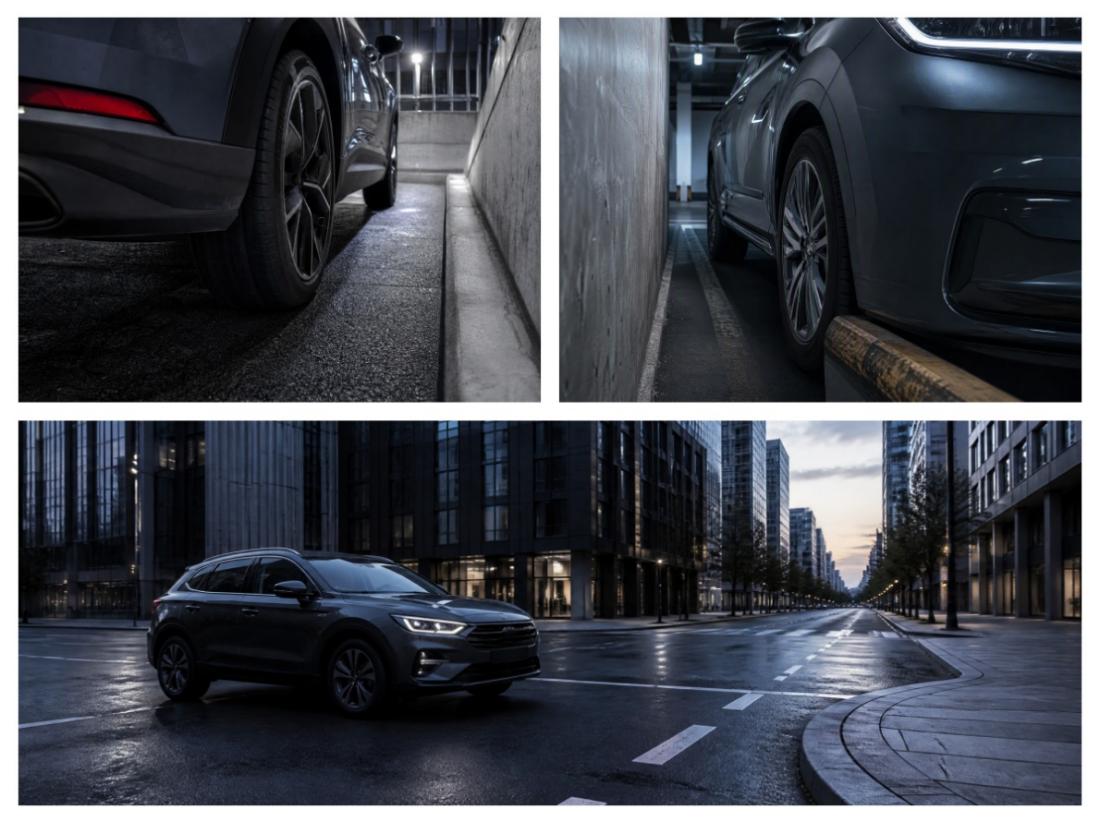
Application of 200-degree fisheye lens in vehicle surround view
Furthermore, lenses positioned in different locations may be subject to environmental factors—such as variations in lighting or the presence of obstructions—which places higher demands on image quality. Therefore, in practical applications, the layout design of the lens needs to be optimized according to the specific vehicle model and usage scenario in order to balance the contradiction between the field of view coverage and system complexity.
Leveraging the CH3631DB lens’s core characteristics such as ultra-wide field of view, high-definition night vision, all-weather adaptability, and high stability, its applications can cover four core scenarios: civilian vehicles, commercial transportation, engineering operations, and intelligent driving, adapting to the safety monitoring needs of all vehicle types and all operating conditions. Several typical application scenarios are outlined below:
1.Low-speed blind spot monitoring and collision warning
When vehicles are in low-speed scenarios such as residential areas, schools, and parking lots, low-lying targets such as children, pets, and low-lying posts around the vehicle can easily enter the blind spots of traditional cameras.
The CH3631DB provides exceptional coverage of the ground area immediately surrounding the vehicle through a 200-degree field of view. Combined with a deep-learning-based obstacle detection algorithm, it can trigger audible and visual warnings before such objects enter a danger zone.
For commercial vehicles such as trucks, buses, and vans, the CH3631DB lens can cover both near-ground and medium-to-long-range monitoring, effectively compensating for the field of view deficiencies of traditional rearview mirrors.
2.Precision parking assist
In scenarios such as perpendicular parking, angled parking, and parallel parking, the CH3631DB’s 200-degree field of view can simultaneously capture parking lines, adjacent vehicles, pillars, and vehicles approaching from behind.
A single rear-view or side-view lens can provide crucial ultra-wide field of view support for the entire process of finding a parking space and parking, reducing perception interruptions caused by perspective switching.
For high-frequency scenarios such as parking in narrow spaces, slow passage through residential areas, passing on narrow roads, and driving in underground garages, the 200-degree ultra-wide field of view can achieve blind spot monitoring around the vehicle, accurately identify high-risk targets that are easily overlooked, such as low stone blocks, guardrails, ground stakes, children, and pets, and improve driving and parking safety.
3.Transparent chassis and off-road assist
When driving off-road or through deep puddles, drivers often cannot perceive what lies directly beneath the vehicle’s chassis. In SUV and off-road vehicle applications, the four-channel CH3631DB camera system—utilizing high-precision calibration and image fusion—can generate a “transparent chassis” view, employing algorithms to create a virtual, see-through perspective of the area beneath the vehicle.
The 200-degree field of view provides ample raw image data for the transparent chassis, enabling the driver to clearly observe tire position, road potholes, and rugged terrain.
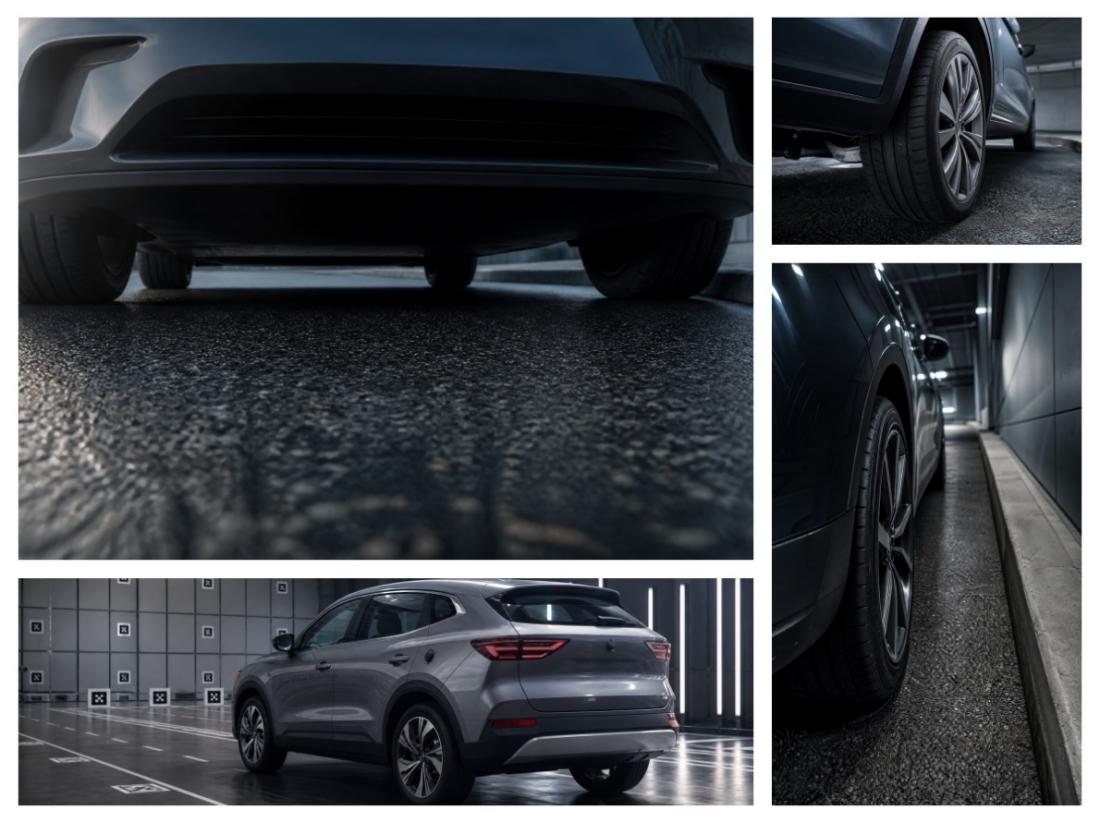
A 200-degree fisheye lens helps with vehicle chassis monitoring
4.Low-speed autonomous driving and ADAS perception
In the intelligent driving perception system, vehicle surround view is the core entry point for near-field environmental perception. With its high resolution and wide field of view, the CH3631DB lens can provide high-quality, high-frame-rate, and highly stable image input for ADAS functions such as low-speed autonomous driving, automatic parking, blind spot warning, and autonomous vehicle relocation.
The ultra-wide field of view can effectively expand the vehicle’s near-field perception range, accurately identify targets such as lane lines, traffic signs, pedestrians, and non-motorized vehicles, provide reliable data support for algorithm decision-making, adapt to the near-field perception needs of intelligent driving systems, and support the iterative implementation of advanced intelligent driving functions.
5.Dashcam and sentry mode
The CH3631DB’s 200-degree field of view allows it to cover the entire scene on one side of the vehicle when deployed as a single unit. It is suitable for front-view dashcams, which can simultaneously record oncoming vehicles on the road ahead and at intersections on both sides, reducing blind spots for evidence collection in side collisions.
It is also suitable for sentry mode, where, in the parked state, four cameras continuously monitor the area around the vehicle at a low frame rate. The 200-degree field of view ensures that any person or object approaching the vehicle is within the field of view of at least one camera.
In summary, the ChuangAn CH3631DB lens, with its ultra-wide 200-degree field of view, ensures the complete coverage of the surround view system; its miniaturized design makes the vehicle wiring simpler and the installation more concealed; its high resolution and high relative illumination guarantee the clarity and uniformity of the final surround view image; and its IP67 protection rating ensures the long-term stability of the system under various harsh operating conditions.
This 200-degree fisheye lens is an ideal choice for developing high-performance, cost-effective 360-degree automotive surround-view systems.
Post time: Nov-17-2026


