
Line scan lenses feature high resolution, a wide field of view, and dynamic imaging capabilities. When paired with line scan cameras and high-speed image processing, they enable seamless, high-resolution, and continuous dynamic image acquisition, making them widely applicable in scenarios such as vehicle inspection and security screening.
Due to their unique imaging principles and hardware characteristics, line scan lenses play a crucial role in vehicle undercarriage inspection, making them particularly well-suited for security screening scenarios that require high-speed inspection with no blind spots.
1.Advantages of line scan lenses in vehicle chassis inspection
Line scan lenses capture only an extremely narrow linear image within the field of view; as a vehicle passes the inspection station at a constant speed, the system can continuously acquire this line-by-line image data at a very high frequency.
Once acquisition is complete, the system compiles the captured linear image data into a complete, high-resolution, wide-field 2D panoramic image of the undercarriage. The advantages of line scan lenses are evident in vehicle chassis inspection:
(1)Blind-spot-free detection, imaging without dead angles
Unlike standard scanning lenses, line-scan lenses have no blind spots in their field of view, enabling seamless, panoramic imaging with complete coverage.
(2)Ultra-high-speed capture, high detection efficiency
Line scan lenses support extremely fast exposure frequencies, enabling clear capture even when vehicles pass by at high speeds, avoiding image blur.
(3)High precision and high contrast
The line scan lens is optimized for machine vision, featuring extremely low noise and extremely high resolution, enabling it to clearly distinguish minute features such as weld points, bolts, and cracks on the chassis.
(4)Dynamic imaging, seamless stitching
Line scan lenses use a linear speed sensor to match vehicle speed, and can stitch together continuously acquired dynamic line images into a complete, distortion-free panoramic view of the vehicle’s underside.

Advantages of line scan lenses in vehicle chassis inspection
2.Application of line scan lenses in vehicle chassis inspection
Line scan lenses are a core component of vehicle chassis inspection systems, primarily used to prevent explosives, weapons, hazardous materials, or personnel from being concealed under the vehicle chassis.
The common application scenarios of line scan lenses in chassis inspection are as follows:
(1)Security checks at high-security locations
Line scan lenses are frequently used in security and inspection applications, playing a vital role—particularly at entry checkpoints—for government facilities, military installations, prisons, customs offices, nuclear power plants, airports, major events, and venues hosting high-profile meetings.
As a key component of under-vehicle scanning systems, these lenses enable the rapid and clear detection of bombs, weapons, narcotics, or stowaways concealed in vehicle undercarriages, effectively eliminating security blind spots.
(2)Automobile manufacturing and quality inspection
On automotive production lines, line scan lenses are often used for online quality inspection of chassis fasteners. By utilizing high-resolution images and algorithms, line scan lenses can be used to measure geometric parameters such as gaps and coaxiality between vehicle chassis components, ensuring compliance with tolerances.
Through a “robot plus line-scan camera” configuration, the system automatically verifies the presence, correct installation, and tightness of components like bolts and clips; this prevents downstream automated assembly failures caused by fastener issues and guarantees product quality.
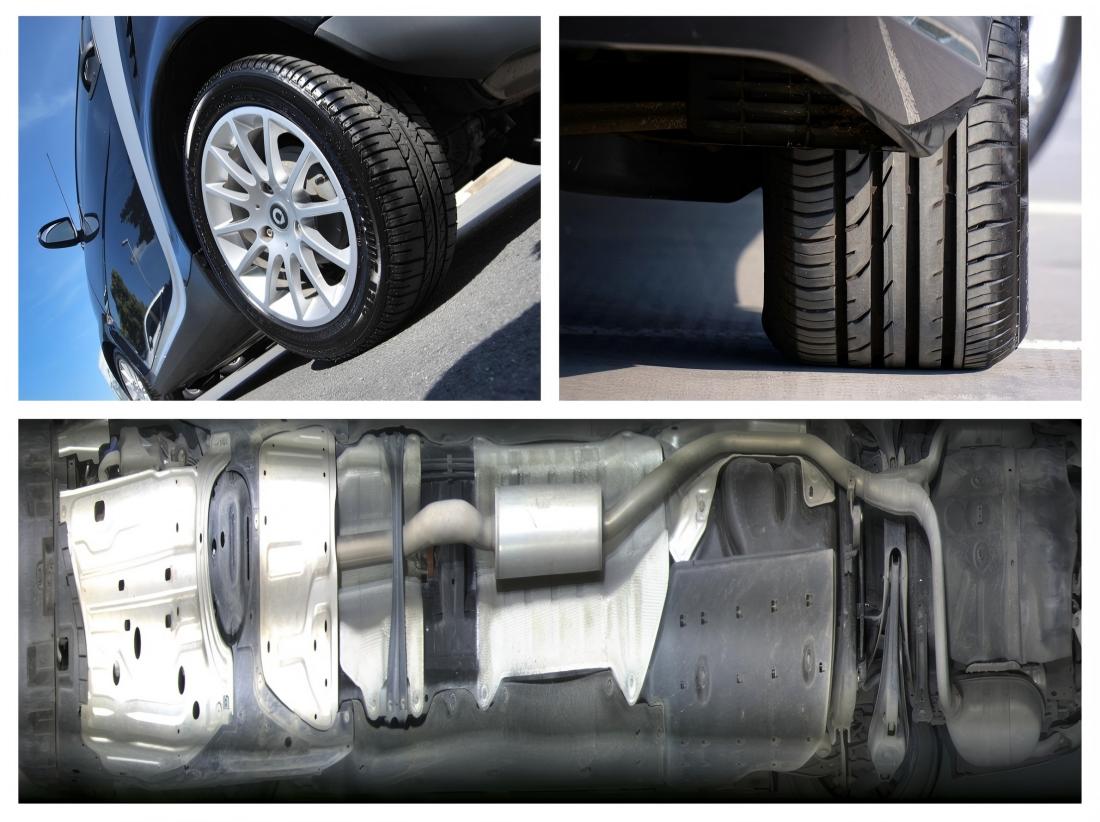
Line scan lenses are commonly used in automotive quality inspection
(3)Vehicle maintenance and fault detection
Line scan lenses are also utilized in vehicle maintenance and chassis defect detection—identifying issues such as rust, cracks, fluid leaks, loose components, and exhaust system damage.
In used-car markets or repair shops, line scan lenses help detect signs of repair or residual accident damage within the chassis structure, assess the vehicle’s age, and automatically verify the presence or absence of critical components like mounting bolts and sensors; this facilitates the early detection of defects and helps prevent major mechanical failures.
(4)Special vehicle inspection and management
Line scan lenses are also used for the inspection and management of some special vehicles.
For example, at customs ports, they can be used to inspect the chassis of container trucks to prevent the smuggling of contraband; they can quickly scan special vehicles such as armored vehicles and police cars to check whether the chassis has been fitted with foreign objects (such as explosives) or has suffered battle damage; as part of the under-vehicle inspection robot, mobile line scanning systems can be quickly deployed in temporary security checkpoints.
In summary, leveraging their inherent advantages, line scan lenses have become a critical component of vehicle undercarriage inspection systems; they resolve the challenge of inspecting this visual blind spot, enhance inspection efficiency, and lay the foundation for the transformation and upgrading of automotive safety inspection systems.
Post time: Jul-07-2026


