
Compared to varifocal lenses, fixed focus lenses offer superior image quality, including higher resolution, less distortion, and better color reproduction, making them the preferred choice for many photographers shooting landscapes. In landscape photography, fixed focus lenses with different focal lengths offer different perspectives and image characteristics, resulting in photographs with distinct styles.
Below, let’s take a closer look at the different application scenarios of fixed focus lenses with different focal lengths in landscape photography:
1.Ultra wide angle fixed focus lens
Ultra wide angle fixed focus lenses have a focal length of approximately 10mm-24mm. Their core advantage is their ultra-wide field of view, which can accommodate a large number of scene elements. They can capture vast landscapes, rugged terrains, and more, while stretching the spatial layers and highlighting the “grandeur” of the scene, making them suitable for showcasing grand scenes.
This ultra wide angle lens is suitable for shooting landscapes where “sky and earth are one,” such as snow-capped mountains, grasslands under the stars, coastlines, and canyons. A single shot can encompass the foreground, middle ground, and background, enhancing the sense of spatial depth.
For example, when photographing a snow-capped mountain with a 14mm ultra wide angle fixed额focus lens, you can include rocks, wildflowers, or a stream in the foreground, retain grasslands or forests in the middle ground, and focus on the main peak of the snow-capped mountain in the background. This creates a layered composition from near to far, highlighting the majestic beauty of the mountain.
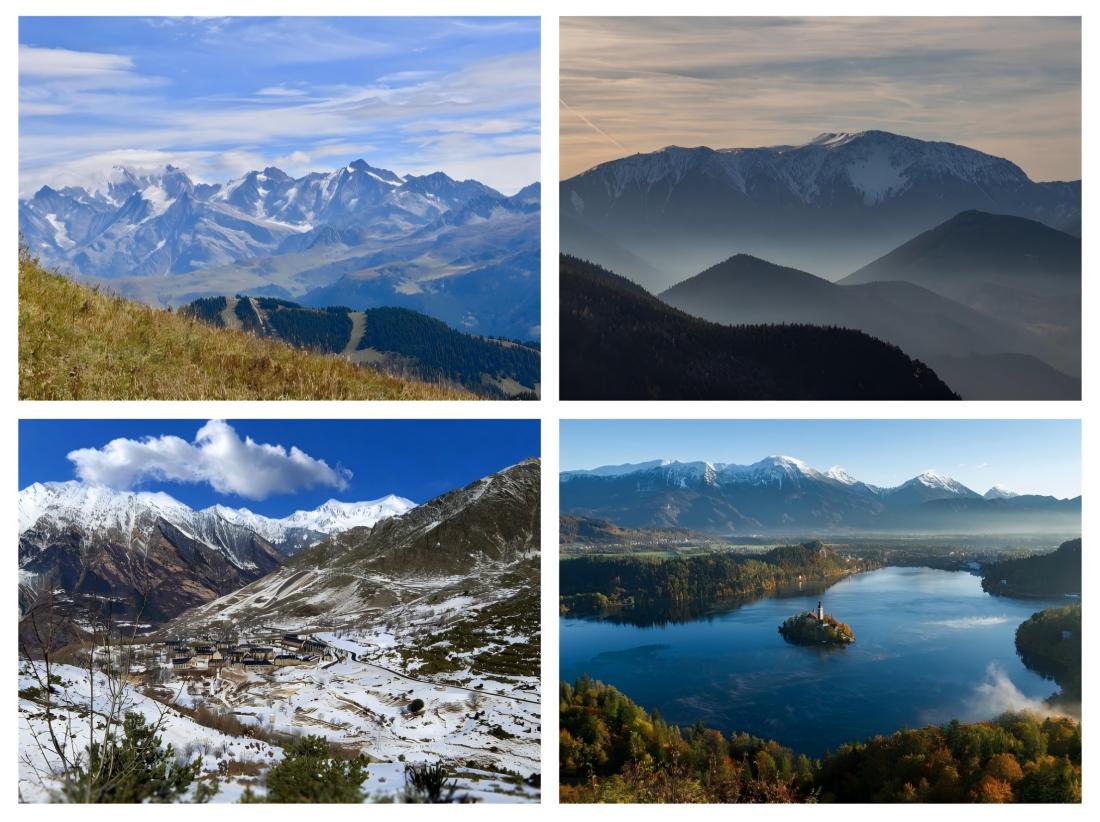
Ultra wide angle fixed focus lenses are suitable for capturing grand scenes
2.Wide angle fixed focus lens
Wide angle fixed focus lenses have a focal length of approximately 24mm-35mm, which is closer to the natural perspective of the human eye than ultra wide angle lenses. They combine the sense of space of a wide-angle lens with less distortion, allowing you to capture both scenic details in everyday scenes and incorporate human elements. This type of wide-angle fixed focus lens is suitable for photographing landscapes with people in them, such as hikers on a journey, herdsmen on the grasslands, or surfers on the beach.
For example, a wide-angle fixed focus lens can include streets, trees, or pedestrians when shooting city skylines, avoiding the coldness of purely architectural shots; when photographing old neighborhoods, it can simultaneously capture the depth of the alleys and the details of the buildings on both sides, showcasing the vibrant atmosphere of the city.
3.Standard fixed focus lens
Standard fixed focus lenses have a focal length of approximately 50mm, which closely matches the field of view of the human eye. This results in natural and realistic images without significant perspective distortion. They are highly versatile and suitable for shooting humanistic landscapes with both subjects and environments, as well as medium-range natural scenes.
These standard fixed focus lenses are ideal for capturing landscapes that require an “objective and restrained” perspective, or for capturing “the essence in the details,” presenting the most realistic spatial proportions.
For example, when using a standard fixed focus lens to photograph rice fields, the proportions of the rice stalks, field ridges, and distant houses in the image are consistent with reality, conveying a sense of “simple beauty.” Photographing reflections on a lake (such as snow-capped mountains reflected in the water), water marks on rocks, or fallen leaves floating in a stream allows one to convey a grander meaning through these small scenes.
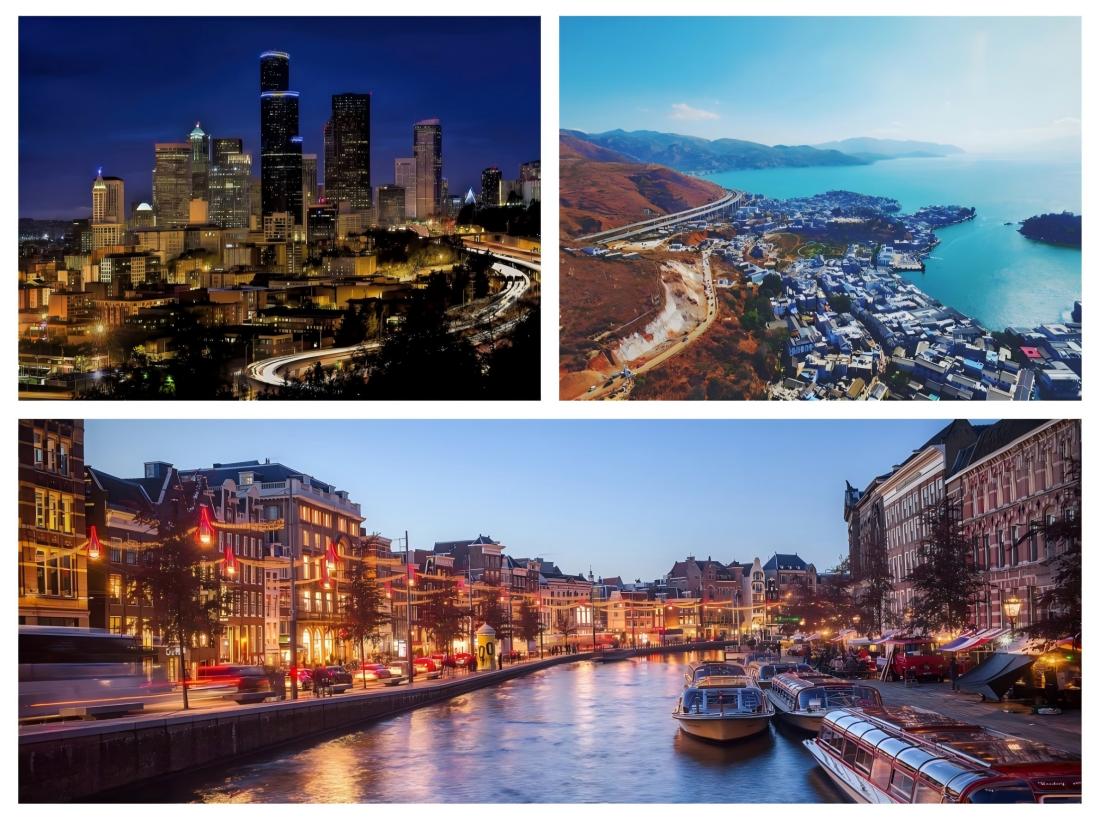
Images captured with a standard fixed focus lens are natural and realistic
4.Medium telephoto fixed focus lens
Medium telephoto fixed focus lenses have a focal length of approximately 85mm-135mm. Compared to wide-angle fixed focus lenses, they compress space, bringing distant and near objects closer together. This makes different layers of elements in the frame, such as distant mountains, middle-ground forests, and nearby hillsides, appear closer together, resulting in a stronger sense of depth.
While these medium telephoto fixed focus lenses cannot capture large scenes, they excel at highlighting interesting patterns, textures, and structures within a scene, making them suitable for creating tranquil, abstract, or formally beautiful images.
For example, when photographing terraced fields, a medium telephoto fixed focus lens allows the near, middle, and distant layers of the terraces to overlap in the frame. The curves formed by the field ridges extend from the foreground to the background, while simultaneously compressing the proportion of the sky, making the terraced fields the absolute focal point of the image and highlighting their “earth sculpture” beauty.
When photographing the welcome pine of Huangshan Mountain, a medium telephoto fixed focus lens can compress the sea of clouds in the background and the distant peaks, making the welcome pine the absolute visual center. At the same time, the sea of clouds, due to the compression, can present a dense and substantial texture, preventing the image from appearing cluttered.
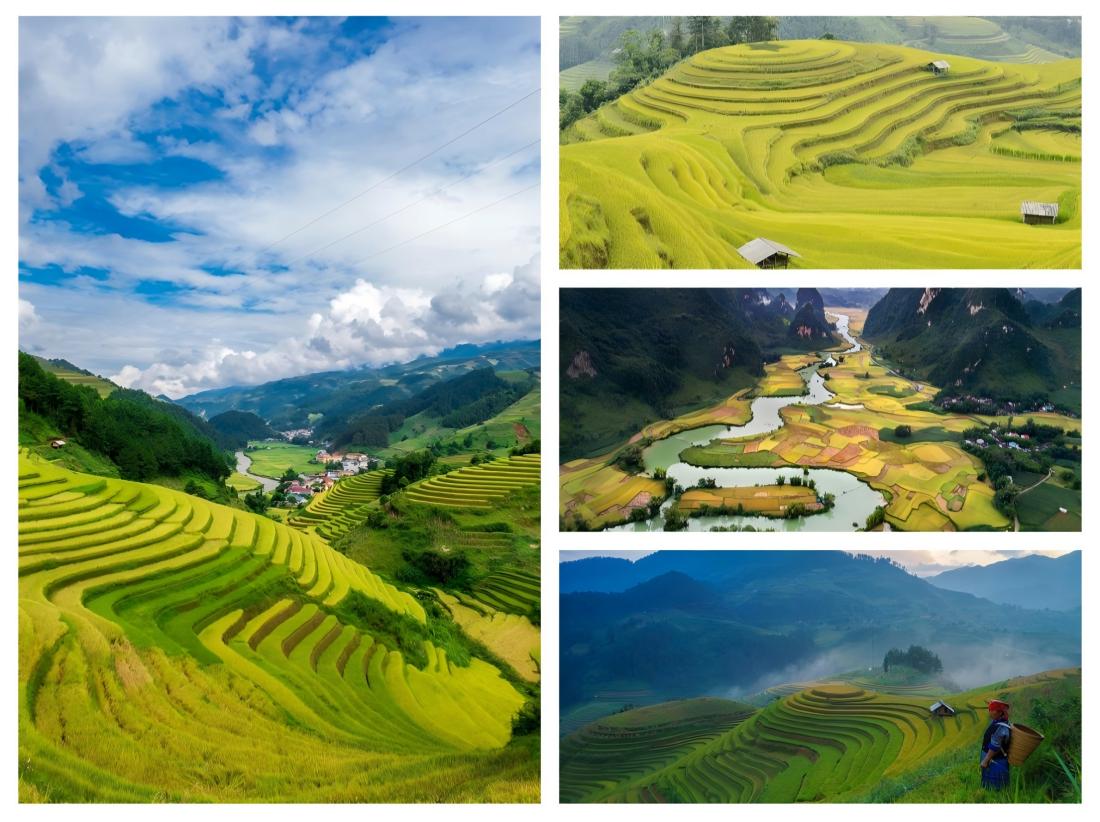
Medium to long telephoto fixed focus lenses can capture elements at different levels within a scene
5.Telephoto fixed focus lens
Telephoto fixed focus lenses typically have a focal length greater than 135mm, usually above 200mm. They have an extremely narrow field of view and provide extreme spatial compression, bringing distant objects closer. They also possess excellent bokeh capabilities, making them suitable for capturing distant details or abstract landscapes, and revealing details and abstract patterns that are difficult for the human eye to perceive.
These telephoto fixed focus lenses are ideal for photographing landscapes and close-ups of subjects that are inaccessible, such as wildlife habitats, waterfalls on cliffs, details of snow-capped mountains, and distant buildings.
For example, when photographing antarctic glaciers, a telephoto fixed focus lens can magnify the blue ice textures and crevasses on the glacier’s surface, making the distant glaciers appear “up close and personal,” conveying both the grandeur and subtlety of the polar landscape.
When photographing deserts, using a 300mm fixed focus lens to capture the ripples of the sand dunes, and compressing the background, the curves formed by the ripples become the sole element in the frame, showcasing the geometric beauty of the desert.
In addition, there are some special fixed focus lenses, such as fisheye fixed focus lenses, which, due to their ultra-wide angle of view, produce strong distortion effects in the image, making them suitable for creative shots such as panoramic views of the sky and architectural domes.
Final Thoughts:
If you are interested in purchasing various types of lenses for surveillance, scanning, drones, smart home, or any other use, we have what you need. Contact us today to learn more about our lenses and other accessories.
Post time: Mar-17-2026


